
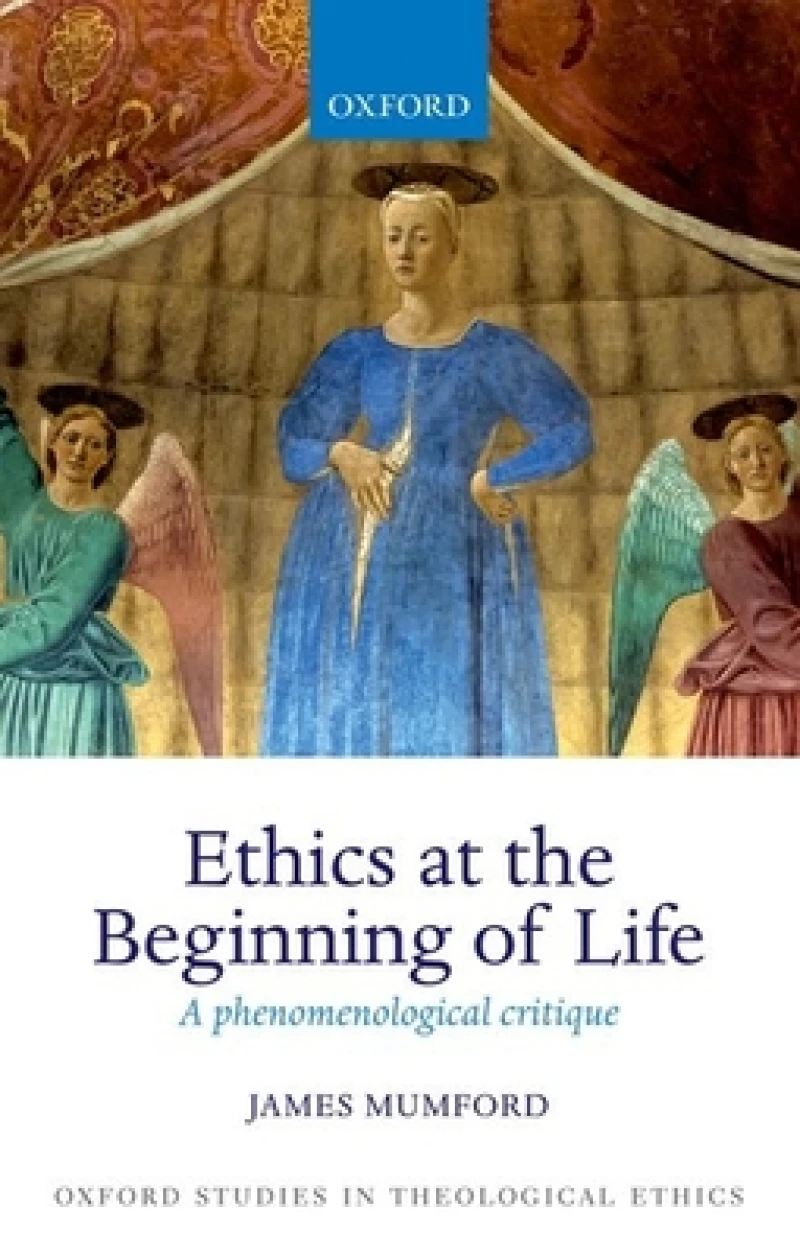
Ethics at the Beginning of Life : A phenomenological critique
Book Details
Format
Paperback / Softback
Book Series
Oxford Studies in Theological Ethics
ISBN-10
0198745052
ISBN-13
9780198745051
Publisher
Oxford University Press
Imprint
Oxford University Press
Country of Manufacture
GB
Country of Publication
GB
Publication Date
Jun 25th, 2015
Print length
228 Pages
Weight
310 grams
Dimensions
21.90 x 13.90 x 1.50 cms
Product Classification:
Ethics & moral philosophyReligious ethicsChristian theologyChristian life & practice
Ksh 7,650.00
Manufactured on Demand
0 in stock
Delivery Location
Delivery fee: Select location
Secure
Quality
Fast
Many declare the debate about abortion to be hopelessly polarised, between conservatives and liberals, between forces religious and secular. In this book Mumford upends this received wisdom and challenges consensus, arguing that many dominant attitudes and argument fail to take into account the particular way human beings 'emerge' in the world.
Many of the most controversial moral decisions we face hinge upon competing descriptions of life, and never is this truer than at the beginning of life. James Mumford draws upon phenomenology (a branch of continental philosophy) to question the descriptive adequacy, the essential ''purchase upon reality'', of many of the approaches, attitudes and arguments which make up beginning of life ethics today. He argues that many of the most prevalent positions and practices in our late modern culture have simply failed to take into account the reality of human emergence, the particular way that new members of our species first appear in the world. Historically, phenomenologists have been far more interested in death than in birth. Mumford therefore first develops his own phenomenological investigation of human emergence, taking leads and developing approaches from phenomenologists both French and German, both living and dead. In the second half of the book phenomenology is finally applied to ethics, and acute moral questions are divided into two kinds: first those concerning ''what'' it is that we are dealing; and, secondly, the more contextual ''where'' questions relating to the situation in which the subject is found. Finally, although this book primarily constitutes a philosophical rather than a religious critique of contemporary ethics, with the findings from continental philosophy being brought to bear upon core convictions of English-speaking ''liberal'' moral and political philosophers, Mumford concludes by exploring an alternative theological basis for human rights which might fill the vacuum created.
Get Ethics at the Beginning of Life by at the best price and quality guaranteed only at Werezi Africa's largest book ecommerce store. The book was published by Oxford University Press and it has pages.

