
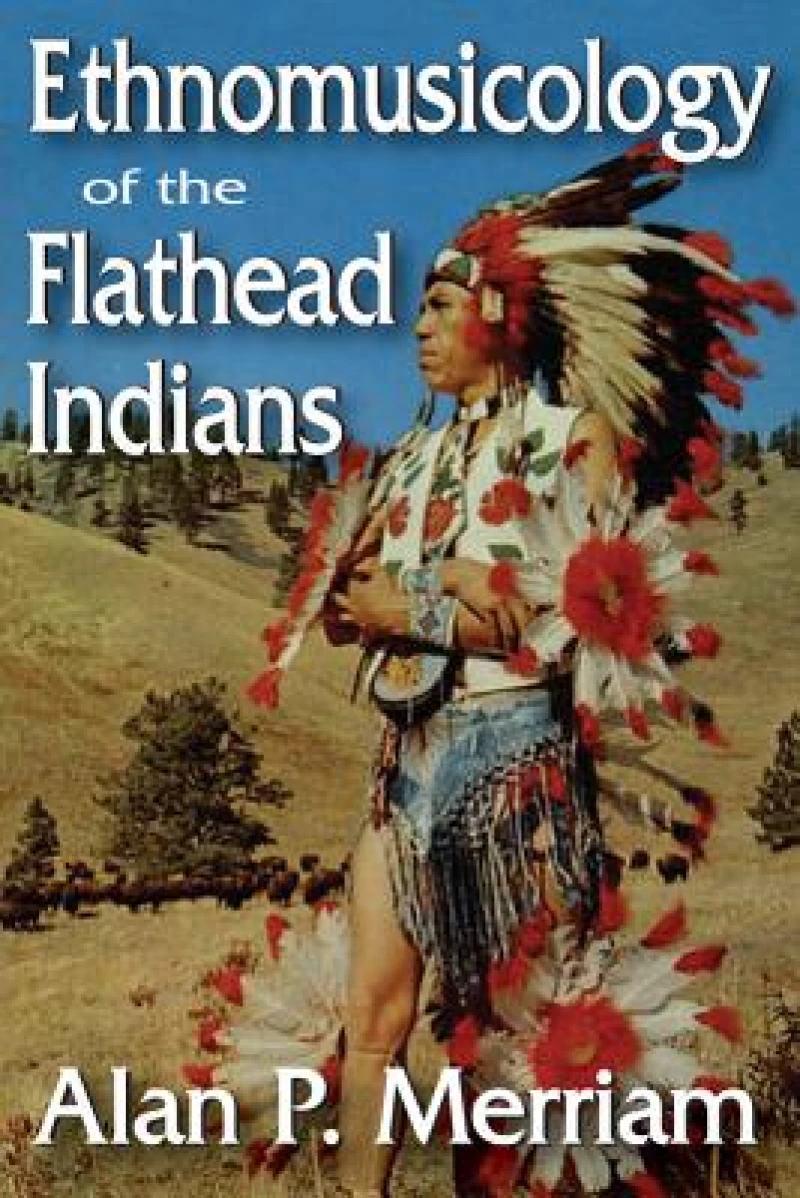
Ethnomusicology of the Flathead Indians
Book Details
Format
Paperback / Softback
ISBN-10
1412842441
ISBN-13
9781412842440
Publisher
Taylor & Francis Inc
Imprint
Routledge
Country of Manufacture
US
Country of Publication
GB
Publication Date
Sep 15th, 2011
Print length
436 Pages
Weight
793 grams
Product Classification:
Theory of music & musicologyFolk & traditional music
Ksh 9,950.00
Werezi Extended Catalogue
0 in stock
Delivery Location
Delivery fee: Select location
Secure
Quality
Fast
All people, in no matter what culture, must be able to place their music firmly in the context of the totality of their beliefs, experiences, and activities, for without such ties, music cannot exist
All people, in no matter what culture, must be able to place their music firmly in the context of the totality of their beliefs, experiences, and activities, for without such ties, music cannot exist. This means that there must be a body of theory connected with any music system - not necessarily a theory of the structure of music sound, although that may be present as well, but rather a theory of what music is, what it does, and how it is coordinated with the total environment, both natural and cultural, in which human beings move.The Flathead Indians of Western Montana (just over 26,000 in number as of the 2000 census) inhabit a reservation consisting of 632,516 acres of land in the Jocko and Flathead Valleys and the Camas Prairie country, which lie roughly between Evaro and Kalispell, Montana. The reservation is bounded on the east by the Mission Range, on the west by the Cabinet National Forest, on the south by the Lolo National Forest, and on the north by an arbitrary line, approximately bisecting Flathead Lake about twenty-four miles south of Kalispell. The area is one of the richest agricultural regions in Montana, and fish and game are abundant. The Flathead are engaged in stocking, timbering, and various agricultural enterprises.For the Flathead, the most important single fact about music and its relationship to the total world is its origin in the supernatural sphere. All true and proper songs, particularly in the past, owe their origin to a variety of contacts experienced by humans with beings which, though a part of this world, are superhuman and the source of both individual and tribal powers and skills. Thus a sharp distinction is drawn by the Flathead between what they call "make-up" and all other songs. Merriam''s pioneering work in the relationship of ethnography and musicology remains a primary source in this field in anthropology.
Get Ethnomusicology of the Flathead Indians by at the best price and quality guaranteed only at Werezi Africa's largest book ecommerce store. The book was published by Taylor & Francis Inc and it has pages.

