
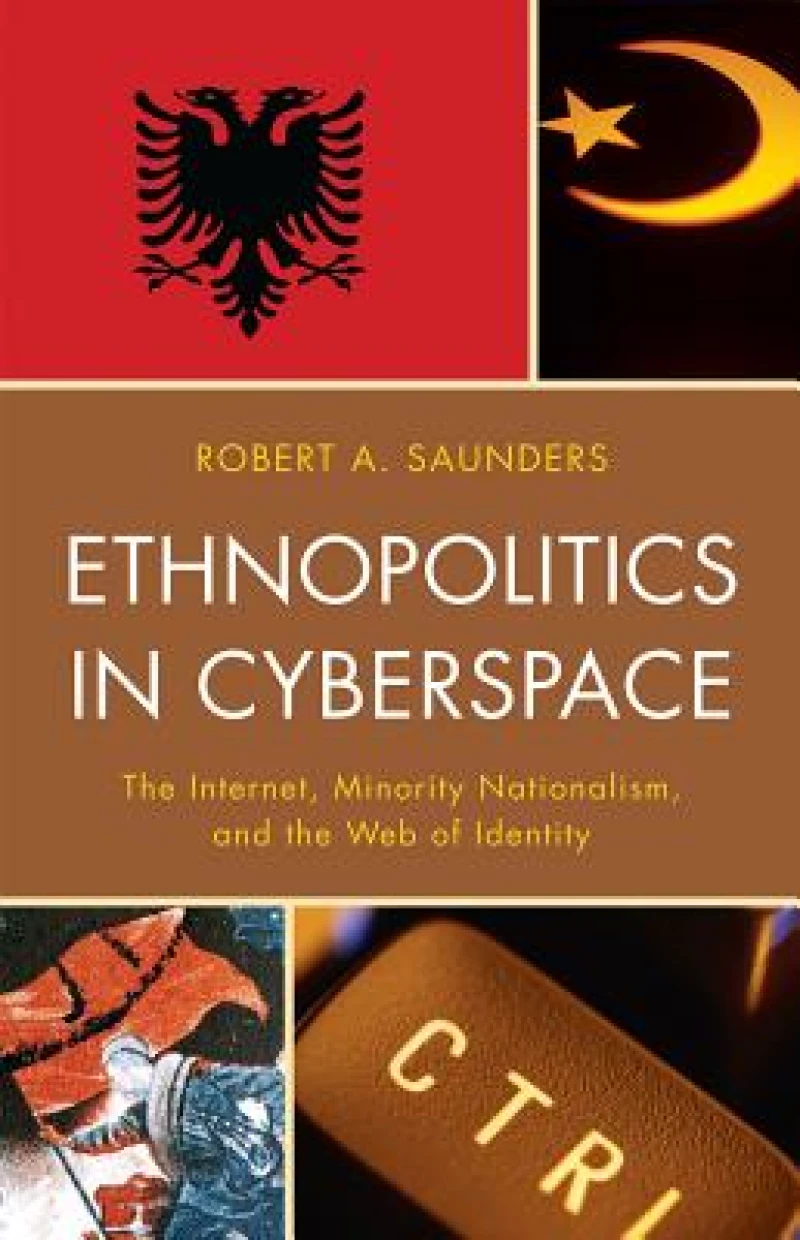
Ethnopolitics in Cyberspace : The Internet, Minority Nationalism, and the Web of Identity
Book Details
Format
Paperback / Softback
ISBN-10
0739141953
ISBN-13
9780739141953
Publisher
Bloomsbury Publishing Plc
Imprint
Lexington Books
Country of Manufacture
GB
Country of Publication
GB
Publication Date
Feb 3rd, 2017
Print length
232 Pages
Weight
326 grams
Dimensions
15.30 x 22.90 x 2.00 cms
Product Classification:
Cybernetics & systems theoryMedia studiesGlobalizationEthnic minorities & multicultural studies
Ksh 8,300.00
Manufactured on Demand
0 in stock
Delivery Location
Delivery fee: Select location
Secure
Quality
Fast
Defying predictions that the Internet would eventually create a world where nations disappeared in favor of a unified 'global village,' the new millennium has instead seen a proliferation of nationalism on the Web. Cyberspace, a vast digital terrain built upon interwoven congeries of data and sustained through countless public/private communication networks, has even begun to alter the very fabric of national identity. This is particularly true among stateless nations, diasporic groups, and national minorities, which have fashioned the Internet into a shield again the assimilating efforts of their countries of residence. As a deterritorialized medium that allows both selective consumption and inexpensive production of news and information, the Internet has endowed a new generation of technology-savvy elites with a level of influence that would have been impossible to obtain a decade ago. Challenged nations-from Assyrians to Zapotecs-have used the Web to rewrite history, engage in political activism, and reinvigorate moribund languages. This book explores the role of the Internet in shaping ethnopolitics and sustaining national identity among four different national groups: Albanians outside of Albania, Russians in the 'near abroad,' Roma (Gypsies), and European Muslims. Accompanying these case studies are briefer discussions of dozens of other online national movements, as well as the ramifications of Internet nationalism for offline domestic and global politics. The author discusses how the Internet provides new tools for maintaining national identity and improves older techniques of nationalist resistance for minorities. Bringing together research and methodologies from a range of fields, Saunders fills a gap in the social science literature on the Internet's central role in influencing nationalism in the twenty-first century. By creating new spaces for political discourse, alternative avenues for cultural production, and novel means of social organization, the Web is remaking what it means to be part of nation. This insightful study provides a glimpse of this exciting and sometimes disturbing new landscape.
Defying predictions that the Internet would eventually create a world where nations disappeared in favor of a unified ''global village,'' the new millennium has instead seen a proliferation of nationalism on the Web. Cyberspace, a vast digital terrain built upon interwoven congeries of data and sustained through countless public/private communication networks, has even begun to alter the very fabric of national identity. This is particularly true among stateless nations, diasporic groups, and national minorities, which have fashioned the Internet into a shield again the assimilating efforts of their countries of residence. As a deterritorialized medium that allows both selective consumption and inexpensive production of news and information, the Internet has endowed a new generation of technology-savvy elites with a level of influence that would have been impossible to obtain a decade ago. Challenged nations-from Assyrians to Zapotecs-have used the Web to rewrite history, engage in political activism, and reinvigorate moribund languages. This book explores the role of the Internet in shaping ethnopolitics and sustaining national identity among four different national groups: Albanians outside of Albania, Russians in the ''near abroad,'' Roma (Gypsies), and European Muslims. Accompanying these case studies are briefer discussions of dozens of other online national movements, as well as the ramifications of Internet nationalism for offline domestic and global politics. The author discusses how the Internet provides new tools for maintaining national identity and improves older techniques of nationalist resistance for minorities. Bringing together research and methodologies from a range of fields, Saunders fills a gap in the social science literature on the Internet''s central role in influencing nationalism in the twenty-first century. By creating new spaces for political discourse, alternative avenues for cultural production, and novel means of social organization, the Web is remaking what it means to be part of nation. This insightful study provides a glimpse of this exciting and sometimes disturbing new landscape.
Get Ethnopolitics in Cyberspace by at the best price and quality guaranteed only at Werezi Africa's largest book ecommerce store. The book was published by Bloomsbury Publishing Plc and it has pages.

