

Evaluating Explanations : A Content Theory
Book Details
Format
Paperback / softback
Book Series
Artificial Intelligence Series
ISBN-10
1138969168
ISBN-13
9781138969162
Publisher
Taylor & Francis Ltd
Imprint
Psychology Press Ltd
Country of Manufacture
GB
Country of Publication
GB
Publication Date
Sep 2nd, 2016
Print length
274 Pages
Weight
453 grams
Product Classification:
Artificial intelligenceArtificial intelligence (AI)
KSh 10,100.00
Currently unavailable
0 in stock
Delivery Location
Delivery fee: Select location
Secure
Quality
Fast
Psychology and philosophy have long studied the nature and role of explanation. More recently, artificial intelligence research has developed promising theories of how explanation facilitates learning and generalization. By using explanations to guide learning, explanation-based methods allow reliable learning of new concepts in complex situations, often from observing a single example.
The author of this volume, however, argues that explanation-based learning research has neglected key issues in explanation construction and evaluation. By examining the issues in the context of a story understanding system that explains novel events in news stories, the author shows that the standard assumptions do not apply to complex real-world domains. An alternative theory is presented, one that demonstrates that context -- involving both explainer beliefs and goals -- is crucial in deciding an explanation''s goodness and that a theory of the possible contexts can be used to determine which explanations are appropriate. This important view is demonstrated with examples of the performance of ACCEPTER, a computer system for story understanding, anomaly detection, and explanation evaluation.
The author of this volume, however, argues that explanation-based learning research has neglected key issues in explanation construction and evaluation. By examining the issues in the context of a story understanding system that explains novel events in news stories, the author shows that the standard assumptions do not apply to complex real-world domains. An alternative theory is presented, one that demonstrates that context -- involving both explainer beliefs and goals -- is crucial in deciding an explanation''s goodness and that a theory of the possible contexts can be used to determine which explanations are appropriate. This important view is demonstrated with examples of the performance of ACCEPTER, a computer system for story understanding, anomaly detection, and explanation evaluation.
Get Evaluating Explanations by David B. Leake at the best price and quality guaranteed only at Werezi Africa's largest book ecommerce store. The book was published by Taylor & Francis Ltd and it has 274 pages.
Customers Who Bought This Also Bought

Magnifica Humanitas
KSh 1,500.00

Nexus
KSh 2,350.00

The Thinking Machine
KSh 2,350.00

The Reverse Centaur's Guide to Life After AI
KSh 3,050.00

The MANIAC
KSh 2,000.00
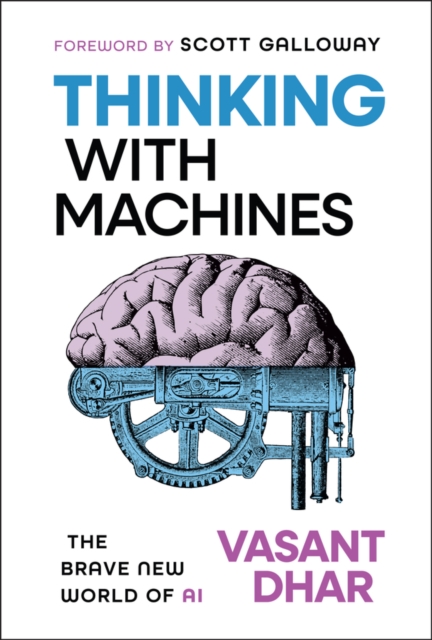
Thinking With Machines: The Brave New World of AI
KSh 4,300.00
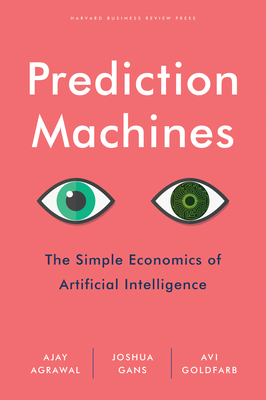
Prediction Machines
KSh 3,950.00

Confident AI
KSh 3,050.00

Responsible AI
KSh 6,400.00
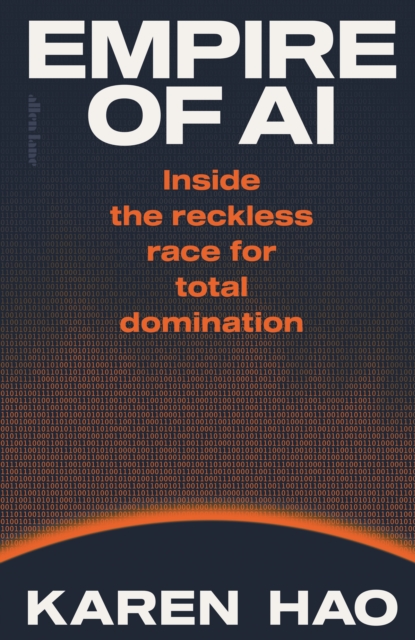
Empire of AI
KSh 4,500.00

The MANIAC
KSh 2,700.00

Data Management, Analytics and Innovation
KSh 32,400.00

