
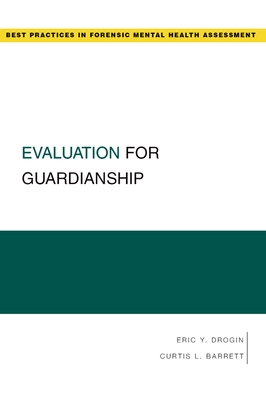
Evaluation for Guardianship
Book Details
Format
Paperback / softback
ISBN-10
0195323602
ISBN-13
9780195323603
Publisher
Oxford University Press Inc
Imprint
Oxford University Press Inc
Country of Manufacture
GB
Country of Publication
GB
Publication Date
Jul 1st, 2010
Print length
176 Pages
Weight
204 grams
Dimensions
22.10 x 13.70 x 1.30 cms
Product Classification:
Criminal or forensic psychology
KSh 11,050.00
Temporarily out of stock, due soon
0 in stock
Delivery Location
Delivery fee: Select location
Secure
Quality
Fast
Forensic mental health assessment (FMHA) has grown into a specialization informed by research and professional guidelines. This series presents up-to-date information on the most important and frequently conducted forms of FMHA. The 19 topical volumes address best approaches to practice for particular types of evaluation in the criminal, civil, and juvenile/family areas. Each volume contains a thorough discussion of the relevant legal and psychological concepts, followed by a step-by-step description of the assessment process from preparing for the evaluation to writing the report and testifying in court.Volumes include the following helpful features:Boxes that zero in on important information for use in evaluationsTips for best practice and cautions against common pitfallsHighlighting of relevant case law and statutesSeparate list of assessment tools for easy referenceHelpful glossary of key terms for the particular topicIn making recommendations for best practice, authors consider empirical support, legal relevance, and consistency with ethical and professional standards. These volumes offer invaluable guidance for anyone involved in conducting or using forensic evaluations.This book considers those legal, ethical and assessment issues that arise when forensic mental health professionals are asked to evaluate the capacity of adults to make independent decisions about the management of their personal and financial affairs. As our population ages, the competence of those who are elderly and mentally infirmed may be challenged more and more frequently, and this book will be an invaluable resource for those involved in assessing that competence.
Forensic mental health assessment (FMHA) has grown into a specialization informed by research and professional guidelines. This series presents up-to-date information on the most important and frequently conducted forms of FMHA. The 19 topical volumes address best approaches to practice for particular types of evaluation in the criminal, civil, and juvenile/family areas. Each volume contains a thorough discussion of the relevant legal and psychological concepts, followed by a step-by-step description of the assessment process from preparing for the evaluation to writing the report and testifying in court. Volumes include the following helpful features:Boxes that zero in on important information for use in evaluationsTips for best practice and cautions against common pitfallsHighlighting of relevant case law and statutesSeparate list of assessment tools for easy referenceHelpful glossary of key terms for the particular topicIn making recommendations for best practice, authors consider empirical support, legal relevance, and consistency with ethical and professional standards. These volumes offer invaluable guidance for anyone involved in conducting or using forensic evaluations. This book considers those legal, ethical and assessment issues that arise when forensic mental health professionals are asked to evaluate the capacity of adults to make independent decisions about the management of their personal and financial affairs. As our population ages, the competence of those who are elderly and mentally infirmed may be challenged more and more frequently, and this book will be an invaluable resource for those involved in assessing that competence.
Get Evaluation for Guardianship by Curtis L. Barrett, Eric Y. Drogin at the best price and quality guaranteed only at Werezi Africa's largest book ecommerce store. The book was published by Oxford University Press Inc and it has 176 pages.
Customers Who Bought This Also Bought
Forensic Case Histories
KSh 7,550.00

Forensic Psychology, Crime and Policing – Key Conc epts and Practical Debates
KSh 7,000.00

Crime and Psychology
KSh 30,950.00
Trial Consulting
KSh 13,050.00

Crime Scripting
KSh 7,900.00

Crime Scripting
KSh 30,950.00
Forensic Psychology
KSh 261,300.00
Clinical Forensic Psychology
KSh 15,850.00

Organizational Change Through Individual Empowerment
KSh 7,750.00
The Explanation of Crime
KSh 17,800.00

Interviewing Vulnerable Suspects
KSh 6,650.00

Policing the Crowd
KSh 30,950.00
