
Search

Categories

    • categories-img Jacket, Women
    • categories-img Woolend Jacket
    • categories-img Western denim
    • categories-img Mini Dresss
    • categories-img Jacket, Women
    • categories-img Woolend Jacket
    • categories-img Western denim
    • categories-img Mini Dresss
    • categories-img Jacket, Women
    • categories-img Woolend Jacket
    • categories-img Western denim
    • categories-img Mini Dresss
    • categories-img Jacket, Women
    • categories-img Woolend Jacket
    • categories-img Western denim
    • categories-img Mini Dresss
    • categories-img Jacket, Women
    • categories-img Woolend Jacket
    • categories-img Western denim
    • categories-img Mini Dresss

Filter By Price

$
-
$

Dietary Needs

Top Rated Product

product-img product-img

Modern Chair

$165.00
product-img product-img

Plastic Chair

$165.00
product-img product-img

Design Rooms

$165.00

Brands

  • Wooden
  • Chair
  • Modern
  • Fabric
  • Shoulder
  • Winter
  • Accessories
  • Dress

Welcome and thank you for visiting us. For any query call us on 0799 626 359 or Email [email protected]

Offcanvas Menu Open

Shopping Cart

Africa largest book store

Sub Total:

Search for any Title

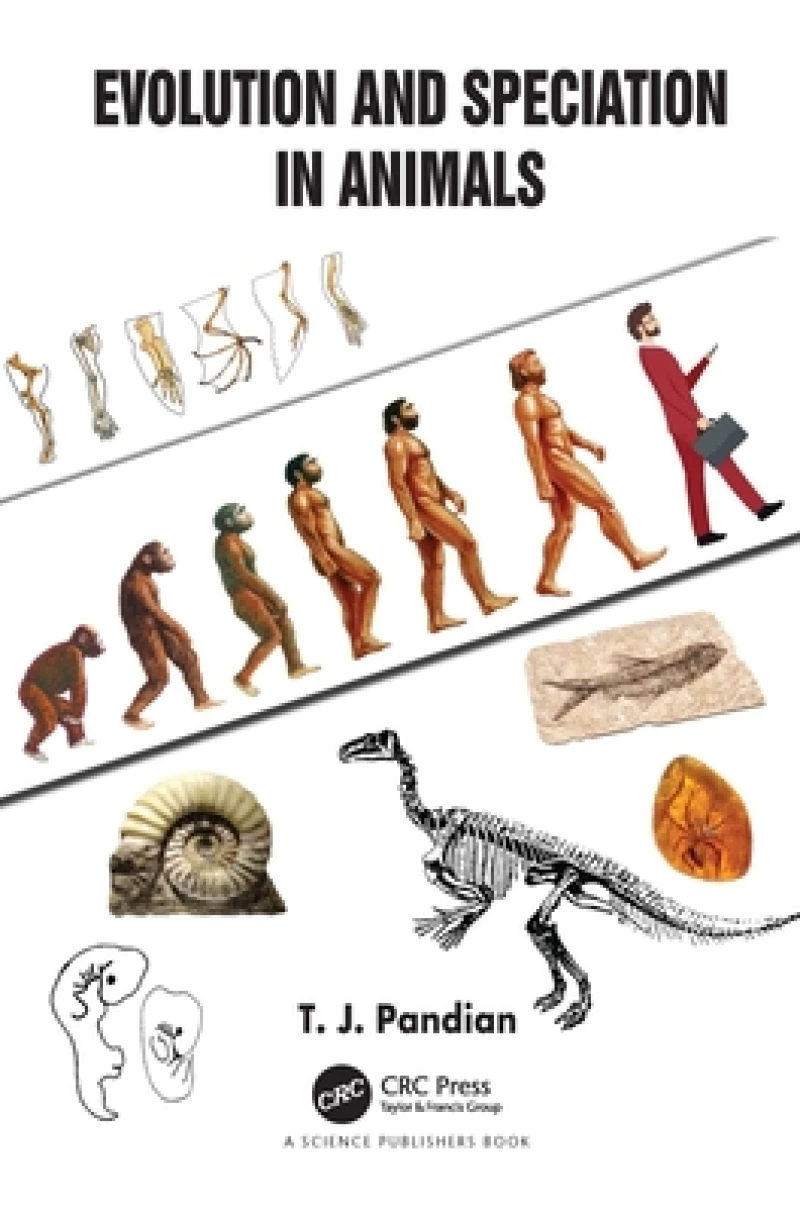
Evolution and Speciation in Animals

By: (Author) T. J. Pandian

Werezi Extended Catalogue
Delivery in 34 days

Ksh 28,800.00

Format: Hardback or Cased Book

ISBN-10: 1032009195

ISBN-13: 9781032009193

Publisher: Taylor & Francis Ltd

Imprint: CRC Press

Country of Manufacture: GB

Country of Publication: GB

Publication Date: Sep 23rd, 2021

Print length: 334 Pages

Weight: 607 grams

Product Classification: Zoology & animal sciences

Choose your Location

Shipping & Delivery

Door Delivery

Delivery fee

Delivery in 34 days

  • Description

  • Reviews

The relatively more motile major phyletics have evolved more toward species diversity, while the relatively low motile or sessile minor phyletics have gone for more phylum diversity. Interestingly, the non-motile plants and microbes have also moved toward strain/racial diversity within a species rather than species diversity.

This book represents the first attempt to quantify environmental factors and life history traits that accelerate or decelerate species diversity in animals. About 15%, 8% and 77% of species are distributed in marine (70% of earth’s surface), freshwater (< 1%) and terrestrial (~ 29%) habitats. Hence, the terra firma fosters more diversity. The harsh hadal, desert and elevated montane habitats restrict diversity to 0.5-4.2%. Costing more time and energy, osmotrophic and suspension modes of food acquisition limit diversity to < 20%. In minor phyletics, evolution has proceeded from a ‘wrong combination’ of low motility and gonochorism to sessility and hermaphroditism. The motile major phyletics are more speciose (166,279 species/phylum) than the latter (1,975 species/phylum). As evolution and speciation are driven by motility, sessility is limited to 2.9% animals.

Selfing hermaphrodites (0.9%), parthenogens (< 0.6%) and clonals (~ 2%) miss meiosis and/or fertilization. Unable to tolerate them together, animals mutually eliminate parthenogenesis and hermaphroditism as well as parthenogenesis and cloning from each other. In clonals, colonial budding (94%) is more common than costlier fragmentation in solitary clonals. The newly proposed hypothesis explains that each stem cell plays an additive role and the required mass of stem cells differs for cloning and regeneration.

Incidence of heterogamety is four-times more in males than in females. Hence, evolution is more a male-driven process. Egg size is determined by environmental factors, but lecithality is genetically fixed. In poikilotherms, sex is also determined by gene(s), but differentiation by environmental factors. The extra-ovarian vitellogenesis (> 96%), spermatozoan (81%) rather than spermatophore mechanism of sperm transfer, promiscuity and polygamy over monogamy, iteroparity (99.6%) over semelparity and internal fertilization (84%) are preferred, as they accelerate diversity. Body size and egg size determine fecundity. Indirect life cycle (82%) and incorporation of feeding larval stages accelerate diversity. Brooding and viviparity (6.4%) decelerate it. Parasitism extends life span and liberates fecundity from eutelism.

Evolution is an ongoing process, and speciation and extinction are its unavoidable by-products. The in-built conservation mechanism of reviving life after a sleeping duration has been reduced from a few million years in microbial spores to a few thousand years in plant seeds and a few hundred years in dormant eggs in animals. Hence, animal conservation requires priority. The existence of temperature-resistant/insensitive individuals, strains and species shall flourish during the ongoing global warming and earth shall continue with such burgeoning species, hopefully inclusive of man.


Get Evolution and Speciation in Animals by at the best price and quality guranteed only at Werezi Africa largest book ecommerce store. The book was published by Taylor & Francis Ltd and it has pages. Enjoy Shopping Best Offers & Deals on books Online from Werezi - Receive at your doorstep - Fast Delivery - Secure mode of Payment

Customer Reviews

Based on 0 reviews

Mind, Body, & Spirit
