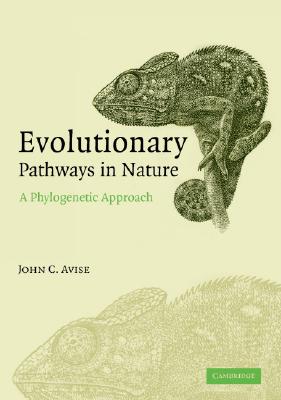
Evolutionary Pathways in Nature : A Phylogenetic Approach
Book Details
Format
Paperback / softback
ISBN-10
0521674174
ISBN-13
9780521674171
Publisher
Cambridge University Press
Imprint
Cambridge University Press
Country of Manufacture
GB
Country of Publication
GB
Publication Date
May 4th, 2006
Print length
298 Pages
Weight
614 grams
Dimensions
24.70 x 17.30 x 1.50 cms
Product Classification:
Ecological science, the BiosphereEvolutionEvolution / Evolutionary biology
KSh 14,050.00
Currently unavailable
0 in stock
Delivery Location
Delivery fee: Select location
Secure
Quality
Fast
This book provides a non-technical introduction to how phylogenetic analyses can be used to understand evolutionary pathways. The author escorts readers on historical journeys into the origins of many of nature's most intriguing evolutionary outcomes, from the toucan's enormous bill to pregnant male seahorses.
Reconstructing phylogenetic trees from DNA sequences has become a popular exercise in many branches of biology, and here the well-known geneticist John Avise explains why. Molecular phylogenies provide a genealogical backdrop for interpreting the evolutionary histories of many other types of biological traits (anatomical, behavioral, ecological, physiological, biochemical and even geographical). Guiding readers on a natural history tour along dozens of evolutionary pathways, the author describes how creatures ranging from microbes to elephants came to possess their current phenotypes. Essential reading for college students, professional biologists and anyone interested in natural history and biodiversity, this book is packed with fascinating examples of evolutionary puzzles from across the animal kingdom; how the toucan got its enormous bill, how reptiles grow back lost limbs and why Arctic fish don''t freeze.
Get Evolutionary Pathways in Nature by John C. Avise at the best price and quality guaranteed only at Werezi Africa's largest book ecommerce store. The book was published by Cambridge University Press and it has 298 pages.
Customers Who Bought This Also Bought

Is a River Alive?
KSh 2,150.00

Heretics Of Dune
KSh 2,000.00

Blue Machine
KSh 2,150.00

Genius of Trees
KSh 4,500.00
Genius of Trees
KSh 3,050.00
Genius of Trees
KSh 2,350.00

For Everyone Bible Study Guide: James
KSh 1,250.00

Deep History of Ourselves
KSh 3,250.00

Deep History of Ourselves
KSh 5,400.00

Is a River Alive?
KSh 4,500.00

Kinship: Vol. 5 Practice
KSh 3,250.00
Aristotle's Classification of Animals
KSh 14,400.00