
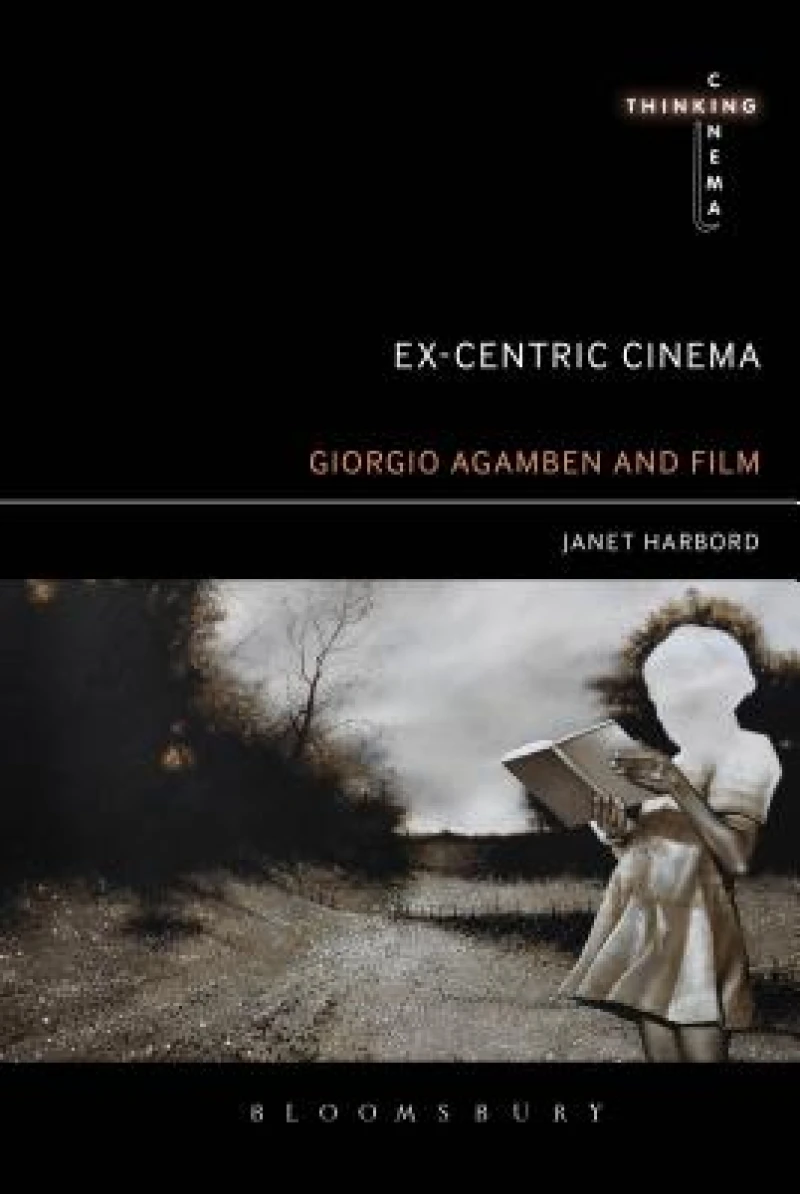
Ex-centric Cinema Giorgio Agamben and Film Archaeology : Giorgio Agamben and Film Archaeology
Book Details
Format
Paperback / Softback
Book Series
Thinking Cinema
ISBN-10
1628922419
ISBN-13
9781628922417
Publisher
Bloomsbury Publishing Plc
Imprint
Bloomsbury Academic
Country of Manufacture
GB
Country of Publication
GB
Publication Date
Oct 20th, 2016
Print length
272 Pages
Weight
428 grams
Dimensions
22.80 x 15.40 x 2.00 cms
Product Classification:
Film theory & criticismFilm history, theory or criticism
Ksh 5,400.00
Manufactured on Demand
0 in stock
Delivery Location
Delivery fee: Select location
Secure
Quality
Fast
In the beginning, cinema was an encounter between humans, images and machine technology, revealing a stream of staccato gestures, micrographic worlds, and landscapes seen from above and below. In this sense, cinema''s potency was its ability to bring other, non-human modes of being into view, to forge an encounter between multiple realities that nonetheless co-exist. Yet the story of cinema became (through its institutionalization) one in which the human swiftly assumed centrality through the literary crafting of story, character and the expression of interiority.
Ex-centric Cinematakes an archaeological approach to the study of cinema through the writings of philosopher Giorgio Agamben, arguing that whilst we have a century-long tradition of cinema, the possibility of what cinema may have become is not lost, but co-exists in the present as an unexcavated potential. The term given to this history is ex-centric cinema, describing a centre-less moving image culture where animals, children, ghosts and machines are privileged vectors, where film is always an incomplete project, and where audiences are a coming community of ephemeral connections and links. Discussing such filmmakers as Harun Farocki, the Lumiere Brothers, Guy Debord and Wong Kar-wai, Janet Harbord draws connections with Agamben to propose a radically different way of thinking about cinema.
Ex-centric Cinematakes an archaeological approach to the study of cinema through the writings of philosopher Giorgio Agamben, arguing that whilst we have a century-long tradition of cinema, the possibility of what cinema may have become is not lost, but co-exists in the present as an unexcavated potential. The term given to this history is ex-centric cinema, describing a centre-less moving image culture where animals, children, ghosts and machines are privileged vectors, where film is always an incomplete project, and where audiences are a coming community of ephemeral connections and links. Discussing such filmmakers as Harun Farocki, the Lumiere Brothers, Guy Debord and Wong Kar-wai, Janet Harbord draws connections with Agamben to propose a radically different way of thinking about cinema.
Get Ex-centric Cinema Giorgio Agamben and Film Archaeology by at the best price and quality guaranteed only at Werezi Africa's largest book ecommerce store. The book was published by Bloomsbury Publishing Plc and it has pages.

