
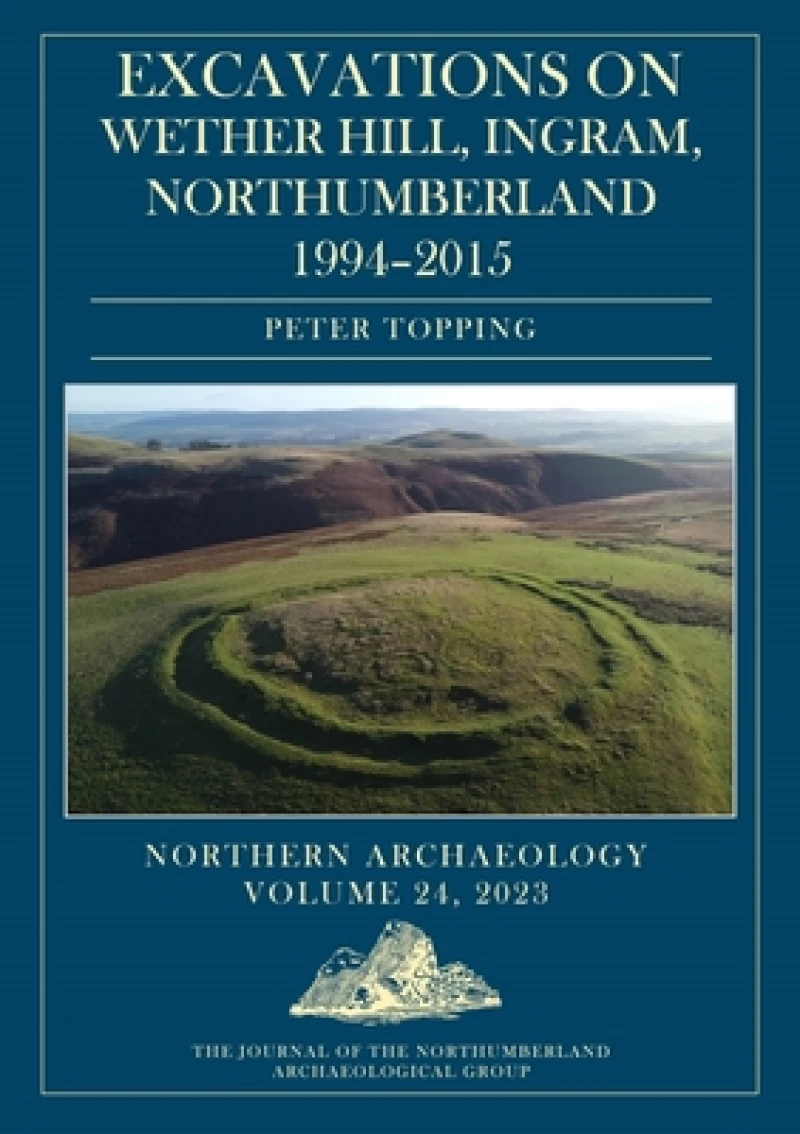
Excavations on Wether Hill, Ingram, Northumberland, 1994–2015
Book Details
Format
Hardback or Cased Book
ISBN-10
178925969X
ISBN-13
9781789259698
Publisher
Oxbow Books
Imprint
Oxbow Books
Country of Manufacture
GB
Country of Publication
GB
Publication Date
Jul 15th, 2023
Print length
152 Pages
Weight
940 grams
Dimensions
21.70 x 30.50 x 1.80 cms
Ksh 8,200.00
Temporarily out of stock, due soon
0 in stock
Delivery Location
Delivery fee: Select location
Secure
Quality
Fast
Explores the well-preserved archaeological landscape around Wether Hill in the English-Scottish borderlands.
The Northumberland Archaeological Group’s (NAG) Wether Hill project spanned the years 1994–2015 and was located on the eponymous hilltop overlooking the mouth of the Breamish Valley in the Northumberland Cheviots. The project had been inspired by the RCHME’s ‘Southeast Cheviots Project’ that had discovered and recorded extensive prehistoric and later landscapes. The NAG project investigated several sites. Over the 11 seasons of excavation, NAG recorded evidence of residual Mesolithic activity (microliths), a burial cairn containing two Beakers in an oak coffin, which was superseded by a stone-built cist containing three Food Vessels, Iron Age cord rig cultivation and clearance cairns, a series of Middle/Late Iron Age timber-built palisaded enclosures, a cross-ridge dyke, which protected the southern approach to the Wether Hill fort, and sampled the multi-period bivallate hillfort. The hillfort sequence on Wether Hill began with a succession of palisaded enclosures, which were later replaced by bivallate earth and stone defenses; both phases appear to have been associated with timber-built houses. Eventually the fort was abandoned, and three stone-built roundhouses were constructed in the fort. The 18 radiocarbon dates obtained from various contexts in the hillfort makes this site one of the better dated forts in the Borders. The chronology of the Wether Hill fort spanned the Middle/Late Iron Age, which corresponds with dates from palisaded enclosures excavated elsewhere on the hilltop spur. Taken together, this evidence provides a snapshot of settlement hierarchies and agricultural practices during the later Iron Age in this part of the Northumberland Cheviots. The excavations also help contextualise some of the RCHME survey evidence, providing data to model chronology, potential prehistoric settlement density and land-use patterns at different time periods in the well-preserved archaeological landscapes of the Cheviots.
Get Excavations on Wether Hill, Ingram, Northumberland, 1994–2015 by at the best price and quality guaranteed only at Werezi Africa's largest book ecommerce store. The book was published by Oxbow Books and it has pages.

