
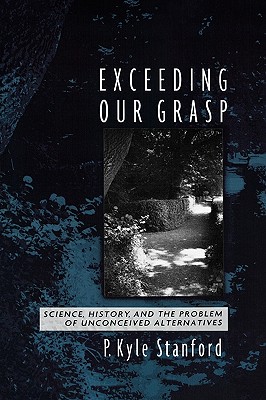
Exceeding Our Grasp : Science, History, and the Problem of Unconceived Alternatives
Book Details
Format
Hardback
ISBN-10
0195174089
ISBN-13
9780195174083
Publisher
Oxford University Press Inc
Imprint
Oxford University Press Inc
Country of Manufacture
GB
Country of Publication
GB
Publication Date
May 25th, 2006
Print length
248 Pages
Weight
513 grams
Dimensions
24.10 x 16.20 x 2.20 cms
Product Classification:
PhilosophyPhilosophy of science
KSh 18,050.00
Temporarily out of stock, due soon
0 in stock
Delivery Location
Delivery fee: Select location
Secure
Quality
Fast
History reveals our routine failure to even conceive of well-confirmed alternatives to our scientific theories, Stanford argues, and similar alternatives to our own theories likely remain presently unconceived. Stanford shows why existing defences of scientific realism cannot evade the problem and propose an alternative positive image of the scientific enterprise.
The incredible achievements of modern scientific theories lead most of us to embrace scientific realism: the view that our best theories offer us at least roughly accurate descriptions of otherwise inaccessible parts of the world like genes, atoms, and the big bang. In Exceeding Our Grasp, Stanford argues that careful attention to the history of scientific investigation invites a challenge to this view that is not well represented in contemporary debates about the nature of the scientific enterprise. The historical record of scientific inquiry, Stanford suggests, is characterized by what he calls the problem of unconceived alternatives. Past scientists have routinely failed even to conceive of alternatives to their own theories and lines of theoretical investigation, alternatives that were both well-confirmed by the evidence available at the time and sufficiently serious as to be ultimately accepted by later scientific communities. Stanford supports this claim with a detailed investigation of the mid-to-late 19th century theories of inheritance and generation proposed in turn by Charles Darwin, Francis Galton, and August Weismann. He goes on to argue that this historical pattern strongly suggests that there are equally well-confirmed and scientifically serious alternatives to our own best theories that remain currently unconceived. Moreover, this challenge is more serious than those rooted in either the so-called pessimistic induction or the underdetermination of theories by evidence, in part because existing realist responses to these latter challenges offer no relief from the problem of unconceived alternatives itself. Stanford concludes by investigating what positive account of the spectacularly successful edifice of modern theoretical science remains open to us if we accept that our best scientific theories are powerful conceptual tools for accomplishing our practical goals, but abandon the view that the descriptions of the world around us that they offer are therefore even probably or approximately true.
Get Exceeding Our Grasp by P. Kyle Stanford at the best price and quality guaranteed only at Werezi Africa's largest book ecommerce store. The book was published by Oxford University Press Inc and it has 248 pages.
Customers Who Bought This Also Bought

Decolonizing Language and Other Revolutionary Ideas
KSh 2,350.00

How to Read a Book
KSh 2,000.00
Decolonizing Language and Other Revolutionary Ideas
KSh 3,600.00

Creative Act
KSh 3,250.00
Groundwork for the Metaphysics of Morals
KSh 2,000.00

Things in Nature Merely
KSh 2,000.00

Meditations – The Philosophy Classic
KSh 2,150.00

Great Ideas Social Contract
KSh 1,450.00

How to Be a Leader – An Ancient Guide to Wise Leadership
KSh 2,800.00
The Daily Laws
KSh 2,350.00

Three Critiques, 3-volume Set
KSh 14,000.00

Philosophical Dictionary
KSh 2,700.00
