
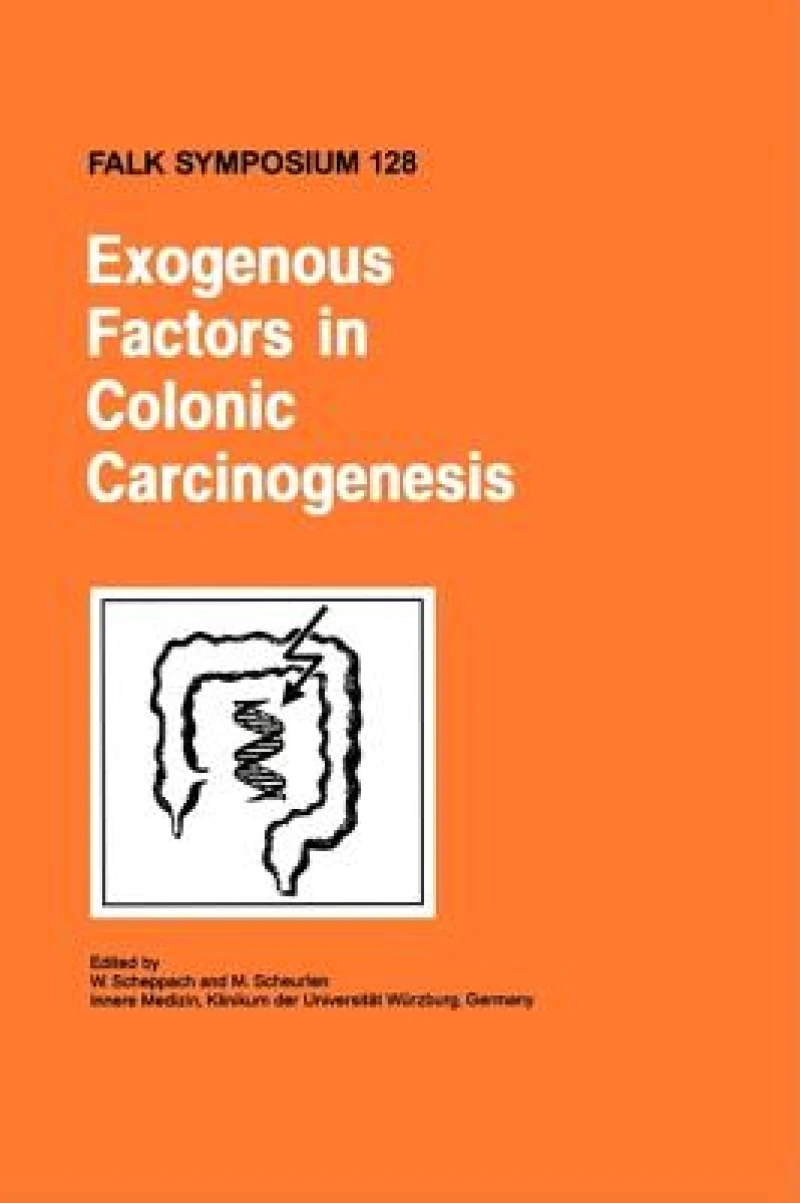
Exogenous Factors in Colonic Carcinogenesis
2003 ed.
Book Details
Format
Hardback or Cased Book
Book Series
Falk Symposium
ISBN-10
0792387805
ISBN-13
9780792387800
Edition
2003 ed.
Publisher
Kluwer Academic Publishers
Imprint
Kluwer Academic Publishers
Country of Manufacture
GB
Country of Publication
GB
Publication Date
Jan 31st, 2003
Print length
328 Pages
Product Classification:
OncologyGastroenterology
Ksh 23,400.00
Werezi Extended Catalogue
0 in stock
Delivery Location
Delivery fee: Select location
Secure
Quality
Fast
Thus, the pathogenesis of the two distinct familial colon cancer syndromes FAP (familial adenomatous polyposis) and HNPCC (hereditary non-polyposis colorectal cancer) is increasingly being understood.
This book is the proceedings of Falk Symposium 128, held in Würzburg, Germany, on May 2-3, 2002, and dedicated to the important issue of colonic carcinogenesis and its underlying genetic and environmental factors.
Colorectal cancer is one of the leading causes of cancer-related death in industrialized countries. It has been recognized to be the consequence of a dynamic process leading from hyperproliferative epithelium through different classes of adenomas to invasive carcinoma. This adenoma-carcinoma sequence has been characterized on a molecular basis. Modern molecular biology has also helped to clarify the clustering of colorectal cancer within families, a phenomenon that has been known to clinicians for a long time. Thus, the pathogenesis of the two distinct familial colon cancer syndromes FAP (familial adenomatous polyposis) and HNPCC (hereditary non-polyposis colorectal cancer) is increasingly being understood. Thereby, an identification of affected people has become possible before the disease has manifested.
There is also convincing evidence that the pathogenesis of sporadic colonic cancer is modulated by environmental, mainly nutritional, factors. Carcinogens seem to be far less important than the components of the `normal'' human diet. It is likely that the interplay between protective and noxious dietary compounds determines the progression of the adenoma-carcinoma sequence. Additionally, a broad spectrum of drugs has been shown to affect colonic tumorigenesis, which provides the rationale for chemoprevention strategies. These issues set the scene for discussions on how genetic and environmental factors may interact in the pathogenesis of colonic cancer, contributing fresh ideas to the prevention of this most prevalent malignancy in the industrialized world.
Colorectal cancer is one of the leading causes of cancer-related death in industrialized countries. It has been recognized to be the consequence of a dynamic process leading from hyperproliferative epithelium through different classes of adenomas to invasive carcinoma. This adenoma-carcinoma sequence has been characterized on a molecular basis. Modern molecular biology has also helped to clarify the clustering of colorectal cancer within families, a phenomenon that has been known to clinicians for a long time. Thus, the pathogenesis of the two distinct familial colon cancer syndromes FAP (familial adenomatous polyposis) and HNPCC (hereditary non-polyposis colorectal cancer) is increasingly being understood. Thereby, an identification of affected people has become possible before the disease has manifested.
There is also convincing evidence that the pathogenesis of sporadic colonic cancer is modulated by environmental, mainly nutritional, factors. Carcinogens seem to be far less important than the components of the `normal'' human diet. It is likely that the interplay between protective and noxious dietary compounds determines the progression of the adenoma-carcinoma sequence. Additionally, a broad spectrum of drugs has been shown to affect colonic tumorigenesis, which provides the rationale for chemoprevention strategies. These issues set the scene for discussions on how genetic and environmental factors may interact in the pathogenesis of colonic cancer, contributing fresh ideas to the prevention of this most prevalent malignancy in the industrialized world.
Get Exogenous Factors in Colonic Carcinogenesis by at the best price and quality guaranteed only at Werezi Africa's largest book ecommerce store. The book was published by Kluwer Academic Publishers and it has pages.

