
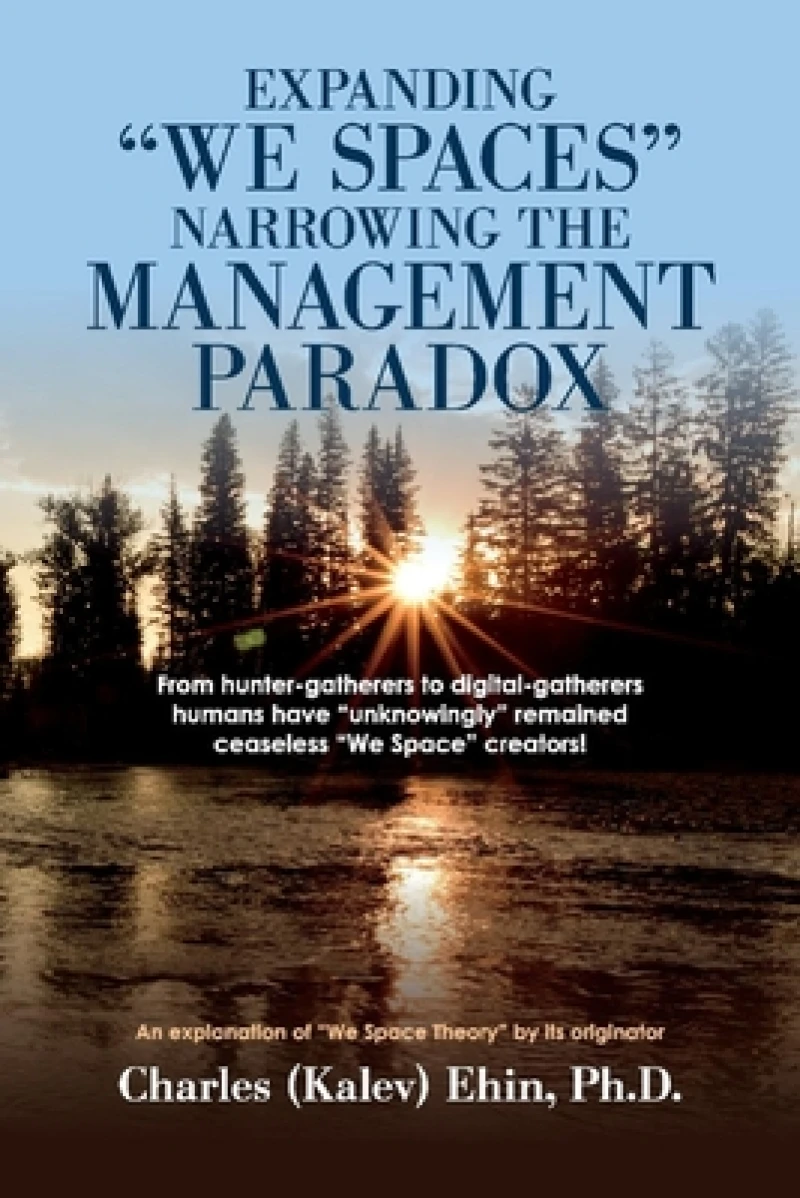
Expanding "We Spaces" Narrowing the Management Paradox : An Explanation of We Space Theory by its Originator
by
Charles Ehin
Book Details
Format
Paperback / Softback
ISBN-10
1098324714
ISBN-13
9781098324711
Publisher
BookBaby
Imprint
BookBaby
Country of Manufacture
US
Country of Publication
GB
Publication Date
Nov 18th, 2020
Print length
44 Pages
Weight
86 grams
Dimensions
22.90 x 15.20 x 2.50 cms
Product Classification:
Business & managementBusiness and ManagementManagement decision making
Ksh 1,250.00
Werezi Extended Catalogue
0 in stock
Delivery Location
Delivery fee: Select location
Secure
Quality
Fast
Since the Agricultural Revolution, roughly 12,000 years ago, we have gradually developed a two-pronged approach to managing people. One is the practice of using managers to assure that every member of an organization reporting to them thoroughly understands what''s expected of them and properly follow established goals and directives. Concurrently, bosses expect every subordinate to be as fully engaged with their assignments and designated coworkers—perform integrated self-management.
Using both approaches simultaneously is far from ideal. It usually does produce "adequate" results but considerably less than using the latter method independently. Specifically, dominance (attempted control of others) instantaneously generates subconscious resistance since it is a "perceived threat." Conversely, extended autonomy (self-management) instantaneously generates perceived acceptance since it''s a "perceived reward."
We Spaces are not new. They have been the "key features" of all social systems since before the dawn of our species. We are members of countless We Spaces throughout our lives. Yet, we pay little attention to them, especially in our formal/public institutions, since they tend to be "invisible," conveniently tucked away in our subconscious minds.
Essentially, We Spaces are the "relatively small intimate and voluntarily formed well-being zones" that provide comfort and sustenance to all of us as much as possible. They are also key to the preservation of our individual identities. It''s the recognition by all that collaboration, instead of attempts at domination, are in the best interest of everyone involved.
Using both approaches simultaneously is far from ideal. It usually does produce "adequate" results but considerably less than using the latter method independently. Specifically, dominance (attempted control of others) instantaneously generates subconscious resistance since it is a "perceived threat." Conversely, extended autonomy (self-management) instantaneously generates perceived acceptance since it''s a "perceived reward."
We Spaces are not new. They have been the "key features" of all social systems since before the dawn of our species. We are members of countless We Spaces throughout our lives. Yet, we pay little attention to them, especially in our formal/public institutions, since they tend to be "invisible," conveniently tucked away in our subconscious minds.
Essentially, We Spaces are the "relatively small intimate and voluntarily formed well-being zones" that provide comfort and sustenance to all of us as much as possible. They are also key to the preservation of our individual identities. It''s the recognition by all that collaboration, instead of attempts at domination, are in the best interest of everyone involved.
Get Expanding "We Spaces" Narrowing the Management Paradox by at the best price and quality guaranteed only at Werezi Africa's largest book ecommerce store. The book was published by BookBaby and it has pages.

