

Experiments in Ethics
Book Details
Format
Paperback / softback
Book Series
Mary Flexner Lectures of Bryn Mawr College
ISBN-10
0674034570
ISBN-13
9780674034570
Publisher
Harvard University Press
Imprint
Harvard University Press
Country of Manufacture
US
Country of Publication
GB
Publication Date
Oct 1st, 2009
Print length
288 Pages
Weight
408 grams
Dimensions
19.90 x 12.90 x 2.00 cms
Product Classification:
Ethics & moral philosophyEthics and moral philosophy
KSh 3,750.00
Temporarily out of stock, due soon
0 in stock
Delivery Location
Delivery fee: Select location
Secure
Quality
Fast
Appiah explores how new empirical moral psychology relates to the age-old project of philosophical ethics, urging that the relation between empirical research and morality, now so often antagonistic, should be seen in terms of dialogue, not contest. He thereby shows how experimental philosophy is actually as old as philosophy itself.
In the past few decades, scientists of human nature—including experimental and cognitive psychologists, neuroscientists, evolutionary theorists, and behavioral economists—have explored the way we arrive at moral judgments. They have called into question commonplaces about character and offered troubling explanations for various moral intuitions. Research like this may help explain what, in fact, we do and feel. But can it tell us what we ought to do or feel? In Experiments in Ethics, the philosopher Kwame Anthony Appiah explores how the new empirical moral psychology relates to the age-old project of philosophical ethics. Some moral theorists hold that the realm of morality must be autonomous of the sciences; others maintain that science undermines the authority of moral reasons. Appiah elaborates a vision of naturalism that resists both temptations. He traces an intellectual genealogy of the burgeoning discipline of "experimental philosophy," provides a balanced, lucid account of the work being done in this controversial and increasingly influential field, and offers a fresh way of thinking about ethics in the classical tradition. Appiah urges that the relation between empirical research and morality, now so often antagonistic, should be seen in terms of dialogue, not contest. And he shows how experimental philosophy, far from being something new, is actually as old as philosophy itself. Beyond illuminating debates about the connection between psychology and ethics, intuition and theory, his book helps us to rethink the very nature of the philosophical enterprise.
Get Experiments in Ethics by Kwame Anthony Appiah at the best price and quality guaranteed only at Werezi Africa's largest book ecommerce store. The book was published by Harvard University Press and it has 288 pages.
Customers Who Bought This Also Bought

Xmeditations
KSh 700.00

Groundwork for the Metaphysics of Morals
KSh 2,000.00

On the Genealogy of Morals
KSh 2,000.00

Beyond Good and Evil
KSh 2,000.00
The Nicomachean Ethics
KSh 1,600.00

The Sovereignty of Good
KSh 5,400.00

Justice
KSh 2,000.00

Meditations
KSh 1,600.00
What We Owe The Future
KSh 2,000.00

The Analects
KSh 2,350.00

How to Be a Leader – An Ancient Guide to Wise Leadership
KSh 2,800.00

There Are Places in the World Where Rules Are Less Important Than Kindness
KSh 3,600.00
More by Kwame Anthony Appiah

Captive Gods
KSh 2,700.00

Captive Gods – Religion and the Rise of Social Science
KSh 4,000.00

Dusk of Dawn (The Oxford W. E. B. Du Bois)
KSh 4,400.00
Color Conscious
KSh 7,200.00

In My Father's House
KSh 5,300.00

The Lies That Bind
KSh 1,800.00
As If – Idealization and Ideals
KSh 2,850.00

The Ethics of Identity
KSh 3,050.00
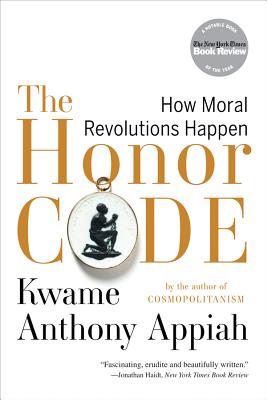
The Honor Code – How Moral Revolutions Happen
KSh 2,350.00

The Ethics of Identity
KSh 5,400.00

Cosmopolitanism
KSh 2,350.00
