
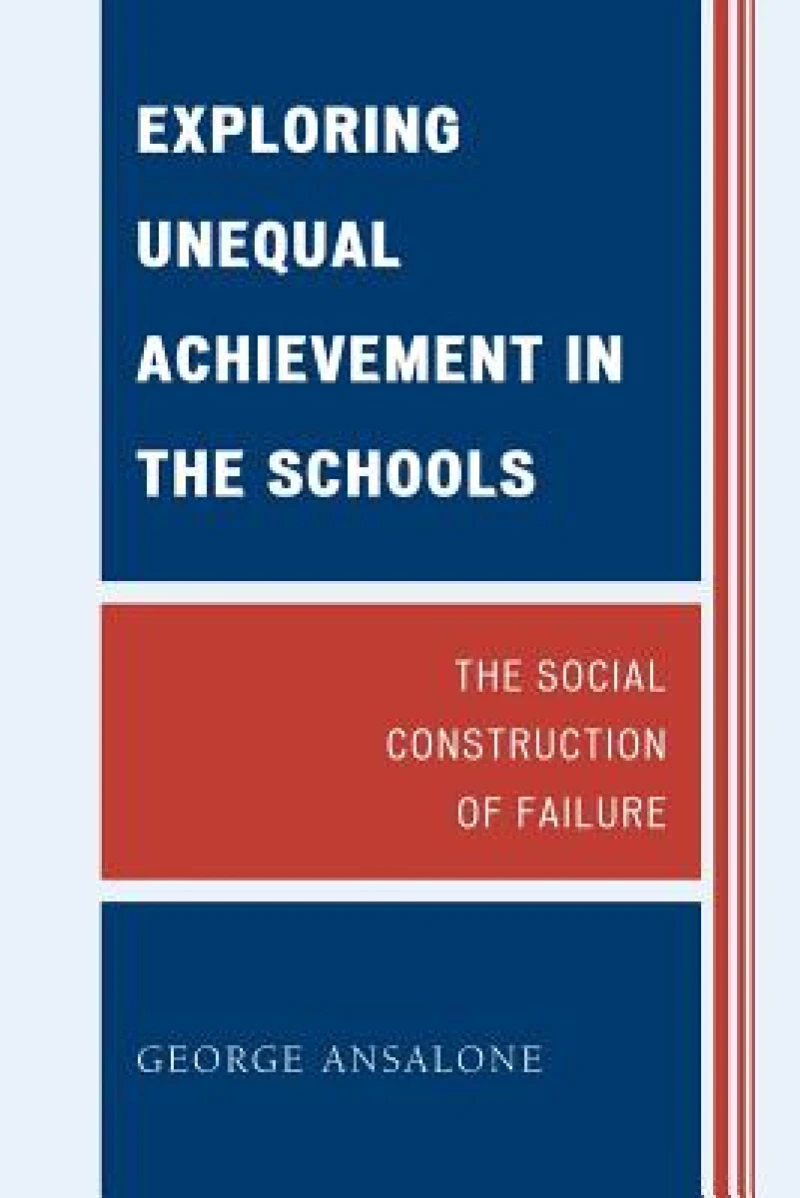
Exploring Unequal Achievement in the Schools : The Social Construction of Failure
Book Details
Format
Paperback / Softback
ISBN-10
0739124692
ISBN-13
9780739124697
Publisher
Bloomsbury Publishing Plc
Imprint
Lexington Books
Country of Manufacture
GB
Country of Publication
GB
Publication Date
Sep 14th, 2010
Print length
256 Pages
Weight
388 grams
Dimensions
15.10 x 22.90 x 2.00 cms
Product Classification:
Ethnic minorities & multicultural studiesEducation
Ksh 8,600.00
Manufactured on Demand
0 in stock
Delivery Location
Delivery fee: Select location
Secure
Quality
Fast
One of the most disturbing problems in American education today is the unequal achievement of children in schools. Few problems have sparked greater concern than the issue of why students from different social origins differ so significantly in their academic performance. This book explores the role played by families and schools in this troubling problem. It employs a social constructionist approach in considering how ascribed characteristics (race, gender, and class) intersect with the daily interactions of teachers and students in classrooms and with the educational practices and structures within schools (tracking, testing, and teacher expectations) to play an exacting role in the construction of success or failure. It suggests that the new student identity that begins to emerge as a result of these processes provides a self-fulfilling prophesy of expectation and belief, which defines how students see themselves as learners and achievers. Through these practices, schooling becomes a crucial factor in the social construction of academic success. The author's final conclusion is inescapable: unequal achievement in school is largely a social construction. But it is a social construction facilitated both by student attributes including gender, race, and class and by the educational structures and policies some schools employ. Because of this undeniable fact, parents, educational practitioners, and policy makers must continue to investigate social policies and practices relative to student abilities and make every effort to understand how they may be related to achievement. Informed by research, they must endeavor to see this power inherent in schooling and the need to effect change.
One of the most disturbing problems in American education today is the unequal achievement of children in schools. Few problems have sparked greater concern than the issue of why students from different social origins differ so significantly in their academic performance. This book explores the role played by families and schools in this troubling problem. It employs a social constructionist approach in considering how ascribed characteristics (race, gender, and class) intersect with the daily interactions of teachers and students in classrooms and with the educational practices and structures within schools (tracking, testing, and teacher expectations) to play an exacting role in the construction of success or failure. It suggests that the new student identity that begins to emerge as a result of these processes provides a self-fulfilling prophesy of expectation and belief, which defines how students see themselves as learners and achievers. Through these practices, schooling becomes a crucial factor in the social construction of academic success. The author''s final conclusion is inescapable: unequal achievement in school is largely a social construction. But it is a social construction facilitated both by student attributes including gender, race, and class and by the educational structures and policies some schools employ. Because of this undeniable fact, parents, educational practitioners, and policy makers must continue to investigate social policies and practices relative to student abilities and make every effort to understand how they may be related to achievement. Informed by research, they must endeavor to see this power inherent in schooling and the need to effect change.
Get Exploring Unequal Achievement in the Schools by at the best price and quality guaranteed only at Werezi Africa's largest book ecommerce store. The book was published by Bloomsbury Publishing Plc and it has pages.

