
Cart 0
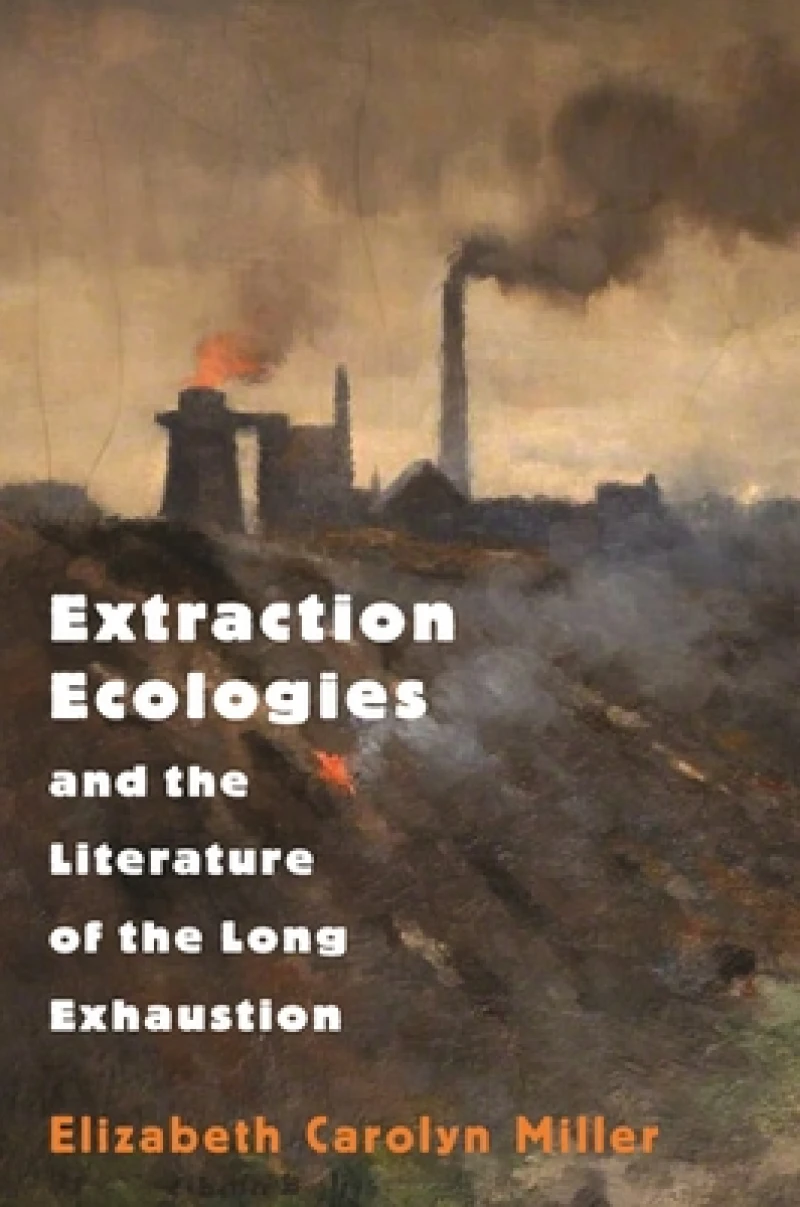
Extraction Ecologies and the Literature of the Long Exhaustion
Click to zoom

Share this book

Extraction Ecologies and the Literature of the Long Exhaustion

Book Details

Format Hardback or Cased Book
ISBN-10 0691205264
ISBN-13 9780691205267
Publisher Princeton University Press
Imprint Princeton University Press
Country of Manufacture GB
Country of Publication GB
Publication Date Oct 12th, 2021
Print length 304 Pages
Weight 640 grams
Dimensions 16.20 x 24.20 x 2.50 cms
Ksh 16,550.00
Werezi Extended Catalogue Delivery in 28 days

Delivery Location

Delivery fee: Select location

Delivery in 28 days

Secure
Quality
Fast
How literature of the British imperial world contended with the social and environmental consequences of industrial miningThe 1830s to the 1930s saw the rise of large-scale industrial mining in the British imperial world. Elizabeth Carolyn Miller examines how literature of this era reckoned with a new vision of civilization where humans are dependent on finite, nonrenewable stores of earthly resources, and traces how the threatening horizon of resource exhaustion worked its way into narrative form. Britain was the first nation to transition to industry based on fossil fuels, which put its novelists and other writers in the remarkable position of mediating the emergence of extraction-based life. Miller looks at works like Hard Times, The Mill on the Floss, and Sons and Lovers, showing how the provincial realist novel’s longstanding reliance on marriage and inheritance plots transforms against the backdrop of exhaustion to withhold the promise of reproductive futurity. She explores how adventure stories like Treasure Island and Heart of Darkness reorient fictional space toward the resource frontier. And she shows how utopian and fantasy works like “Sultana’s Dream,” The Time Machine, and The Hobbit offer imaginative ways of envisioning energy beyond extractivism. This illuminating book reveals how an era marked by violent mineral resource rushes gave rise to literary forms and genres that extend extractivism as a mode of environmental understanding.

How literature of the British imperial world contended with the social and environmental consequences of industrial mining

The 1830s to the 1930s saw the rise of large-scale industrial mining in the British imperial world. Elizabeth Carolyn Miller examines how literature of this era reckoned with a new vision of civilization where humans are dependent on finite, nonrenewable stores of earthly resources, and traces how the threatening horizon of resource exhaustion worked its way into narrative form.

Britain was the first nation to transition to industry based on fossil fuels, which put its novelists and other writers in the remarkable position of mediating the emergence of extraction-based life. Miller looks at works like Hard Times, The Mill on the Floss, and Sons and Lovers, showing how the provincial realist novel’s longstanding reliance on marriage and inheritance plots transforms against the backdrop of exhaustion to withhold the promise of reproductive futurity. She explores how adventure stories like Treasure Island and Heart of Darkness reorient fictional space toward the resource frontier. And she shows how utopian and fantasy works like “Sultana’s Dream,” The Time Machine, and The Hobbit offer imaginative ways of envisioning energy beyond extractivism.

This illuminating book reveals how an era marked by violent mineral resource rushes gave rise to literary forms and genres that extend extractivism as a mode of environmental understanding.


Get Extraction Ecologies and the Literature of the Long Exhaustion by at the best price and quality guaranteed only at Werezi Africa's largest book ecommerce store. The book was published by Princeton University Press and it has pages.


Mind, Body, & Spirit

Price

Ksh 16,550.00

Shopping Cart

Africa largest book store

Sub Total:
Ebooks

Digital Library
Coming Soon

Our digital collection is currently being curated to ensure the best possible reading experience on Werezi. We'll be launching our Ebooks platform shortly.