
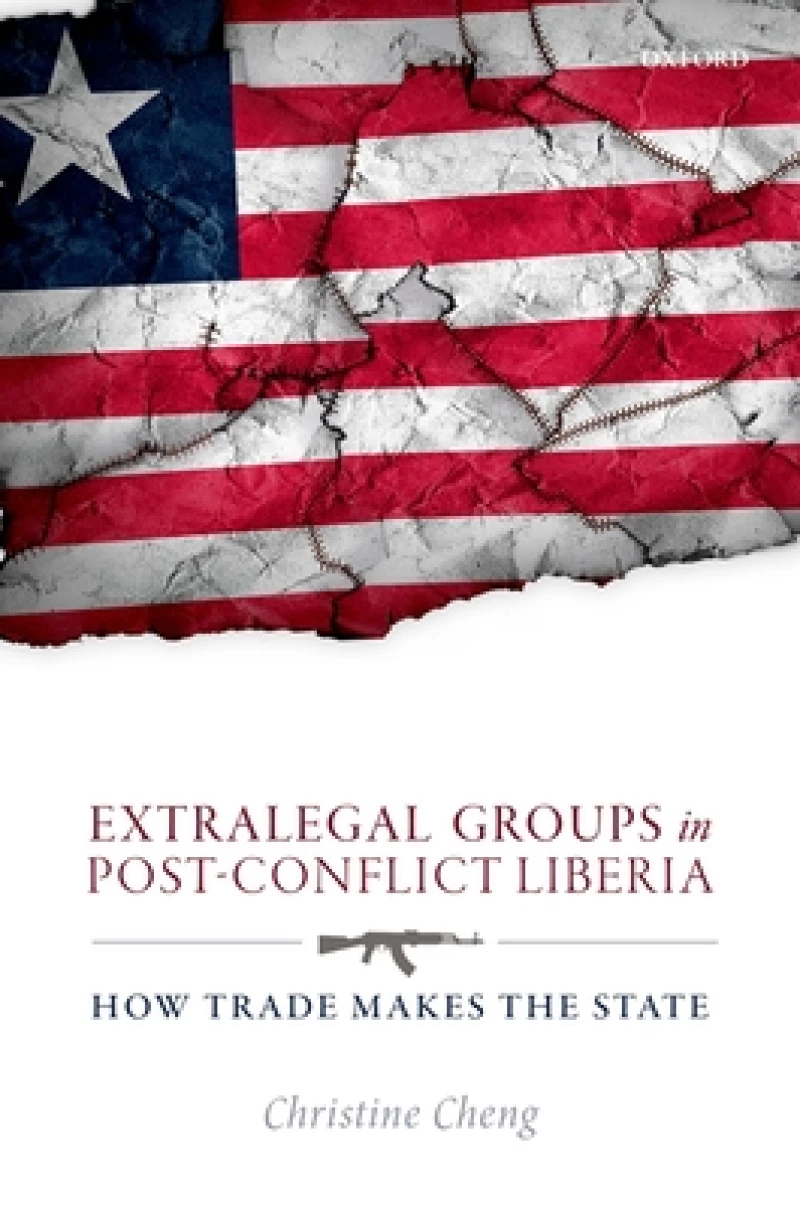
Extralegal Groups in Post-Conflict Liberia : How Trade Makes the State
Book Details
Format
Hardback or Cased Book
ISBN-10
0199673349
ISBN-13
9780199673346
Publisher
Oxford University Press
Imprint
Oxford University Press
Country of Manufacture
GB
Country of Publication
GB
Publication Date
Jun 7th, 2018
Print length
384 Pages
Weight
732 grams
Dimensions
16.60 x 24.10 x 3.20 cms
Product Classification:
Comparative politicsInternational relationsPeacekeeping operationsPolitical economy
Ksh 19,300.00
Manufactured on Demand
0 in stock
Delivery Location
Delivery fee: Select location
Secure
Quality
Fast
This book examines how the economic survival strategies of former fighters in Liberia can help explain the trajectories of war-to-peace transitions.
In the aftermath of the Liberian civil war, groups of ex-combatants seized control of natural resource enclaves in the rubber, diamond, and timber sectors. With some of them threatening a return to war, these groups were widely viewed as the most significant threats to Liberia''s hard-won peace. Building on fieldwork and socio-historical analysis, this book shows how extralegal groups are driven to provide basic governance goods in their bid to create a stable commercial environment. This is a story about how their livelihood strategies merged with the opportunities of Liberia''s post-war political economy. But it is also a context-specific story that is rooted in the country''s geography, its history of state-making, and its social and political practices. This volume demonstrates that extralegal groups do not emerge in a vacuum.In areas of limited statehood, where the state is weak and political authority is contested, where rule of law is corrupted and government distrust runs deep, extralegal groups can provide order and dispute resolution, forming the basic kernel of the state. This logic counters the prevailing ''spoiler'' narrative, forcing us to reimagine non-state actors and recast their roles as incidental statebuilders in the evolutionary process of state-making. This leads to a broader argument: it is trade, rather than war, that drives contemporary statebuilding. Along the way, this book poses some uncomfortable questions about what it means to be legitimately governed, whether our trust in states is ultimately misplaced, whether entrenched corruption is the most likely post-conflict outcome, and whether our expectations of international peacebuilding and statebuilding are ultimately self-defeating.
Get Extralegal Groups in Post-Conflict Liberia by at the best price and quality guaranteed only at Werezi Africa's largest book ecommerce store. The book was published by Oxford University Press and it has pages.

