
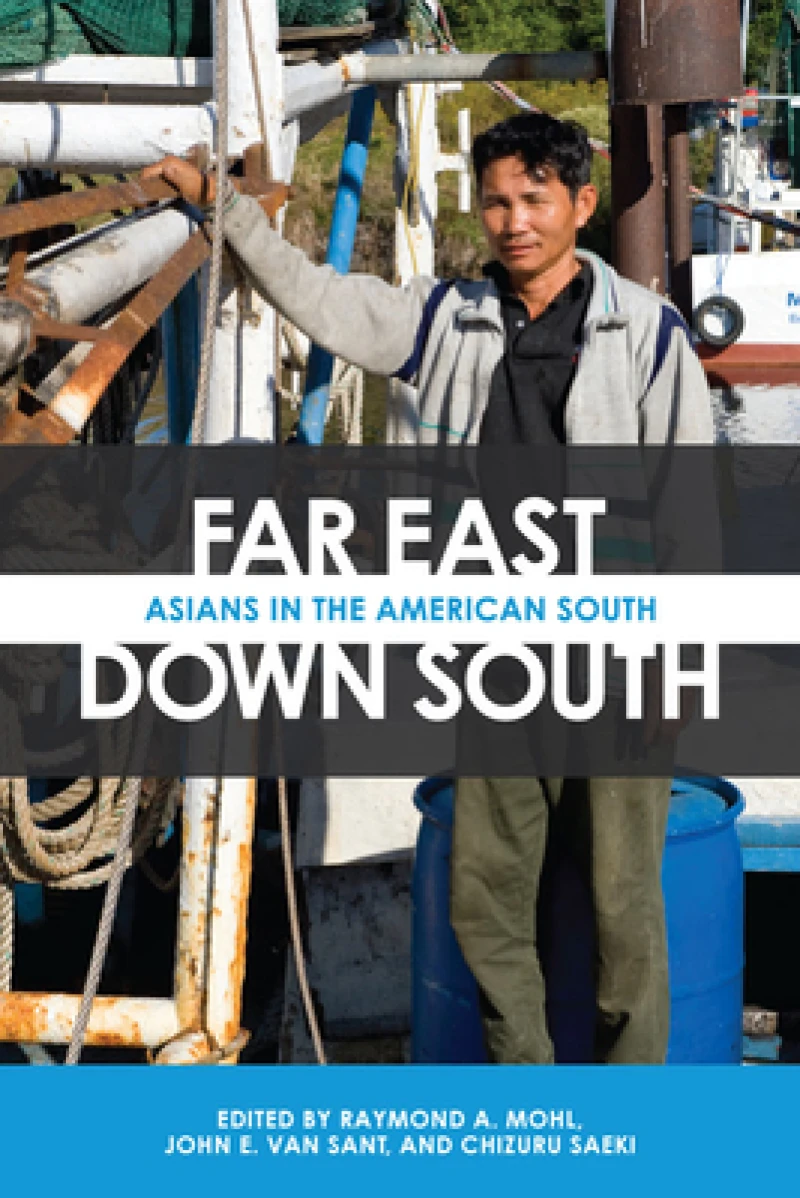
Far East, Down South : Asians in the American South
Book Details
Format
Paperback / Softback
Book Series
Modern South
ISBN-10
0817360387
ISBN-13
9780817360382
Publisher
The University of Alabama Press
Imprint
The University of Alabama Press
Country of Manufacture
GB
Country of Publication
GB
Publication Date
Oct 19th, 2021
Print length
280 Pages
Weight
437 grams
Ksh 5,150.00
Publisher Out of Stock
0 in stock
Delivery Location
Delivery fee: Select location
Secure
Quality
Fast
In sharp contrast to the ‘melting pot’ reputation of the United States, the American South - with its history of slavery, Jim Crow, and the civil rights movement - has been perceived in stark and simplistic demographic terms. This volume offers essays that explore an overlooked part of the South's story - Asian immigration to the region.
Far East, Down South: Asians in the American South offers a collection of ten insightful essays that illuminate the little-known history and increasing presence of Asian immigrants in the American southeast.
In sharp contrast to the “melting pot” reputation of the United States, the American South—with its history of slavery, Jim Crow, and the civil rights movement—has been perceived in stark and simplistic demographic terms. In Far East, Down South, editors Raymond A. Mohl, John E. Van Sant, and Chizuru Saeki provide a collection of essential essays that restores and explores an overlooked part of the South’s story—that of Asian immigration to the region.
These essays form a comprehensive overview of key episodes and issues in the history of Asian immigrants to the South. During Reconstruction, southern entrepreneurs experimented with the replacement of slave labor with Chinese workers. As in the West, Chinese laborers played a role in the development of railroads. Japanese farmers also played a more widespread role than is usually believed. Filipino sailors recruited by the US Navy in the early decades of the twentieth century often settled with their families in the vicinity of naval ports such as Corpus Christi, Biloxi, and Pensacola. Internment camps brought Japanese Americans to Arkansas. Marriages between American servicemen and Japanese, Korean, Filipina, Vietnamese, and nationals in other theaters of war created many thousands of blended families in the South. In recent decades, the South is the destination of internal immigration as Asian Americans spread out from immigrant enclaves in West Coast and Northeast urban areas.
Taken together, the book’s essays document numerous fascinating themes: the historic presence of Asians in the South dating back to the mid-nineteenth century; the sources of numerous waves of contemporary Asian immigration to the South; and the steady spread of Asians out from the coastal port cities. Far East, Down South adds a vital new dimension to popular understanding of southern history.
In sharp contrast to the “melting pot” reputation of the United States, the American South—with its history of slavery, Jim Crow, and the civil rights movement—has been perceived in stark and simplistic demographic terms. In Far East, Down South, editors Raymond A. Mohl, John E. Van Sant, and Chizuru Saeki provide a collection of essential essays that restores and explores an overlooked part of the South’s story—that of Asian immigration to the region.
These essays form a comprehensive overview of key episodes and issues in the history of Asian immigrants to the South. During Reconstruction, southern entrepreneurs experimented with the replacement of slave labor with Chinese workers. As in the West, Chinese laborers played a role in the development of railroads. Japanese farmers also played a more widespread role than is usually believed. Filipino sailors recruited by the US Navy in the early decades of the twentieth century often settled with their families in the vicinity of naval ports such as Corpus Christi, Biloxi, and Pensacola. Internment camps brought Japanese Americans to Arkansas. Marriages between American servicemen and Japanese, Korean, Filipina, Vietnamese, and nationals in other theaters of war created many thousands of blended families in the South. In recent decades, the South is the destination of internal immigration as Asian Americans spread out from immigrant enclaves in West Coast and Northeast urban areas.
Taken together, the book’s essays document numerous fascinating themes: the historic presence of Asians in the South dating back to the mid-nineteenth century; the sources of numerous waves of contemporary Asian immigration to the South; and the steady spread of Asians out from the coastal port cities. Far East, Down South adds a vital new dimension to popular understanding of southern history.
Get Far East, Down South by at the best price and quality guaranteed only at Werezi Africa's largest book ecommerce store. The book was published by The University of Alabama Press and it has pages.

