
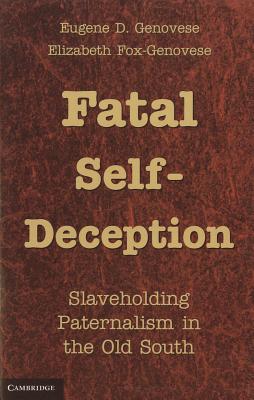
Fatal Self-Deception : Slaveholding Paternalism in the Old South
Book Details
Format
Paperback / softback
ISBN-10
1107605024
ISBN-13
9781107605022
Publisher
Cambridge University Press
Imprint
Cambridge University Press
Country of Manufacture
GB
Country of Publication
GB
Publication Date
Oct 24th, 2011
Print length
256 Pages
Weight
374 grams
Dimensions
15.70 x 23.70 x 1.40 cms
KSh 4,850.00
Currently unavailable
0 in stock
Delivery Location
Delivery fee: Select location
Secure
Quality
Fast
Slaveholders were preoccupied with presenting slavery as a benign, paternalistic institution in which the planter took care of his family and slaves were content with their fate. In this book, Eugene D. Genovese and Elizabeth Fox-Genovese discuss how slaveholders perpetuated and rationalized this romanticized version of life on the plantation.
Slaveholders were preoccupied with presenting slavery as a benign, paternalistic institution in which the planter took care of his family and slaves were content with their fate. In this book, Eugene D. Genovese and Elizabeth Fox-Genovese discuss how slaveholders perpetuated and rationalized this romanticized version of life on the plantation. Slaveholders' paternalism had little to do with ostensible benevolence, kindness and good cheer. It grew out of the necessity to discipline and morally justify a system of exploitation. At the same time, this book also advocates the examination of masters' relations with white plantation laborers and servants - a largely unstudied subject. Southerners drew on the work of British and European socialists to conclude that all labor, white and black, suffered de facto slavery, and they championed the South's 'Christian slavery' as the most humane and compassionate of social systems, ancient and modern.
Get Fatal Self-Deception by Elizabeth Fox-Genovese, Eugene D. Genovese at the best price and quality guaranteed only at Werezi Africa's largest book ecommerce store. The book was published by Cambridge University Press and it has 256 pages.
Customers Who Bought This Also Bought

Crusade for Justice – The Autobiography of Ida B. Wells, Second Edition
KSh 4,050.00

Killers of the Flower Moon
KSh 2,000.00

Warmth of Other Suns
KSh 3,050.00

Frederick Douglass
KSh 3,350.00

107 Days
KSh 4,500.00

Second Treatise of Government – Norton Library
KSh 1,600.00

Tuesdays With Morrie
KSh 2,000.00
My Bondage and My Freedom
KSh 1,600.00

Hidden Figures
KSh 2,000.00

America, América
KSh 3,650.00

Holding the Line
KSh 2,000.00

Nuclear Folly
KSh 3,050.00
More by Elizabeth Fox-Genovese, Eugene D. Genovese

A Consuming Fire
KSh 5,500.00

Within the Plantation Household
KSh 5,800.00

The Mind of the Master Class
KSh 12,550.00
From Rebellion to Revolution
KSh 4,550.00

The Sweetness of Life
KSh 14,750.00

The Southern Tradition
KSh 5,550.00

Slavery in White and Black
KSh 5,200.00

The Sweetness of Life
KSh 5,350.00
Slavery in White and Black
KSh 9,450.00

The Mind of the Master Class
KSh 8,550.00
