
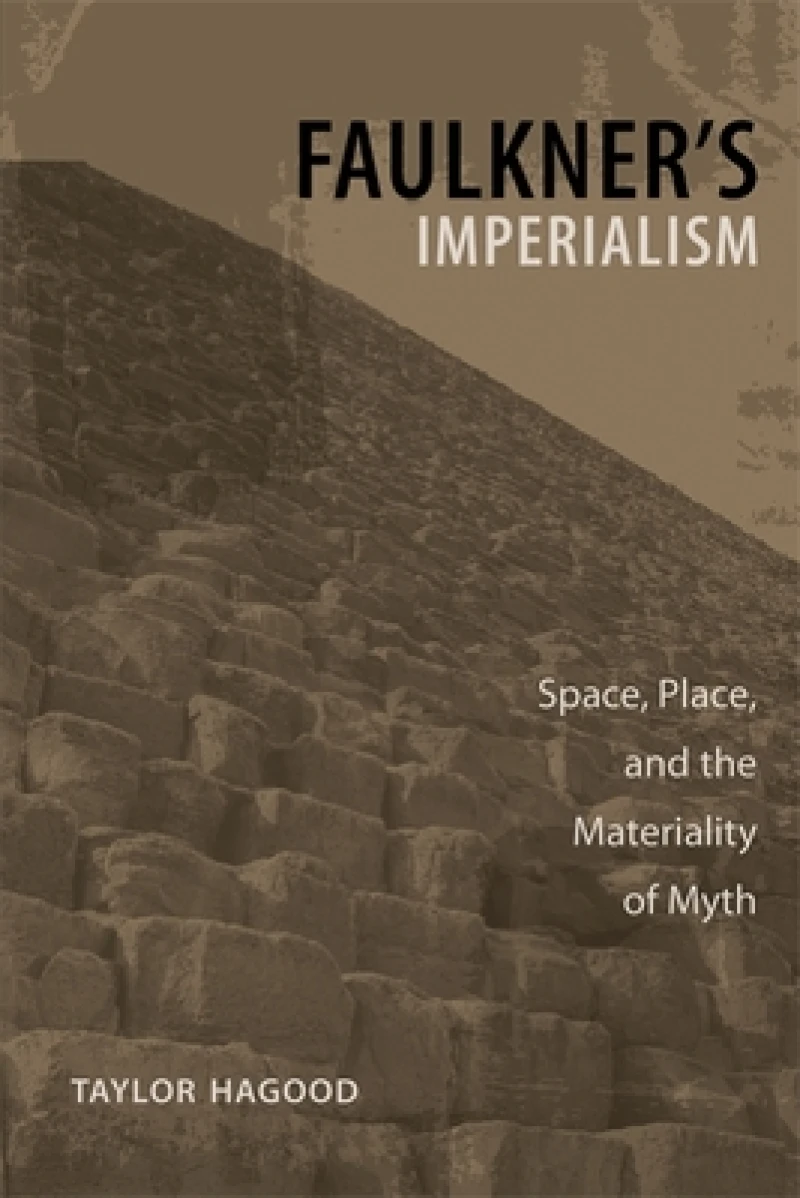
Faulkner''s Imperialism : Space, Place, and the Materiality of Myth
Book Details
Format
Hardback or Cased Book
Book Series
Southern Literary Studies
ISBN-10
0807133442
ISBN-13
9780807133446
Publisher
Louisiana State University Press
Imprint
Louisiana State University Press
Country of Manufacture
US
Country of Publication
GB
Publication Date
Nov 15th, 2008
Print length
264 Pages
Weight
333 grams
Dimensions
22.80 x 15.40 x 2.50 cms
Product Classification:
Literature: history & criticismLiterature: history and criticism
Ksh 6,500.00
Temporarily out of stock, due soon
0 in stock
Delivery Location
Delivery fee: Select location
Secure
Quality
Fast
Using an interdisciplinary approach to examine economic, sociological, and political factors in william Faulkner's writing, Taylor Hagood applies postcolonial theory, cultural materialism, and the work of the New Southernists to analyse how these themes intersect to encode narratives of imperialism and anti-imperialism.
In Faulkner's Imperialism, Taylor Hagood explores two staples of Faulkner's world: myth and place. Using an interdisciplinary approach to examine the economic, sociological, and political factors in Faulkner's writing, he applies postcolonial theory, cultural materialism, and the work of the New Southernists to analyse the ways myth and place come together to encode narratives of imperialism - and anti-imperialism - in the worlds in which Faulkner lived and the one that he created. The resulting discussion highlights the deeply embedded imperial impulses underpinning not just Yoknapatawpha and Mississippi, but the Midwest, the Caribbean, France, and a host of often-overlooked corners of the Faulknerian map.
Faulkner defines space in his fiction by creating places through culturally compelling narratives. Although these narrative spaces often have imperial roots, Hagood reveals how the oppressed can subvert these ""mythic places"" by turning the myths against their oppressors. The Greco-Roman myths long recognised as part of Faulkner's fictional world, for example, define racially hybrid spaces ostensibly designed to articulate white patriarchal narratives of imperial control but which actually carry within their very dreams of Arcady an anti-imperial narrative. In Faulkner's Mississippi Delta, which he modeled after the Nile Delta, plantation owners evoke the imperial power of ancient Egypt to confirm their own cultural ascendancy even while African Americans use biblical narratives of the Israelites enslaved in Egypt to speak against the power that controls them. Faulkner also used places he personally experienced - such as New Orleans, a city that he recognised as containing multiple layers of imperial design - to dramatize the constant struggle between the oppressor and the oppressed.
Rather than reading the roles of myth and place according to conventional myth criticism or typical place models used by other Faulkner scholars, Hagood examines the intertextuality within Faulkner's writing, as well as the relationship of his writing to others' work, in an attempt to understand how the texts fit together and speak to one another. One of the few books that examine Faulkner's work as a whole, Faulkner's Imperialism moves beyond South-versus-North paradigms to encompass all the spaces within Faulkner's created cosmos, considering their interrelationships in a precise, holistic way.
Faulkner defines space in his fiction by creating places through culturally compelling narratives. Although these narrative spaces often have imperial roots, Hagood reveals how the oppressed can subvert these ""mythic places"" by turning the myths against their oppressors. The Greco-Roman myths long recognised as part of Faulkner's fictional world, for example, define racially hybrid spaces ostensibly designed to articulate white patriarchal narratives of imperial control but which actually carry within their very dreams of Arcady an anti-imperial narrative. In Faulkner's Mississippi Delta, which he modeled after the Nile Delta, plantation owners evoke the imperial power of ancient Egypt to confirm their own cultural ascendancy even while African Americans use biblical narratives of the Israelites enslaved in Egypt to speak against the power that controls them. Faulkner also used places he personally experienced - such as New Orleans, a city that he recognised as containing multiple layers of imperial design - to dramatize the constant struggle between the oppressor and the oppressed.
Rather than reading the roles of myth and place according to conventional myth criticism or typical place models used by other Faulkner scholars, Hagood examines the intertextuality within Faulkner's writing, as well as the relationship of his writing to others' work, in an attempt to understand how the texts fit together and speak to one another. One of the few books that examine Faulkner's work as a whole, Faulkner's Imperialism moves beyond South-versus-North paradigms to encompass all the spaces within Faulkner's created cosmos, considering their interrelationships in a precise, holistic way.
Get Faulkner''s Imperialism by at the best price and quality guaranteed only at Werezi Africa's largest book ecommerce store. The book was published by Louisiana State University Press and it has pages.

