
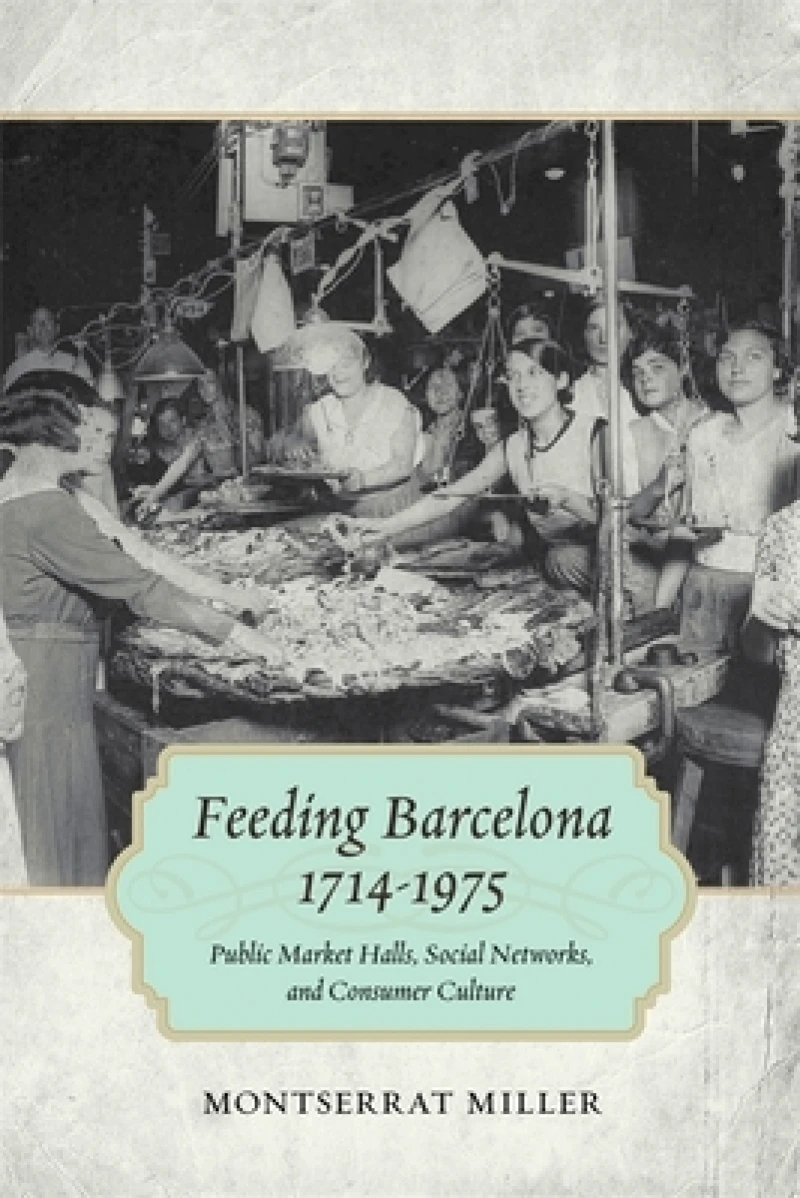
Feeding Barcelona, 1714-1975 : Public Market Halls, Social Networks, and Consumer Culture
Book Details
Format
Paperback / Softback
ISBN-10
0807156469
ISBN-13
9780807156469
Publisher
Louisiana State University Press
Imprint
Louisiana State University Press
Country of Manufacture
US
Country of Publication
GB
Publication Date
Jan 12th, 2015
Print length
384 Pages
Weight
566 grams
Dimensions
22.90 x 15.40 x 3.00 cms
Product Classification:
European historyEuropean history
Ksh 6,000.00
Temporarily out of stock, due soon
0 in stock
Delivery Location
Delivery fee: Select location
Secure
Quality
Fast
While other countries experienced major shifts away from the public-market model in the twentieth century, Barcelona's food markets remained fundamental to the city's identity, economy, and culture. Montserrat Miller examines the causes behind the extraordinary vibrancy and tenacity of the Barcelonan market system.
The food markets of Barcelona host thousands of customers daily, from tourists eager to sample fresh fruits and grilled seafood to neighborhood cooks in search of high-quality ingredients. While other countries experienced major shifts away from the public-market model in the twentieth century, Barcelona's food markets remained fundamental to the city's identity, economy, and culture. Montserrat Miller's Feeding Barcelona, 1714-1975 examines the causes behind the extraordinary vibrancy and tenacity of the Barcelonan market system.
Miller argues that recurrent revolutionary uprisings in Barcelona, beginning in the mid-eighteenth century, forced ongoing collaboration between the public and private sectors to ensure adequate and effective food distribution. Municipal support permitted small-scale food sellers in Barcelona to survive in a period more commonly characterized by increasing capitalization in food retail, while the importance of food markets to Barcelona's social networks enhanced vendors' ability to recognize and adapt to changing customer demands. In addition, a high number of stalls owned by women contributed both to the financial well-being of vendor families and to the sociability patterns that placed neighborhood food markets at the center of daily life in the city. The shared commitment of vendors, shoppers, and government officials to a market model of food sales created the lasting and unique market system that persists in Barcelona to this day.
Drawing from extensive archival research and numerous interviews with individuals at all levels of the market system, Feeding Barcelona, 1714-1975 is the first detailed history of the historical and social influences that create urban food markets.
Miller argues that recurrent revolutionary uprisings in Barcelona, beginning in the mid-eighteenth century, forced ongoing collaboration between the public and private sectors to ensure adequate and effective food distribution. Municipal support permitted small-scale food sellers in Barcelona to survive in a period more commonly characterized by increasing capitalization in food retail, while the importance of food markets to Barcelona's social networks enhanced vendors' ability to recognize and adapt to changing customer demands. In addition, a high number of stalls owned by women contributed both to the financial well-being of vendor families and to the sociability patterns that placed neighborhood food markets at the center of daily life in the city. The shared commitment of vendors, shoppers, and government officials to a market model of food sales created the lasting and unique market system that persists in Barcelona to this day.
Drawing from extensive archival research and numerous interviews with individuals at all levels of the market system, Feeding Barcelona, 1714-1975 is the first detailed history of the historical and social influences that create urban food markets.
Get Feeding Barcelona, 1714-1975 by at the best price and quality guaranteed only at Werezi Africa's largest book ecommerce store. The book was published by Louisiana State University Press and it has pages.

