
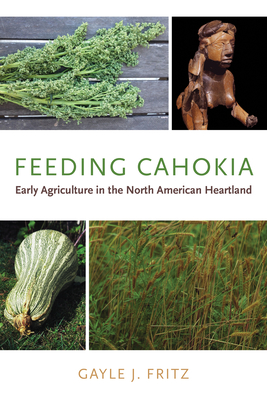
Feeding Cahokia : Early Agriculture in the North American Heartland
Book Details
Format
Paperback / softback
Book Series
Archaeology of Food
ISBN-10
0817360042
ISBN-13
9780817360047
Publisher
The University of Alabama Press
Imprint
The University of Alabama Press
Country of Manufacture
US
Country of Publication
GB
Publication Date
Mar 31st, 2020
Print length
232 Pages
Weight
488 grams
Dimensions
15.20 x 22.90 x 1.40 cms
KSh 4,550.00
Temporarily out of stock, due soon
0 in stock
Delivery Location
Delivery fee: Select location
Secure
Quality
Fast
Offers an authoritative and thoroughly accessible overview of farming and food practices at Cahokia. The book presents evidence to demonstrate that the emphasis on corn has created a distorted picture of Cahokia's agricultural practices.
An authoritative and thoroughly accessible overview of farming and food practices at Cahokia.
Agriculture is rightly emphasized as the center of the economy in most studies of Cahokian society, but the focus is often predominantly on corn. This farming economy is typically framed in terms of ruling elites living in mound centers who demanded tribute and a mass surplus to be hoarded or distributed as they saw fit. Farmers are cast as commoners who grew enough surplus corn to provide for the elites.
Feeding Cahokia: Early Agriculture in the North American Heartland presents evidence to demonstrate that the emphasis on corn has created a distorted picture of Cahokia's agricultural practices. Farming at Cahokia was biologically diverse and, as such, less prone to risk than was maize-dominated agriculture. Gayle J. Fritz shows that the division between the so-called elites and commoners simplifies and misrepresents the statuses of farmers-a workforce consisting of adult women and their daughters who belonged to kin groups crosscutting all levels of the Cahokian social order. Many farmers had considerable influence and decision-making authority, and they were valued for their economic contributions, their skills, and their expertise in all matters relating to soils and crops. Fritz examines the possible roles played by farmers in the processes of producing and preparing food and in maintaining cosmological balance.
This highly accessible narrative by an internationally known paleoethnobotanist highlights the biologically diverse agricultural system by focusing on plants, such as erect knotweed, chenopod, and maygrass, which were domesticated in the midcontinent and grown by generations of farmers before Cahokia Mounds grew to be the largest Native American population center north of Mexico. Fritz also looks at traditional farming systems to apply strategies that would be helpful to modern agriculture, including reviving wild and weedy descendants of these lost crops for redomestication. With a wealth of detail on specific sites, traditional foods, artifacts such as famous figurines, and color photos of significant plants, Feeding Cahokia will satisfy both scholars and interested readers.
Agriculture is rightly emphasized as the center of the economy in most studies of Cahokian society, but the focus is often predominantly on corn. This farming economy is typically framed in terms of ruling elites living in mound centers who demanded tribute and a mass surplus to be hoarded or distributed as they saw fit. Farmers are cast as commoners who grew enough surplus corn to provide for the elites.
Feeding Cahokia: Early Agriculture in the North American Heartland presents evidence to demonstrate that the emphasis on corn has created a distorted picture of Cahokia's agricultural practices. Farming at Cahokia was biologically diverse and, as such, less prone to risk than was maize-dominated agriculture. Gayle J. Fritz shows that the division between the so-called elites and commoners simplifies and misrepresents the statuses of farmers-a workforce consisting of adult women and their daughters who belonged to kin groups crosscutting all levels of the Cahokian social order. Many farmers had considerable influence and decision-making authority, and they were valued for their economic contributions, their skills, and their expertise in all matters relating to soils and crops. Fritz examines the possible roles played by farmers in the processes of producing and preparing food and in maintaining cosmological balance.
This highly accessible narrative by an internationally known paleoethnobotanist highlights the biologically diverse agricultural system by focusing on plants, such as erect knotweed, chenopod, and maygrass, which were domesticated in the midcontinent and grown by generations of farmers before Cahokia Mounds grew to be the largest Native American population center north of Mexico. Fritz also looks at traditional farming systems to apply strategies that would be helpful to modern agriculture, including reviving wild and weedy descendants of these lost crops for redomestication. With a wealth of detail on specific sites, traditional foods, artifacts such as famous figurines, and color photos of significant plants, Feeding Cahokia will satisfy both scholars and interested readers.
Get Feeding Cahokia by Gayle J. Fritz at the best price and quality guaranteed only at Werezi Africa's largest book ecommerce store. The book was published by The University of Alabama Press and it has 232 pages.
Customers Who Bought This Also Bought
Andean Expressions
KSh 6,350.00

Forgotten
KSh 2,000.00
Ocmulgee Archaeology, 1936-1986
KSh 6,700.00
Mound Sites of the Ancient South
KSh 7,950.00

The Limits of Tyranny
KSh 11,500.00
Conquistador’s Wake
KSh 22,600.00
The Ancient Maya, 6th Edition
KSh 7,400.00
The Punic Mediterranean
KSh 21,600.00
The Palace of Minos
KSh 14,250.00
The Penetration of Arabia
KSh 8,300.00
Chogha Mish, Volume 2
KSh 15,300.00

A Primer of Assyriology
KSh 3,800.00
