
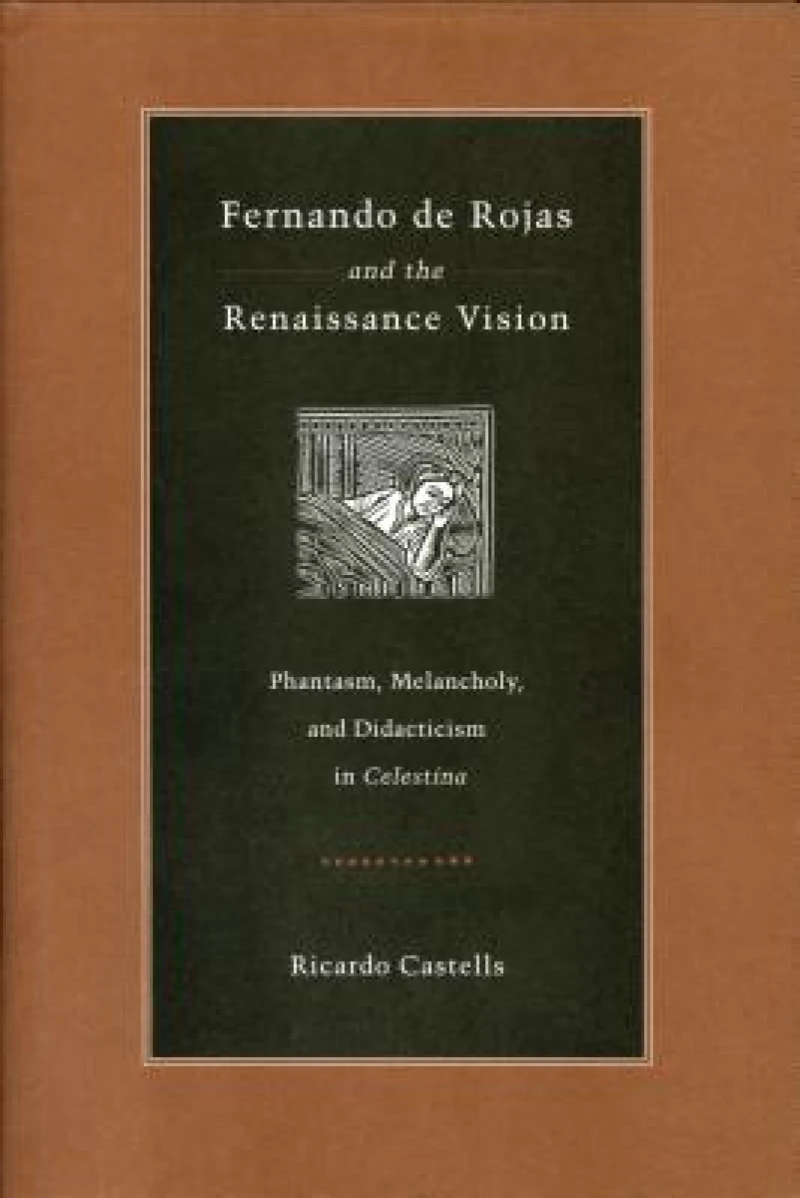
Fernando de Rojas and the Renaissance Vision : Phantasm, Melancholy, and Didacticism in “Celestina”
Book Details
Format
Paperback / Softback
Book Series
Studies in Romance Literatures
ISBN-10
0271028017
ISBN-13
9780271028019
Publisher
Pennsylvania State University Press
Imprint
Pennsylvania State University Press
Country of Manufacture
GB
Country of Publication
GB
Publication Date
Apr 15th, 2001
Print length
136 Pages
Weight
227 grams
Dimensions
22.90 x 15.20 x 1.00 cms
Product Classification:
Literary studies: poetry & poets
Ksh 5,050.00
Werezi Extended Catalogue
0 in stock
Delivery Location
Delivery fee: Select location
Secure
Quality
Fast
The late medieval masterpiece Celestina has long been the focus of controversy, over both its authorship and the apparent contradictions and inconsistencies within its plot. Scholars trace the publication of Celestina to 1499, when Fernando de Rojas supposedly discovered the first act and completed the remainder of the drama within a two-week period. The plot centers on the ill-fated love of Calisto and Melibea and the fascinating character of the old bawd, Celestina. Scholars disagree about how to interpret the meeting of the two lovers in the first scene, when they share an unusual conversation that is incongruous with their comportment in the remainder of the work. Ricardo Castells seeks to resolve this and other seeming contradictions by tracing the oneiric, phantasmal, and melancholic traditions of the Renaissance and their effect on the composition of Celestina. Castells explores the European cultural and literary tradition—works of both fiction and nonfiction that would have been available to Rojas—to discover theoretical approaches to the physiology of lovesickness and its accompanying dreams and visions. He employs the themes of love, medicine, and dreams in these works to explain the seemingly illogical progression of the play’s action and the ultimately detrimental effects of melancholy, lovesickness, and sensual contamination on the protagonist, Calisto. In so doing, Castells places Celestina within its appropriate cultural and historical context, enriching our perception not only of the text itself but also of the traditions that helped to produce it.
Get Fernando de Rojas and the Renaissance Vision by at the best price and quality guaranteed only at Werezi Africa's largest book ecommerce store. The book was published by Pennsylvania State University Press and it has pages.

