

Fieldwork for Future Ecologies
Book Details
Format
Paperback / softback
ISBN-10
9493148912
ISBN-13
9789493148918
Publisher
Onomatopee
Imprint
Onomatopee
Country of Manufacture
NL
Country of Publication
GB
Publication Date
Feb 1st, 2023
Print length
544 Pages
Weight
730 grams
Dimensions
14.30 x 21.80 x 3.80 cms
Product Classification:
The Arts
KSh 7,000.00
Temporarily out of stock, due soon
0 in stock
Delivery Location
Delivery fee: Select location
Secure
Quality
Fast
Bringing together contributions by artists, writers and theorists, ‘Fieldwork for Future Ecologies’ addresses the role that art practice and art-based research plays in expanding notions of fieldwork. At once a handbook for research and practice and a philosophical speculation, this book offers the unique opportunity to explore ways of working within vastly diverse climates and terrains using image, sound, movement and other sensing technologies. It also offers more creative and speculative interventions into the idea and location of the ‘field’ itself. Focusing on a range of projects from across different geographic locations and situations, the book highlights the crucial contribution that art can make to environmental and climate studies offering a valuable intervention into current discussions of artistic practice and research. ‘Fieldwork for Future Ecologies’ presents a series of propositions and speculations . radical practices for radical times. Contributing authors: Angus Carlyle, Alliance of the Southern Triangle/AST (D Bauer, F Grodin, P M Hernandez, E Kedan), Bianca Hester, Bridget Crone, David Burns, Henriette Gunkel and Eline McGeorge, Imani Jacqueline Brown, Julie Gough, Kate Pickering, Kreider + O’Leary, Kristen Sharp, Melody Jue, Nicholas Mangan, Philip Samartzis, Polly Stanton, Ruth Maclennan, Sam Nightingale, Saskia Beudel, Simon O’Sullivan, Susan Schuppli, Therese Keogh. Editor Bio''s Bridget Crone is Senior Lecturer in Visual Cultures at Goldsmiths, The University of London. Her work as a curator and writer is situated at the intersections between theory and practice; her work weaves across fields of practice to propose new forms of encounter between body, image. Books include The Edinburgh Companion to Curatorial Futures (edited with Bassam El Baroni) forthcoming with Edinburgh University Press, and The Sensible Stage: Staging and the Moving Image, Intellect / University of Chicago Press, 2017. Recent essays include: “Future” (2019, with Henriette Gunkel, The Bloomsbury Handbook for 21st Century Feminist Theory, London: Bloomsbury); “Flicker-time and Fabulation: from flickering images to crazy wipes” (2017, Fictions and Futures, London: Repeater Books); “Liquid States and the Image” (2015, Technologism, Monash University Museum of Art, Melbourne). Sam Nightingale is an artist and researcher working within environmental media. He works with creative methodologies to re-imagine and re-image the spectral-material complexities of settler colonialism, extractivism and their ongoing environmental, ethical, and political impact on human and non-human worlds. Nightingale is involved in various interdisciplinary projects, including running field-labs and working with rural communities, scientists, geographers and social scientists in Europe and Australia. He is a member of the Centre for Research Architecture (Goldsmiths, University of London) – an international cohort of artist-researchers working at the intersection of architecture, law, media and climate science, where he is also a PhD candidate. He is tutor in the Royal Collage of Art’s School of Architecture. Polly Stanton is an artist and filmmaker. Her films and installations focus on contested sites, presenting landscape as a politically charged field of negotiation, entangled with history, technology and capital. Sound and listening also play a critical role in Stanton’s work, as a process of attunement and as a means to attend to what is unseen and excluded. Polly’s mode of working is expansive and site-based, with her practice intersecting across a number of disciplines from film production, sound design, field research, writing and publication. Polly has exhibited widely in both Australia and overseas and has been the recipient of numerous grants and Artist-in-Residence programs. She is a lecturer and researcher in RMIT’s School of Media and Communication.
Get Fieldwork for Future Ecologies by Bridget Crone at the best price and quality guaranteed only at Werezi Africa's largest book ecommerce store. The book was published by Onomatopee and it has 544 pages.
Customers Who Bought This Also Bought
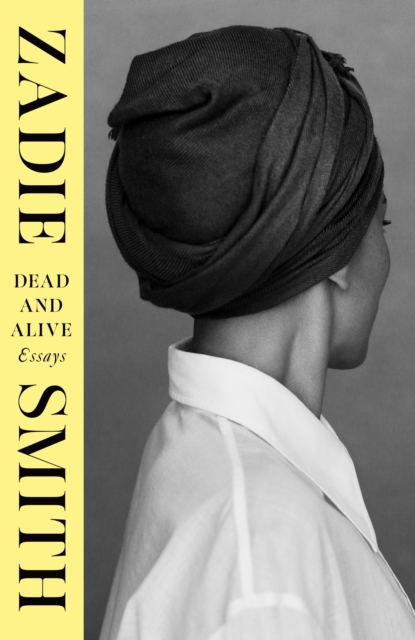
Dead and Alive
KSh 3,950.00
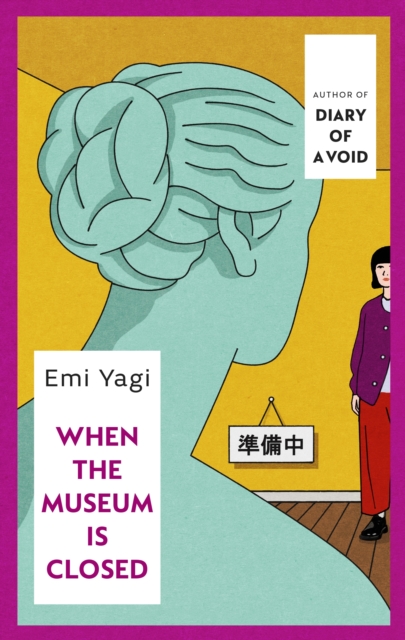
When the Museum is Closed
KSh 2,700.00
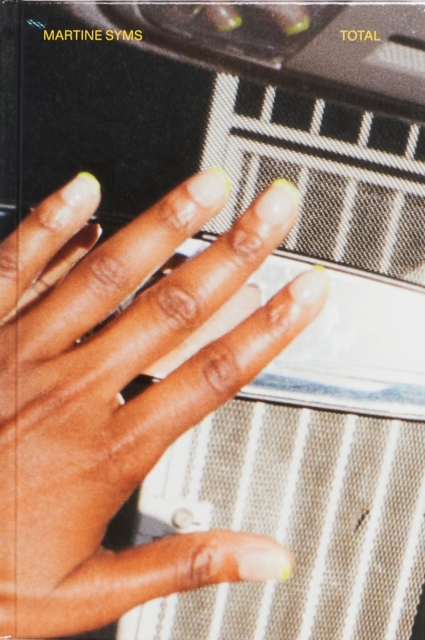
Total
KSh 7,550.00

Marble in Metamorphosis
KSh 4,500.00
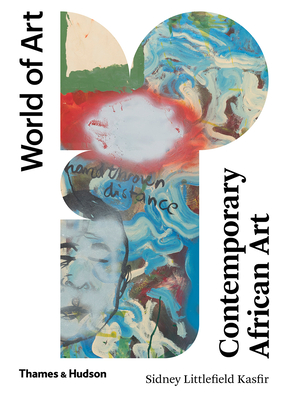
Contemporary African Art
KSh 2,800.00
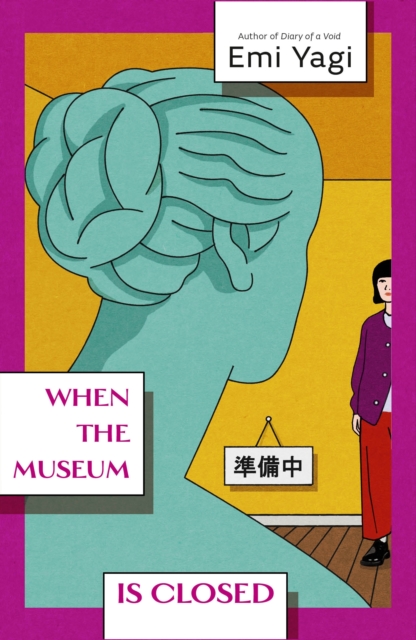
When the Museum is Closed
KSh 1,800.00

You'll Never Know . . . If You Don't Try!
KSh 1,750.00

Mash Up
KSh 8,400.00

Strategic Use of Humour in Politics
KSh 30,950.00

Breaking into Sound Design for Video Games
KSh 9,900.00

Half State
KSh 3,600.00

Navigating Media Work
KSh 30,950.00
