
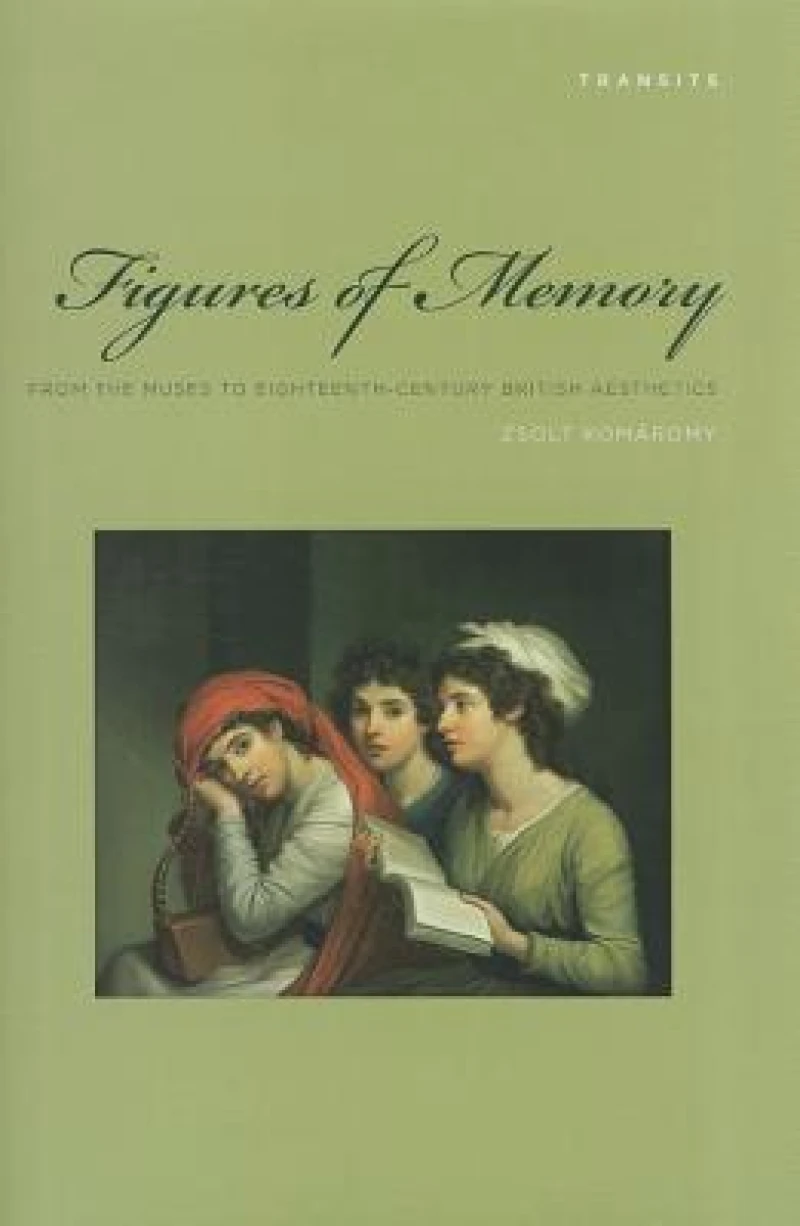
Figures of Memory : From the Muses to Eighteenth-Century British Aesthetics
Book Details
Format
Hardback or Cased Book
ISBN-10
1611480442
ISBN-13
9781611480443
Publisher
Bucknell University Press
Imprint
Bucknell University Press
Country of Manufacture
US
Country of Publication
GB
Publication Date
Aug 5th, 2011
Print length
352 Pages
Weight
513 grams
Dimensions
24.10 x 16.30 x 2.40 cms
Product Classification:
Literary theory
Ksh 18,350.00
Re-Printing
0 in stock
Delivery Location
Delivery fee: Select location
Secure
Quality
Fast
Zsolt Komáromy’s Figures of Memory: From the Muses to Eighteenth-Century British Aesthetics affects a rapprochement between memory studies and eighteenth-century British aesthetics. It argues that the assessment of memory in the history of aesthetics and criticism has been determined by the ideological import of the creative imagination, based on the dichotomies of imitative versus creative or reproductive versus productive mental and artistic procedures. The legacy of such an opposition can still be felt in the way the literary relevance of memory is based on either viewing it as a representational (reproductive, imitative) power that is a counter term to the creative sense of the imagination, or as a constructive (productive, creative) power that is assimilated by the creative imagination. The notion of memory, however, harbors problems that unsettle such dichotomies. This book does the timely work of employing insights offered by memory studies in reconsidering memory in the history of aesthetics: it suggests that memory’s literary relevance is explained precisely by the problems that make it resistant to the reproductive-productive opposition. These problems are explored through various “figures” representing senses of memory, such as the Muses, or metaphors for memory in philosophical and critical discourse. Tracing figures of memory from the Muses through Plato and Descartes to works by Pope, Addison, Gerard and Kames, Komáromy reveals an undercurrent of thought in eighteenth-century British aesthetics that questions memory’s nominal opposition to the imagination , and that exploits memory’s simultaneously reproductive and constructive nature in the emerging theory of the imagination. By thus claiming that the tradition of memory’s literary relevance is not marginalized but in fact perpetuated in eighteenth-century British critical thought, Figures of Memory gives a powerful new perspective on the history of memory in aesthetics and criticism. A theoretical work with claims for historical generalization, Figures of Memory will appeal to those interested in the history of aesthetics and criticism, in memory studies, in literary theory, to students of literature and memory, of literature and psychology, and to scholars of the eighteenth century with theoretical interests.
Zsolt Komáromy’s Figures of Memory: From the Muses to Eighteenth-Century British Aesthetics affects a rapprochement between memory studies and eighteenth-century British aesthetics. It argues that the assessment of memory in the history of aesthetics and criticism has been determined by the ideological import of the creative imagination, based on the dichotomies of imitative versus creative or reproductive versus productive mental and artistic procedures. The legacy of such an opposition can still be felt in the way the literary relevance of memory is based on either viewing it as a representational (reproductive, imitative) power that is a counter term to the creative sense of the imagination, or as a constructive (productive, creative) power that is assimilated by the creative imagination. The notion of memory, however, harbors problems that unsettle such dichotomies. This book does the timely work of employing insights offered by memory studies in reconsidering memory in the history of aesthetics: it suggests that memory’s literary relevance is explained precisely by the problems that make it resistant to the reproductive-productive opposition. These problems are explored through various “figures” representing senses of memory, such as the Muses, or metaphors for memory in philosophical and critical discourse. Tracing figures of memory from the Muses through Plato and Descartes to works by Pope, Addison, Gerard and Kames, Komáromy reveals an undercurrent of thought in eighteenth-century British aesthetics that questions memory’s nominal opposition to the imagination , and that exploits memory’s simultaneously reproductive and constructive nature in the emerging theory of the imagination. By thus claiming that the tradition of memory’s literary relevance is not marginalized but in fact perpetuated in eighteenth-century British critical thought, Figures of Memory gives a powerful new perspective on the history of memory in aesthetics and criticism. A theoretical work with claims for historical generalization, Figures of Memory will appeal to those interested in the history of aesthetics and criticism, in memory studies, in literary theory, to students of literature and memory, of literature and psychology, and to scholars of the eighteenth century with theoretical interests.
Get Figures of Memory by at the best price and quality guaranteed only at Werezi Africa's largest book ecommerce store. The book was published by Bucknell University Press and it has pages.

