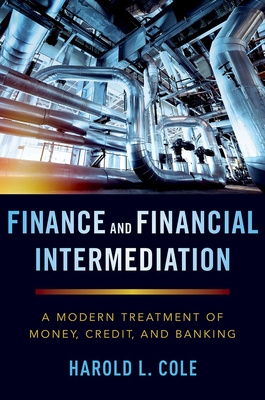
Finance and Financial Intermediation : A Modern Treatment of Money, Credit, and Banking
Book Details
Format
Hardback
ISBN-10
0190941693
ISBN-13
9780190941697
Publisher
Oxford University Press Inc
Imprint
Oxford University Press Inc
Country of Manufacture
US
Country of Publication
GB
Publication Date
Jun 6th, 2019
Print length
264 Pages
Weight
590 grams
Dimensions
15.70 x 23.90 x 2.00 cms
Product Classification:
MacroeconomicsFinance
KSh 20,450.00
Currently unavailable
0 in stock
Delivery Location
Delivery fee: Select location
Secure
Quality
Fast
The financial system is a densely interconnected network of financial intermediaries, facilitators, and markets that serves three major purposes: allocating capital, sharing risks, and facilitating intertemporal trade. Finance and Financial Intermediation provides a broad overview of the financial system and assets pricing, covering history, institutional detail, and theory. It also examines soverign debt crises and their forms through analysis of cases like the Great Recession of the 2000s.
The financial system is a densely interconnected network of financial intermediaries, facilitators, and markets that serves three major purposes: allocating capital, sharing risks, and facilitating intertemporal trade. Asset prices are an important mechanism in each of these phenomena. Capital allocation, whether through loans or other forms of investment, can vary both across sectors-at the broadest, manufactures, agriculture, and services-and within sectors, for example different firms. The risk that various investors are willing to take reflects their financial position and alternative opportunities. Risk and asset allocation are also influenced by whether money, and especially its expenditure, is more important now or in the future. These decisions are all influenced by governmental policies. When there are mismatches, the results include financial meltdowns, fiscal deficits, sovereign debt, default and debt crises.Harold L. Cole provides a broad overview of the financial system and assets pricing, covering history, institutional detail, and theory. The book begins with an overview of financial markets and their operation and then covers asset pricing for standard assets and derivatives, and analyzes what modern finance says about firm behavior and capital structure. It then examines theories of money, exchange rates, electronic payments methods, and cryptocurrencies. After exploring banks and other forms of financial intermediation, the book examines the role they played in the Great Recession. Having provided an overview of the provate sector, Cole switches to public finance and government borrowing as well as the incentives to monetize the public debt and its consequences. The book closes with an examination of sovereign debt crises and an analysis of their various forms.Finance and financial intermediation are central to modern economies. This book covers all of the material a sophisticated economist needs to know about this area.
Get Finance and Financial Intermediation by Harold L. Cole at the best price and quality guaranteed only at Werezi Africa's largest book ecommerce store. The book was published by Oxford University Press Inc and it has 264 pages.
Customers Who Bought This Also Bought

The Great Escape
KSh 2,900.00

Skin in the Game
KSh 2,350.00
Poor Economics
KSh 2,350.00
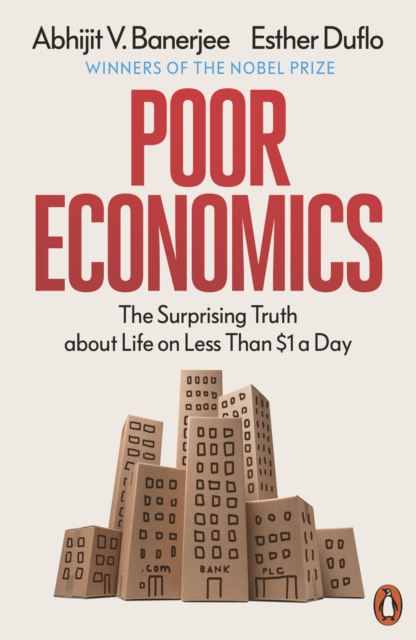
Poor Economics
KSh 2,000.00
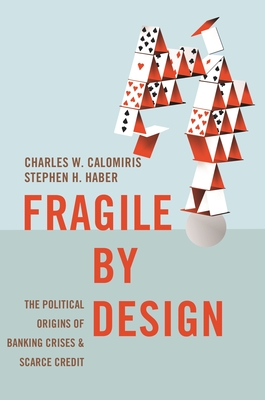
Fragile by Design – The Political Origins of Banking Crises and Scarce Credit
KSh 4,500.00

The Power of Creative Destruction – Economic Upheaval and the Wealth of Nations
KSh 3,250.00

Same as Ever
KSh 3,050.00
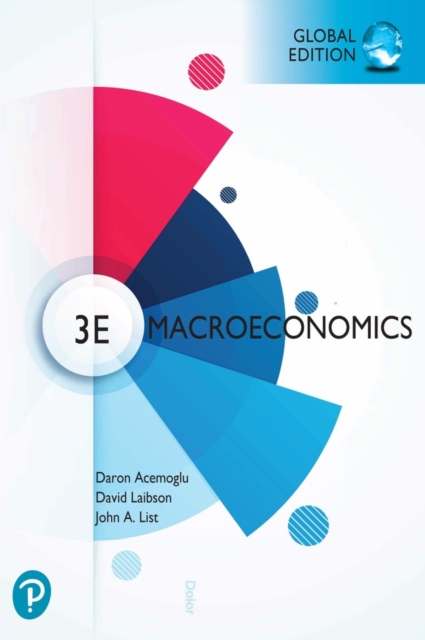
Macroeconomics, Global Edition
KSh 14,500.00

Vulture Capitalism
KSh 2,000.00

Charter Schools and Their Enemies
KSh 4,500.00

Risky Behavior among Youths – An Economic Analysis
KSh 18,000.00

The Great Escape – Health, Wealth, and the Origins of Inequality
KSh 3,300.00