
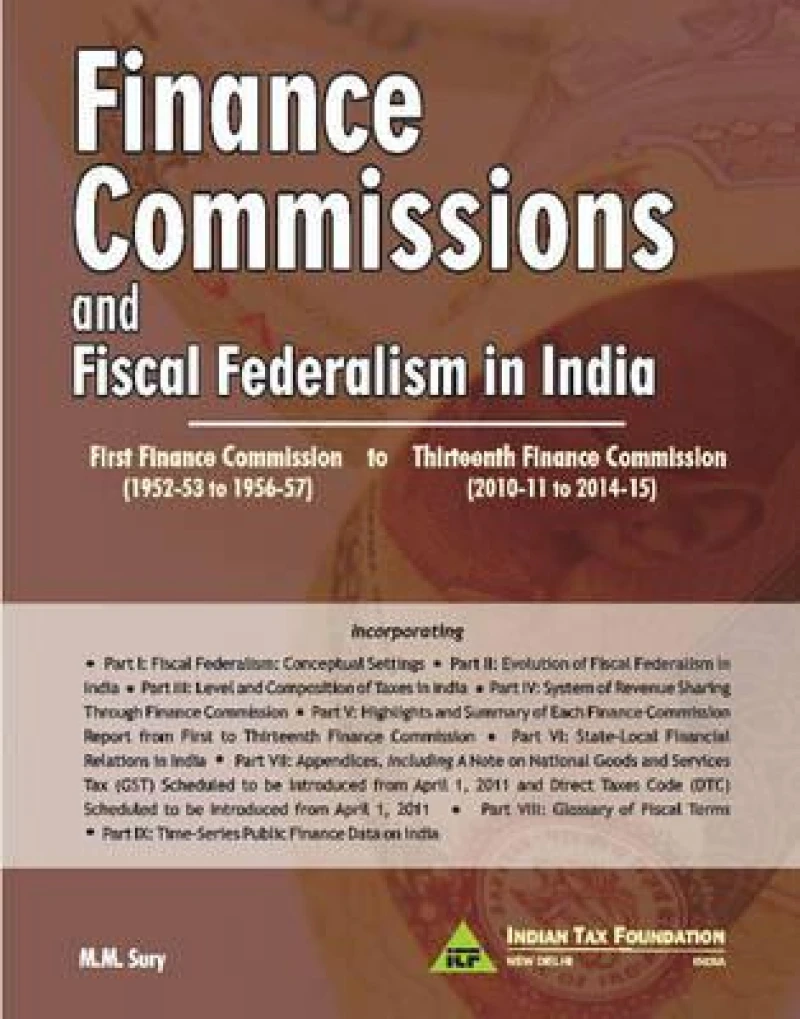
Finance Commissions & Fiscal Federalism in India : 1st Finance Commission (1952-53 to 1956-57) to
by
Dr. M M Sury
Book Details
Format
Hardback or Cased Book
ISBN-10
8177082388
ISBN-13
9788177082388
Publisher
New Century Publications
Imprint
New Century Publications
Country of Manufacture
IN
Country of Publication
GB
Publication Date
Jan 1st, 2010
Print length
569 Pages
Weight
1,536 grams
Dimensions
24.30 x 19.10 x 6.10 cms
Product Classification:
Public finance and taxationTaxation
Ksh 23,750.00
Werezi Extended Catalogue
0 in stock
Delivery Location
Delivery fee: Select location
Secure
Quality
Fast
Finance is the life blood of a government. Arrangements for finance are more complicated in a federal set up than in a unitary form of government. A federal system creates a multiple polity based on divided functions and powers among central, state and local governments. Fiscal federalism, as a branch of public finance, deals with financial arrangements and their working in a federal polity. Fiscal federalism is a subject of topical interest in India in view of some recent developments of historical importance. With the passage of the Constitution (Seventy-third Amendment) Act, 1992, a uniform structure of panchayats has emerged throughout the country. Similarly, the passage of the Constitution (Seventy-fourth Amendment) Act, 1992 was a landmark in the history of municipal administration in India. As a result of these amendments, panchayats and municipalities are now constitutional bodies forming the third tier of the federal polity of India. Furthermore, the Constitution (Eightieth Amendment) Act, 2000, significantly changed the manner of distribution of Central tax collections between the Central and State Governments. Prior to this Amendment, income tax and Union excise duties were the only taxes shared with the States. This Amendment altered the pattern of sharing of Central taxes between the Centre and the States by providing for the sharing of the net proceeds of all Union taxes and duties with the States. Still further, the Constitution (Eighty-eighth Amendment) Act, 2003 included taxes on services under entry 92C in the Union List (List I) in the Seventh Schedule of the Constitution. The Fiscal Responsibility and Budget Management Act, 2003, requires rules to be made under the Act to specify the annual targets for reduction of fiscal deficit and revenue deficit, contingent liabilities and total liabilities. Spread over 30 chapters, this book provides a detailed description and analysis of the evolution and the present structure of fiscal federalism in India. In particular, it contains highlights and summary of each Finance Commission Report from First to Thirteenth Finance Commission. A detailed note on the National Level Goods and Services Tax (GST) -- scheduled to be introduced from April 1, 2011 -- also forms part of the book. Besides, it contains time-series data (1950-51 to 2010-11) on India''s public finances. It also includes a glossary of fiscal terms.
Get Finance Commissions & Fiscal Federalism in India by at the best price and quality guaranteed only at Werezi Africa's largest book ecommerce store. The book was published by New Century Publications and it has pages.

