
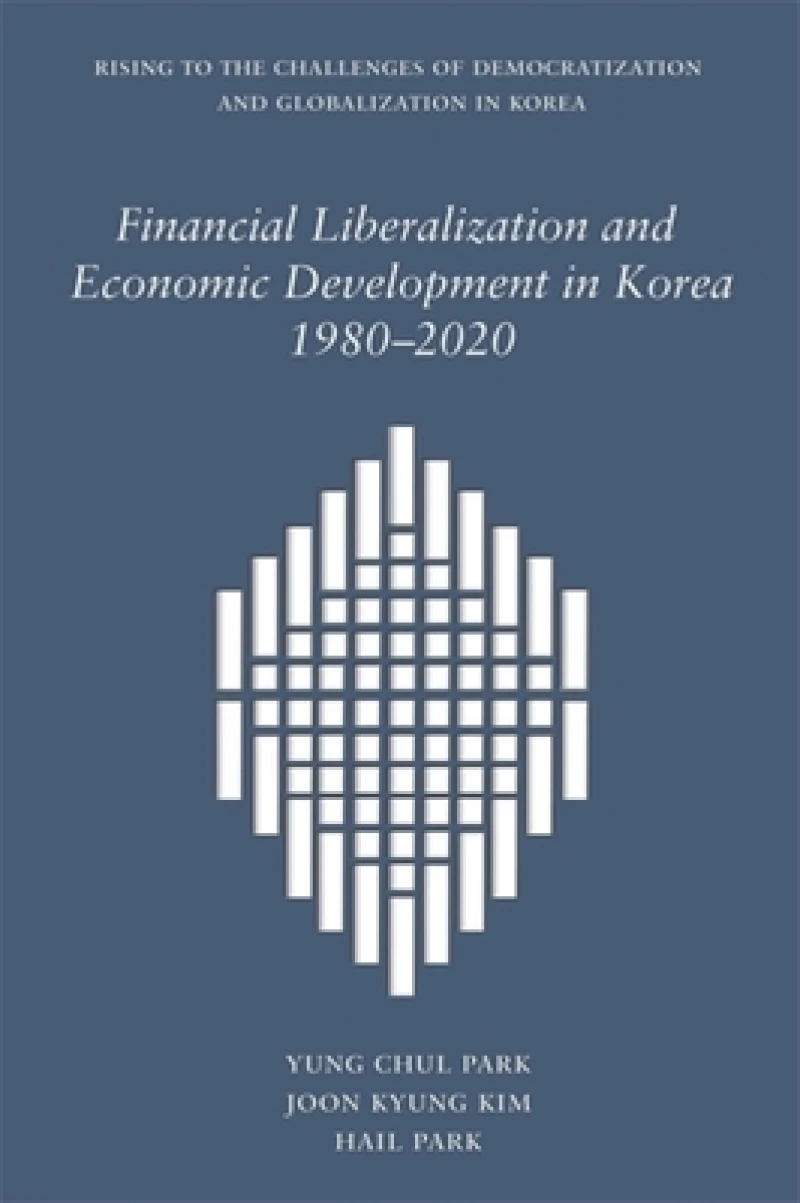
Financial Liberalization and Economic Development in Korea, 1980-2020
Book Details
Format
Hardback or Cased Book
ISBN-10
0674251288
ISBN-13
9780674251281
Publisher
Harvard University Press
Imprint
Harvard University Press
Country of Manufacture
US
Country of Publication
GB
Publication Date
Jan 1st, 1900
Print length
336 Pages
Weight
596 grams
Dimensions
16.00 x 23.50 x 2.90 cms
Ksh 7,900.00
Temporarily out of stock, due soon
0 in stock
Delivery Location
Delivery fee: Select location
Secure
Quality
Fast
Korea’s financial development has been a tale of liberalization and opening but the new system has failed to steer the country away from financial crises. This study analyzes the changes in the financial system and finds that financial liberalization has contributed little to grow and stabilize the Korean economy.
Since the early 1980s, Korea’s financial development has been a tale of liberalization and opening. After the 1997 financial crisis, great strides were made in building a market-oriented financial system through sweeping reforms for deregulation and the opening of financial markets. However, the new system failed to steer the country away from a credit card boom and bust in 2003, a liquidity crisis in 2008, and a run on its savings banks in 2011, and has been severely tested again by the ongoing COVID-19 pandemic crisis. Financial liberalization, clearly, has been no panacea.
This study analyzes the deepening of and structural changes in Korea’s financial system since the early 1980s and presents the empirical results of the effects of financial development on economic growth, stability, and the distribution of income. It finds that, contrary to conventional wisdom, financial liberalization has contributed little to fostering the growth and stability of the Korean economy and has exacerbated income distribution problems. Are there any merits in financial liberalization? The authors answer this query through empirical examinations of the theories of finance and growth. They point to a clear need to further improve the efficiency, soundness, and stability of Korean financial institutions and markets.
This study analyzes the deepening of and structural changes in Korea’s financial system since the early 1980s and presents the empirical results of the effects of financial development on economic growth, stability, and the distribution of income. It finds that, contrary to conventional wisdom, financial liberalization has contributed little to fostering the growth and stability of the Korean economy and has exacerbated income distribution problems. Are there any merits in financial liberalization? The authors answer this query through empirical examinations of the theories of finance and growth. They point to a clear need to further improve the efficiency, soundness, and stability of Korean financial institutions and markets.
Get Financial Liberalization and Economic Development in Korea, 1980-2020 by at the best price and quality guaranteed only at Werezi Africa's largest book ecommerce store. The book was published by Harvard University Press and it has pages.

