
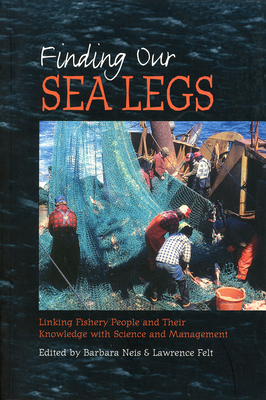
Finding Our Sea Legs : Linking Fishery People and Their Knowledge with Science and Management
Book Details
Format
Paperback / softback
Book Series
Social and Economic Papers
ISBN-10
0919666981
ISBN-13
9780919666986
Publisher
Memorial University Press
Imprint
ISER Books
Country of Manufacture
GB
Country of Publication
GB
Publication Date
Apr 4th, 2000
Print length
320 Pages
Dimensions
22.90 x 15.20 x 1.90 cms
Product Classification:
Conservation of the environmentWildlife: general interest
KSh 3,800.00
Temporarily out of stock, due soon
0 in stock
Delivery Location
Delivery fee: Select location
Secure
Quality
Fast
Interdisciplinary research addresses the global fisheries crisis by fusing experimental approaches with fishers’ firsthand insights from the North Atlantic. It critiques standard stock assessments and calls for institutional reform while exploring fresh methods and tech shifts to enhance resource management.
The global fisheries crisis has prompted widespread debate about the origins of overfishing in managed fisheries. Criticisms of existing systems of science and management have led to experimental approaches involving access to fishery workers and their knowledge. Finding Our Sea Legs is an edited collection of theoretical discussions and case studies of such experiments, with a particular focus on the North Atlantic. Significant institutional changes are required to involve fishery workers and their knowledge in fisheries science and management. Fundamental differences between stock assessment science and fishers' knowledge require new methods for combining and interpreting information. Management structures, industrial and resource management strategies and technological change could affect the nature and quality of information derived from fishery workers. Such impacts need to be assessed. This extensive interdisciplinary overview will be useful to students, fishers, community leaders, social and natural scientists, managers and environmentalists with an interest in fisheries science and management.
Get Finding Our Sea Legs by Barbara Neis at the best price and quality guaranteed only at Werezi Africa's largest book ecommerce store. The book was published by Memorial University Press and it has 320 pages.
Customers Who Bought This Also Bought

World We Once Lived In, The
KSh 1,450.00
How To Do Nothing
KSh 2,700.00

Silent Spring
KSh 2,350.00

Democracy of Species
KSh 1,450.00

Savage Landscape
KSh 3,050.00

Silent Spring
KSh 3,600.00

Once There Were Wolves
KSh 2,700.00

Serviceberry
KSh 2,000.00

Serviceberry
KSh 2,700.00

Coral Reefs
KSh 30,950.00

The Women Who Saved the English Countryside
KSh 2,650.00

Toxic Waste and Environmental Policy in the 21st Century United States
KSh 5,400.00
