
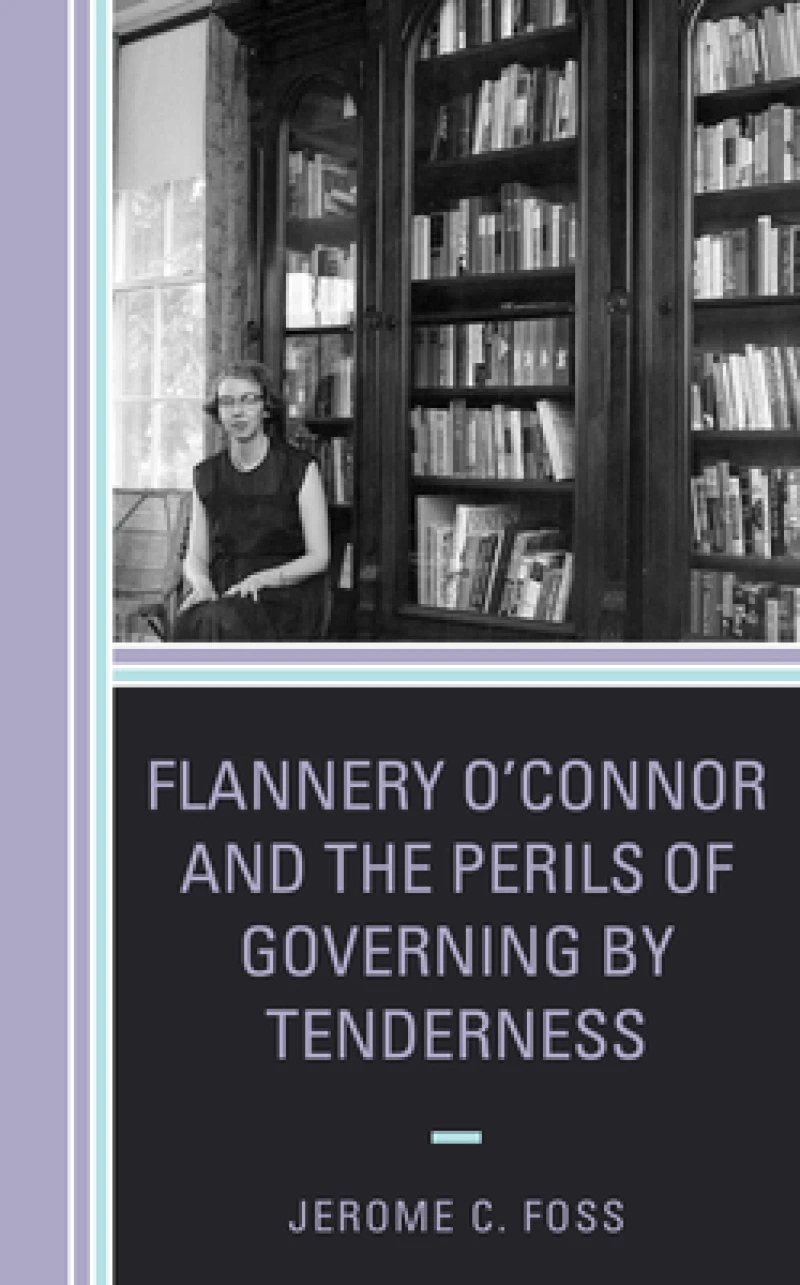
Flannery O’Connor and the Perils of Governing by Tenderness
Book Details
Format
Paperback / Softback
Book Series
Politics, Literature, & Film
ISBN-10
1498532616
ISBN-13
9781498532617
Publisher
Bloomsbury Publishing Plc
Imprint
Lexington Books
Country of Manufacture
GB
Country of Publication
GB
Publication Date
Oct 19th, 2020
Print length
200 Pages
Weight
308 grams
Dimensions
15.00 x 22.90 x 1.90 cms
Product Classification:
Film: styles & genresPolitics & governmentPolitical science & theory
Ksh 7,550.00
Manufactured on Demand
0 in stock
Delivery Location
Delivery fee: Select location
Secure
Quality
Fast
Flannery O’Connor’s fiction continues to haunt American readers, in part because of its uncanny ability to remind us who we are and what we need. This book reveals the extent to which O’Connor was a serious reader of the history of political philosophy and why O’Connor feared that the habit to govern by tenderness would lead to terror.
Flannery O’Connor’s fiction continues to haunt American readers, in part because of its uncanny ability to remind us who we are and what we need. Foss’s book reveals the extent to which O’Connor was a serious reader of the history of political philosophy. She understood the ideas upon which the American regime rests, and she evaluated those ideas from the standpoint of both faith and reason. Foss’s book explains why O’Connor feared that the modern habit to govern by tenderness would lead to terror.
After a thorough account of her familiarity with the history of political philosophy, Foss shows how the works of Plato, Aristotle, Saint Augustine, Saint Thomas Aquinas, Machiavelli, Locke, Rousseau, and Nietzsche inform O’Connor’s stories. This does not mean that O’Connor was writing about politics in the narrow sense. Her vision was deeply theological, and she carefully avoided topical stories that promote social agendas. Her concern was with the health of the American regime more broadly, insofar as the manners of a regime affect citizens’ attitudes toward religion. O’Connor does not present a political theory of her own, but as Foss argues, she was a political philosopher in the original sense of the word. Her stories give clear accounts of her political wisdom. Foss further shows the continued relevance of her wisdom in age dominated by abstract modern theories, such as that of John Rawls.
After a thorough account of her familiarity with the history of political philosophy, Foss shows how the works of Plato, Aristotle, Saint Augustine, Saint Thomas Aquinas, Machiavelli, Locke, Rousseau, and Nietzsche inform O’Connor’s stories. This does not mean that O’Connor was writing about politics in the narrow sense. Her vision was deeply theological, and she carefully avoided topical stories that promote social agendas. Her concern was with the health of the American regime more broadly, insofar as the manners of a regime affect citizens’ attitudes toward religion. O’Connor does not present a political theory of her own, but as Foss argues, she was a political philosopher in the original sense of the word. Her stories give clear accounts of her political wisdom. Foss further shows the continued relevance of her wisdom in age dominated by abstract modern theories, such as that of John Rawls.
Get Flannery O’Connor and the Perils of Governing by Tenderness by at the best price and quality guaranteed only at Werezi Africa's largest book ecommerce store. The book was published by Bloomsbury Publishing Plc and it has pages.

