
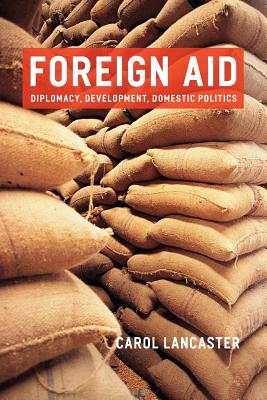
Foreign Aid : Diplomacy, Development, Domestic Politics
Book Details
Format
Paperback / softback
ISBN-10
0226470458
ISBN-13
9780226470450
Publisher
The University of Chicago Press
Imprint
University of Chicago Press
Country of Manufacture
US
Country of Publication
GB
Publication Date
Dec 1st, 2006
Print length
288 Pages
Weight
468 grams
Dimensions
15.20 x 22.80 x 2.10 cms
Product Classification:
Aid & relief programmesInternational relations
KSh 5,350.00
Currently unavailable
0 in stock
Delivery Location
Delivery fee: Select location
Secure
Quality
Fast
A twentieth-century innovation, foreign aid has become a familiar and even expected element in international relations. But scholars and government officials continue to debate why countries provide it: some claim that it is primarily a tool of diplomacy, some argue that it is largely intended to support development in poor countries, and still others point out its myriad newer uses. Carol Lancaster effectively puts this dispute to rest here by providing the most comprehensive answer yet to the question of why governments give foreign aid. She argues that because of domestic politics in aid-giving countries, it has always been—and will continue to be—used to achieve a mixture of different goals. Drawing on her expertise in both comparative politics and international relations and on her experience as a former public official, Lancaster provides five in-depth case studies—the United States, Japan, France, Germany, and Denmark—that demonstrate how domestic politics and international pressures combine to shape how and why donor governments give aid. In doing so, she explores the impact on foreign aid of political institutions, interest groups, and the ways governments organize their giving. Her findings provide essential insight for scholars of international relations and comparative politics, as well as anyone involved with foreign aid or foreign policy.
Get Foreign Aid by Carol Lancaster at the best price and quality guaranteed only at Werezi Africa's largest book ecommerce store. The book was published by The University of Chicago Press and it has 288 pages.
Customers Who Bought This Also Bought
The White Man''s Burden
KSh 2,900.00

Dead Aid
KSh 2,000.00

The Bottom Billion
KSh 2,500.00

World Food and Agriculture – Statistical Pocketbook 2024
KSh 4,500.00

World Food and Agriculture – Statistical Pocketbook 2022
KSh 4,500.00

World Food and Agriculture – Statistical Pocketbook 2023
KSh 4,500.00
Resilience Toolbox
KSh 6,500.00

The Emergence of Humanitarian Intervention
KSh 13,850.00
Evaluation of PEPFAR
KSh 13,300.00

Climate Change Adaptation and International Development
KSh 30,950.00

Moving Beyond Assessment
KSh 6,900.00
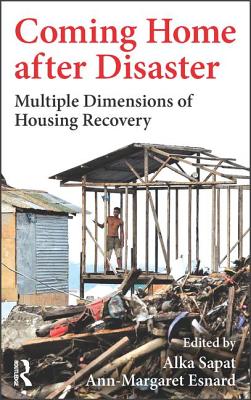
Coming Home after Disaster
KSh 30,950.00


More in This Genre
The White Man''s Burden
KSh 2,900.00
Dead Aid
KSh 2,000.00
The Bottom Billion
KSh 2,500.00
World Food and Agriculture – Statistical Pocketbook 2024
KSh 4,500.00
World Food and Agriculture – Statistical Pocketbook 2022
KSh 4,500.00
World Food and Agriculture – Statistical Pocketbook 2023
KSh 4,500.00
