
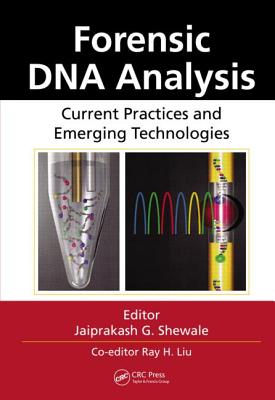
Forensic DNA Analysis : Current Practices and Emerging Technologies
Book Details
Delivery Location
Delivery fee: Select location
The field of forensic DNA analysis has grown immensely in the past two decades and genotyping of biological samples is now routinely performed in human identification (HID) laboratories. Application areas include paternity testing, forensic casework, family lineage studies, identification of human remains, and DNA databasing. Forensic DNA Analysis: Current Practices and Emerging Technologies explores the fundamental principles and the application of technologies for each aspect of forensic DNA analysis.
The book begins by discussing the value of DNA evidence and how to properly recognize, document, collect, and store it. The remaining chapters examine:
- The most widely adopted methods and the best practices for DNA isolation from forensic biological samples and human remains
- Studies carried out on the use of both messenger RNA and small (micro) RNA profiling
- Real-time polymerase chain reaction (PCR) methods for quantification and assessment of human DNA prior to genotyping
- Capillary electrophoresis (CE) as a tool for forensic DNA analysis
- Next-generation short tandem repeat (STR) genotyping kits for forensic applications, the biological nature of STR loci, and Y-chromosome STRs (Y-STRs)
- Mitochondrial DNA (mtDNA) sequence analysis
- Single nucleotide polymorphisms (SNPs) and insertion/deletion polymorphisms (indels) in typing highly degraded DNA
- Deep-sequencing technologies
- The current state of integrated systems in forensic DNA analysis
The book concludes by discussing various aspects of sample-processing training and the entities that provide such training programs. This volume is an essential resource for students, researchers, teaching faculties, and other professionals interested in human identification/forensic DNA analysis.
Get Forensic DNA Analysis by Jaiprakash G. Shewale at the best price and quality guaranteed only at Werezi Africa's largest book ecommerce store. The book was published by Taylor & Francis Inc and it has 446 pages.
Customers Who Bought This Also Bought

Forensics
KSh 2,150.00

Livid
KSh 1,800.00

Unnatural Death
KSh 1,800.00

Identity Unknown
KSh 2,000.00

Identity Unknown
KSh 3,950.00

Livid
KSh 3,950.00

Cognitive Psychology for Forensic Experts
KSh 10,250.00

Criminalistics: Forensic Science, Crime, and Ter – Forensic Science, Crime, and Terrorism
KSh 19,600.00

AI Based Advancements in Biometrics and its Applications
KSh 10,100.00

Advances in Forensic Applications of Mass Spectrometry
KSh 52,200.00

The Forensic Studies Anthology
KSh 12,250.00

Naming Jack the Ripper
KSh 4,500.00
