
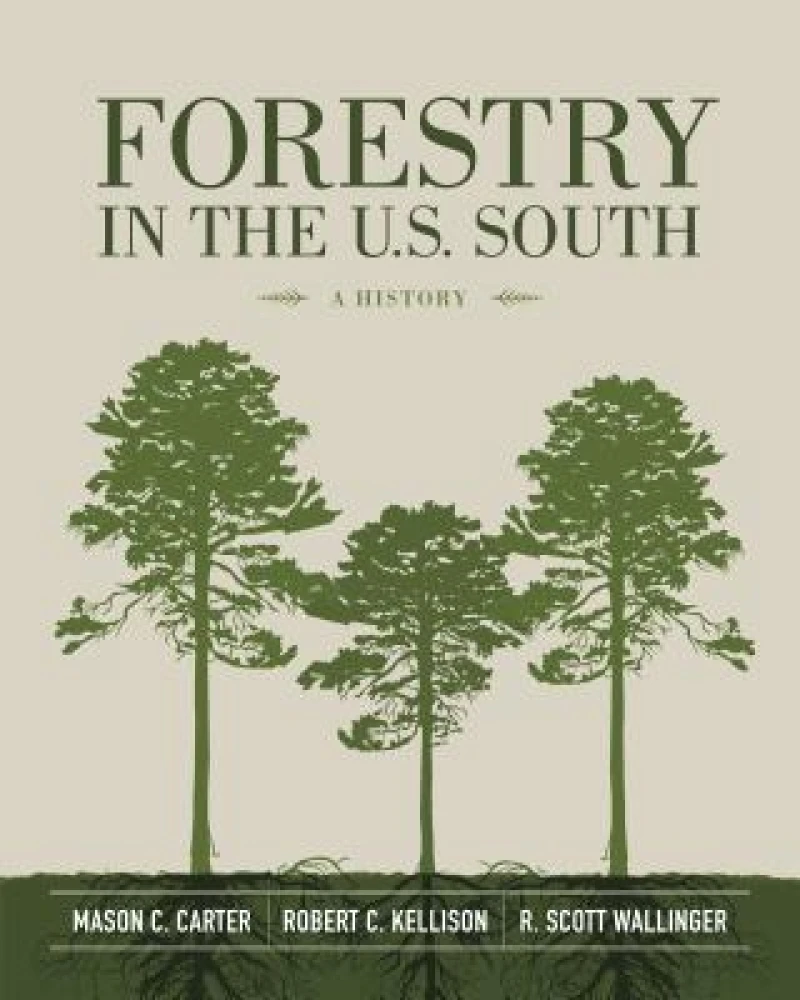
Forestry in the U.S. South : A History
Book Details
Format
Hardback or Cased Book
ISBN-10
0807160547
ISBN-13
9780807160541
Publisher
Louisiana State University Press
Imprint
Louisiana State University Press
Country of Manufacture
US
Country of Publication
GB
Publication Date
Nov 9th, 2015
Print length
408 Pages
Weight
1,012 grams
Dimensions
26.00 x 20.40 x 3.30 cms
Product Classification:
Forestry & silviculture: practice & techniquesForestry and silviculture
Ksh 10,100.00
Temporarily out of stock, due soon
0 in stock
Delivery Location
Delivery fee: Select location
Secure
Quality
Fast
During the second half of the twentieth century, partnerships between public and private entities improved the inventory, health, and productivity of the forestry industry. This book explores the remarkable commercial and environmental gains made possible through the collaboration of industry, universities, and other agencies.
During the second half of the twentieth century, the forest industry removed more than 300 billion cubic feet of timber from southern forests. Yet at the same time, partnerships between public and private entities improved the inventory, health, and productivity of this vast and resilient resource. A comprehensive and multilayered history, Forestry in the U.S. South explores the remarkable commercial and environmental gains made possible through the collaboration of industry, universities, and other agencies.
This authoritative assessment starts by discussing the motives and practices of early lumber companies, which, having exhausted the forests of the Northeast by the turn of the twentieth century, aggressively began to harvest the virgin pine of the South, with production peaking by 1909. The rapidly declining supply of old-growth southern pine triggered a threat of timber famine and inspired efforts to regulate the industry. By mid-century, however, industrial forestry had its own profit incentive to replenish harvested timber. This set the stage for a unique alliance between public and private sectors, which conducted cooperative research on tree improvement, fertilization, seedling production, and other practices germane to sustainable forest management.
By the close of the 1990s, concerns about an inadequate timber supply gave way to questions about how to utilize millions of acres of pine plantations approaching maturity. No longer concerned with the future supply of raw material and facing mounting global competition the U.S. pulp and paper industry consolidated, restructured, and sold nearly20 million acres of forests to Timber Investment Management Organizations (TIMOs) and Real Estate Investment Trusts (REITs), resulting in an entirely new dynamic for private forestry in the South.
Incomparable in scope, Forestry in the U.S. South spotlights the people and organizations responsible for empowering individual forest owners across the region, tripling the production of pine stands and bolstering the livelihoods of thousands of men and women across the South.
This authoritative assessment starts by discussing the motives and practices of early lumber companies, which, having exhausted the forests of the Northeast by the turn of the twentieth century, aggressively began to harvest the virgin pine of the South, with production peaking by 1909. The rapidly declining supply of old-growth southern pine triggered a threat of timber famine and inspired efforts to regulate the industry. By mid-century, however, industrial forestry had its own profit incentive to replenish harvested timber. This set the stage for a unique alliance between public and private sectors, which conducted cooperative research on tree improvement, fertilization, seedling production, and other practices germane to sustainable forest management.
By the close of the 1990s, concerns about an inadequate timber supply gave way to questions about how to utilize millions of acres of pine plantations approaching maturity. No longer concerned with the future supply of raw material and facing mounting global competition the U.S. pulp and paper industry consolidated, restructured, and sold nearly20 million acres of forests to Timber Investment Management Organizations (TIMOs) and Real Estate Investment Trusts (REITs), resulting in an entirely new dynamic for private forestry in the South.
Incomparable in scope, Forestry in the U.S. South spotlights the people and organizations responsible for empowering individual forest owners across the region, tripling the production of pine stands and bolstering the livelihoods of thousands of men and women across the South.
Get Forestry in the U.S. South by at the best price and quality guaranteed only at Werezi Africa's largest book ecommerce store. The book was published by Louisiana State University Press and it has pages.

