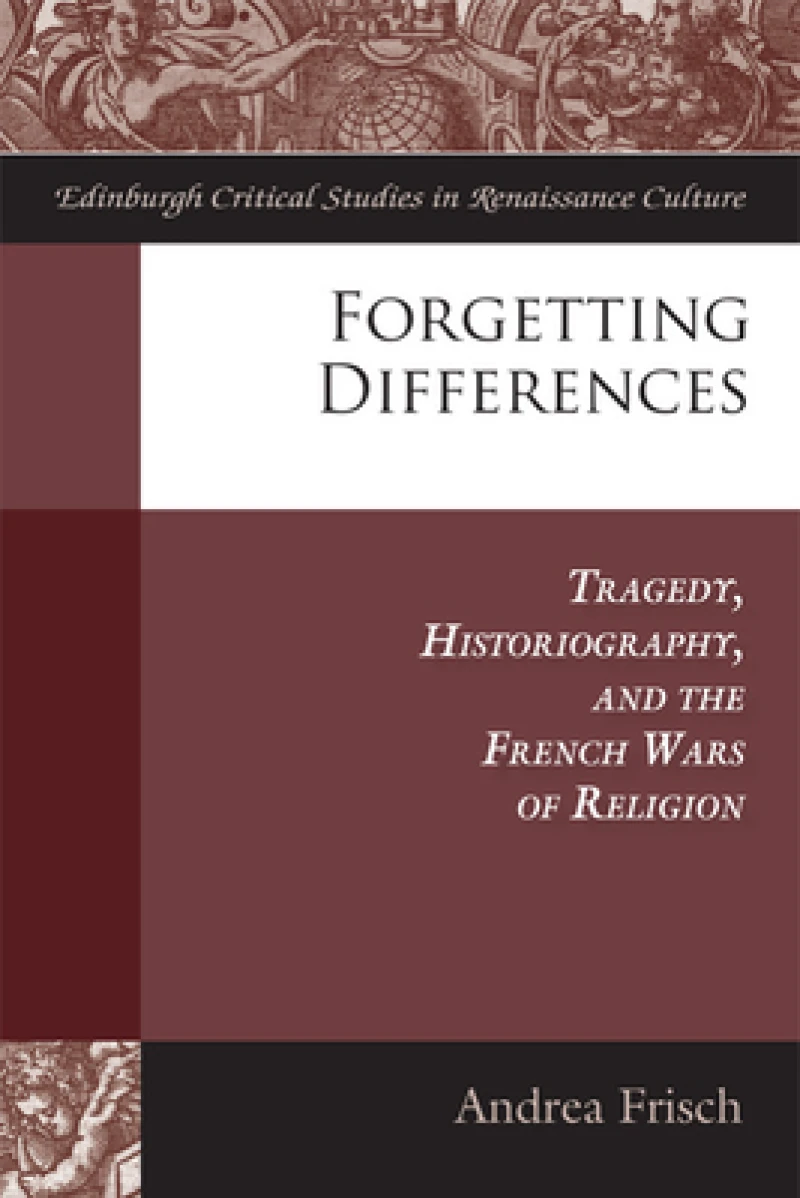
Forgetting Differences : Tragedy, Historiography, and the French Wars of Religion
Book Details
Format
Hardback or Cased Book
ISBN-10
0748694390
ISBN-13
9780748694396
Publisher
Edinburgh University Press
Imprint
Edinburgh University Press
Country of Manufacture
GB
Country of Publication
GB
Publication Date
Jun 2nd, 2015
Print length
192 Pages
Weight
424 grams
Dimensions
16.40 x 24.20 x 1.60 cms
Ksh 17,100.00
Werezi Extended Catalogue
0 in stock
Delivery Location
Delivery fee: Select location
Secure
Quality
Fast
Examines the impact of the royal politics of amnesia on tragedy and national historiography in France, 1560-1630
This study argues that the political and legislative process of forgetting internal differences, undertaken in France after the civil wars of the sixteenth century, leads to subtle yet fundamental shifts in the broader conception of the relationship between readers or spectators on the one hand, and the matter of history, on the other. These shifts, occasioned by the desire for communal reconciliation and generally associated with an increasingly modern sensibility, will nonetheless prove useful to the ideologies of cultural and political absolutism.
By juxtaposing representations of the French civil war past as they appear (and frequently overlap) in historiography and tragedy from 1550-1630, Andrea Frisch tracks changes in the ways in which history and tragedy sought to ''move'' readers throughout the period of the wars and in their wake. The book shows that a shift from a politically (and martially) active reading of the past to a primarily affective one follows the imperative, so clear and urgent at the turn of the seventeenth century, to put an end to violent conflict. The emotions that neoclassical tragedy and absolutist historiography sought to elicit were intended above all to be shared, and thus a medium via which political and religious differences could be downplayed or forgotten. The book aims to illuminate some of the ways in which the experience of the wars of religion, as registered in tragedy and historiography, contributed to a restructuring of the ever-vital relationship between emotion and politics, and thereby to historicize the very concept of ''esmouvoir''.
By juxtaposing representations of the French civil war past as they appear (and frequently overlap) in historiography and tragedy from 1550-1630, Andrea Frisch tracks changes in the ways in which history and tragedy sought to ''move'' readers throughout the period of the wars and in their wake. The book shows that a shift from a politically (and martially) active reading of the past to a primarily affective one follows the imperative, so clear and urgent at the turn of the seventeenth century, to put an end to violent conflict. The emotions that neoclassical tragedy and absolutist historiography sought to elicit were intended above all to be shared, and thus a medium via which political and religious differences could be downplayed or forgotten. The book aims to illuminate some of the ways in which the experience of the wars of religion, as registered in tragedy and historiography, contributed to a restructuring of the ever-vital relationship between emotion and politics, and thereby to historicize the very concept of ''esmouvoir''.
Get Forgetting Differences by at the best price and quality guaranteed only at Werezi Africa's largest book ecommerce store. The book was published by Edinburgh University Press and it has pages.