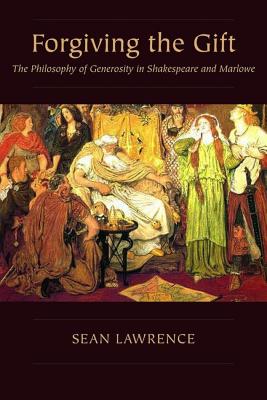
Forgiving the Gift : The Philosophy of Generosity in Shakespeare and Marlowe
Book Details
Format
Paperback / softback
Book Series
Medieval & Renaissance Literary Studies
ISBN-10
0271092963
ISBN-13
9780271092966
Publisher
Pennsylvania State University Press
Imprint
Pennsylvania State University Press
Country of Manufacture
GB
Country of Publication
GB
Publication Date
May 3rd, 2022
Print length
267 Pages
Weight
418 grams
Dimensions
15.10 x 22.90 x 2.10 cms
Product Classification:
Literary studies: c 1500 to c 1800Shakespeare studies & criticism
KSh 5,050.00
Currently unavailable
0 in stock
Delivery Location
Delivery fee: Select location
Secure
Quality
Fast
Forgiving the Gift challenges the tendency to reflexively understand gifts as exchanges, negotiations, and circulations. Lawrence reads plays by Christopher Marlowe and William Shakespeare as informed by an early modern belief in the possibility and even necessity of radical generosity, of gifts that break the cycle of economy and self-interest. The prologue reads Marlowe’s Dr. Faustus to show how the play aligns gift and grace, depicting Faustus’s famous bond as the instrument simultaneously of reciprocal exchange and of damnation. In the introduction, the author frames his argument theoretically by placing Marcel Mauss’s classic essay, “The Gift,” into dialogue with Jacques Derrida, Emmanuel Levinas, and Paul Ricoeur to sketch two very different understandings of gift-giving. In the first, described by Mauss, the gift becomes a covert form of exchange. Though Mauss contrasts the gift economy with the market economy, his description of the gift economy nevertheless undermines his own project of discovering in it a basis for social solidarity. In the second understanding of gift exchange, derived from the philosophy of Levinas, the gift expresses the radical asymmetry of ethical concern. Literature and philosophy scholars alike will benefit from the original readings of The Merchant of Venice, Edward II, King Lear, Titus Andronicus, and The Tempest, which constitute the body of the text. These readings find in the plays a generosity that exceeds the social practice of gift-giving, because extraordinarily generous acts of friendship or filial affection survive the collapse of social norms. Antonio in Merchant and the title character in Edward II practice a friendship whose extravagance marks its excess. Lear, on the other hand, brings about his tragedy by attempting to reduce filial love to debt. Titus also discovers a love excessive to social convention when rape and mutilation annihilate his daughter’s cultural value. Finally, Prospero in The Tempest sacrifices power and even his own life for the love of his daughter, giving a gift rendered asymmetrical by both its excess and its secrecy. While proposing new readings of works of Renaissance drama, Forgiving the Gift also questions the model of human life from which many contemporary readings, especially those characterized as new historicist or cultural materialist, grow. In so doing, it addresses questions of how we are to understand literary texts—and how we are to live with others in the world.
Get Forgiving the Gift by Sean Lawrence at the best price and quality guaranteed only at Werezi Africa's largest book ecommerce store. The book was published by Pennsylvania State University Press and it has 267 pages.
Customers Who Bought This Also Bought
Arabian Nights'' Entertainments
KSh 2,950.00
Robinson Crusoe
KSh 1,450.00
Metaphysical Poetry
KSh 2,350.00
A Portrait of the Artist as a Young Man
KSh 1,250.00

Shakespeare Book
KSh 4,250.00
Don Quixote de la Mancha
KSh 2,150.00
Lorna Doone
KSh 2,000.00

Tom Jones
KSh 5,400.00
Tom Jones
KSh 2,250.00
Micromégas and Other Short Fictions
KSh 2,350.00
Murder Among Friends
KSh 22,750.00

Hamlet: Poem Unlimited
KSh 1,800.00