

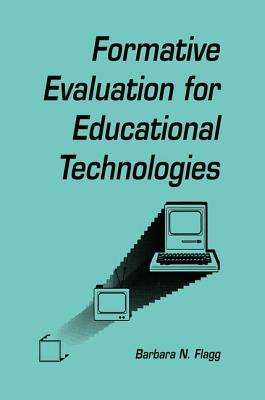
formative Evaluation for Educational Technologies
Book Details
Format
Hardback
Book Series
Routledge Communication Series
ISBN-10
0805801278
ISBN-13
9780805801279
Publisher
Taylor & Francis Inc
Imprint
Routledge
Country of Manufacture
US
Country of Publication
GB
Publication Date
Dec 1st, 1989
Print length
274 Pages
Weight
635 grams
KSh 18,700.00
Currently unavailable
0 in stock
Delivery Location
Delivery fee: Select location
Secure
Quality
Fast
The designers of educational or training programs that employ electronic technology might have many questions about a project while it is still in the early stages of development. For instance: Is the program''s presentation too simple, or too complex for its target audience? Does the pacing of the program help or hinder comprehension? Which aspects of the program are the most appealing, and why? Formative evaluation can answer these, or similar questions. It can help guide designers of television programs, microcomputer software, interactive videodiscs, or virtually any other educational item, in making modifications that can lead to the development of a final product that fully achieves its stated goals.
Until very recently, however, the person interested in avoiding potential problems through the use of formative evaluation would have been faced with difficulties of a different kind. Comprehensive treatment of formative evaluation has been scarce, and published discussion on formative evaluation of computer-based materials has been virtually nonexistent. Until now, that is.
Barbara Flagg''s Formative Evaluation for Educational Technologies provides comprehensive treatment of formative evaluation. The book offers:
* extensive coverage of all the methods evaluators might use to assess the user friendliness, the appeal, and the outcome effectiveness of an educational program.
* extensive focus on new technologies
* coverage of all phases of program development, from initial idea to final product
* discussion of formative evaluation as part of the broader field of curriculum evaluation
* numerous case studies.
This volume will appeal to a wide variety of people engaged in formative evaluation. It is an excellent guide for newcomers to the field; it is a state-of-the art document for established practitioners of instructional design and curriculum evaluation.
Until very recently, however, the person interested in avoiding potential problems through the use of formative evaluation would have been faced with difficulties of a different kind. Comprehensive treatment of formative evaluation has been scarce, and published discussion on formative evaluation of computer-based materials has been virtually nonexistent. Until now, that is.
Barbara Flagg''s Formative Evaluation for Educational Technologies provides comprehensive treatment of formative evaluation. The book offers:
* extensive coverage of all the methods evaluators might use to assess the user friendliness, the appeal, and the outcome effectiveness of an educational program.
* extensive focus on new technologies
* coverage of all phases of program development, from initial idea to final product
* discussion of formative evaluation as part of the broader field of curriculum evaluation
* numerous case studies.
This volume will appeal to a wide variety of people engaged in formative evaluation. It is an excellent guide for newcomers to the field; it is a state-of-the art document for established practitioners of instructional design and curriculum evaluation.
Get formative Evaluation for Educational Technologies by Barbara N. Flagg at the best price and quality guaranteed only at Werezi Africa's largest book ecommerce store. The book was published by Taylor & Francis Inc and it has 274 pages.
Customers Who Bought This Also Bought

Educational Technology
KSh 19,800.00

Let Them Eat Data
KSh 16,000.00

Human Interface and the Management of Information. Information and Knowledge in Context
KSh 8,100.00

Impact of ChatGPT on Higher Education
KSh 6,650.00

Teaching with Reverence
KSh 8,100.00

Exploring the Theory, Pedagogy and Practice of Networked Learning
KSh 16,200.00
Assessment and Teaching of 21st Century Skills
KSh 34,750.00
Failure to Connect
KSh 4,150.00

Wikiworld
KSh 5,050.00
Educational Networking
KSh 16,200.00
Augmented Reality in Education
KSh 32,400.00

Jahrbuch Medienpädagogik 14
KSh 9,000.00
More by Barbara N. Flagg
More in This Genre
Educational Technology
KSh 19,800.00
Let Them Eat Data
KSh 16,000.00
Human Interface and the Management of Information. Information and Knowledge in Context
KSh 8,100.00
Impact of ChatGPT on Higher Education
KSh 6,650.00
Teaching with Reverence
KSh 8,100.00
Exploring the Theory, Pedagogy and Practice of Networked Learning
KSh 16,200.00
