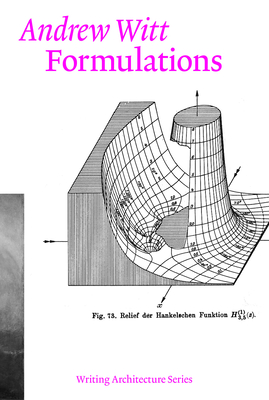
Formulations : Architecture, Mathematics, Culture
by
Andrew Witt
Book Details
Format
Paperback / softback
Book Series
Writing Architecture
ISBN-10
0262543001
ISBN-13
9780262543002
Publisher
MIT Press Ltd
Imprint
MIT Press
Country of Manufacture
IT
Country of Publication
GB
Publication Date
Jan 11th, 2022
Print length
328 Pages
Weight
566 grams
Dimensions
13.90 x 20.20 x 3.50 cms
Product Classification:
Architecture
KSh 6,500.00
Werezi Extended Catalogue
Delivery in 12 days
2 copies in stock
Delivery Location
Delivery fee: Select location
Delivery in 12 days
Secure
Quality
Fast
An investigation of mathematics as it was drawn, encoded, imagined, and interpreted by architects on the eve of digitization in the mid-twentieth century.
In Formulations, Andrew Witt examines the visual, methodological, and cultural intersections between architecture and mathematics. The linkages Witt explores involve not the mystic transcendence of numbers invoked throughout architectural history, but rather architecture’s encounters with a range of calculational systems—techniques that architects inventively retooled for design. Witt offers a catalog of mid-twentieth-century practices of mathematical drawing and calculation in design that preceded and anticipated digitization as well as an account of the formal compendia that became a cultural currency shared between modern mathematicians and modern architects.
Witt presents a series of extensively illustrated “biographies of method”—episodes that chart the myriad ways in which mathematics, particularly the mathematical notion of modeling and drawing, was spliced into the creative practice of design. These include early drawing machines that mechanized curvature; the incorporation of geometric maquettes—“theorems made flesh”—into the toolbox of design; the virtualization of buildings and landscapes through surveyed triangulation and photogrammetry; formal and functional topology; stereoscopic drawing; the economic implications of cubic matrices; and a strange synthesis of the technological, mineral, and biological: crystallographic design.
Trained in both architecture and mathematics, Witt uses mathematics as a lens through which to understand the relationship between architecture and a much broader set of sciences and visual techniques. Through an intercultural exchange with other disciplines, he argues, architecture adapted not only the shapes and surfaces of mathematics but also its values and epistemic ideals.
In Formulations, Andrew Witt examines the visual, methodological, and cultural intersections between architecture and mathematics. The linkages Witt explores involve not the mystic transcendence of numbers invoked throughout architectural history, but rather architecture’s encounters with a range of calculational systems—techniques that architects inventively retooled for design. Witt offers a catalog of mid-twentieth-century practices of mathematical drawing and calculation in design that preceded and anticipated digitization as well as an account of the formal compendia that became a cultural currency shared between modern mathematicians and modern architects.
Witt presents a series of extensively illustrated “biographies of method”—episodes that chart the myriad ways in which mathematics, particularly the mathematical notion of modeling and drawing, was spliced into the creative practice of design. These include early drawing machines that mechanized curvature; the incorporation of geometric maquettes—“theorems made flesh”—into the toolbox of design; the virtualization of buildings and landscapes through surveyed triangulation and photogrammetry; formal and functional topology; stereoscopic drawing; the economic implications of cubic matrices; and a strange synthesis of the technological, mineral, and biological: crystallographic design.
Trained in both architecture and mathematics, Witt uses mathematics as a lens through which to understand the relationship between architecture and a much broader set of sciences and visual techniques. Through an intercultural exchange with other disciplines, he argues, architecture adapted not only the shapes and surfaces of mathematics but also its values and epistemic ideals.
Get Formulations by Andrew Witt at the best price and quality guaranteed only at Werezi Africa's largest book ecommerce store. The book was published by MIT Press Ltd and it has 328 pages.
Customers Who Bought This Also Bought

Architecture
KSh 7,550.00

Architecture: The Whole Story
KSh 5,150.00

Architectural Graphics
KSh 8,650.00

The Dorm Room Guide
KSh 2,900.00

The Scandal of the Kingdom Workbook
KSh 2,700.00

The Cairo of Naguib Mahfouz
KSh 4,100.00

Room 606
KSh 10,800.00
Éléments et théorie de l''architecture. Tome 3
KSh 6,050.00
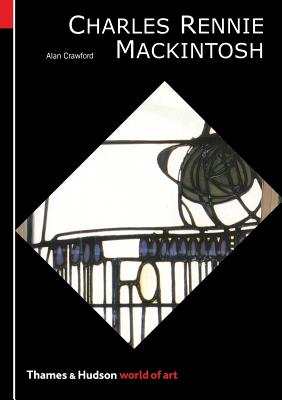
Charles Rennie Mackintosh
KSh 1,950.00
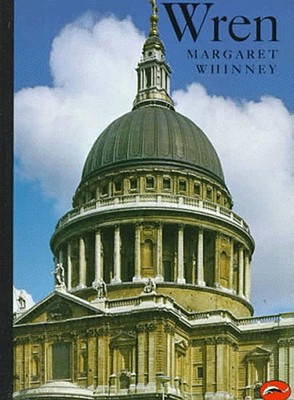
Wren
KSh 1,950.00
Latin American Architecture
KSh 8,650.00

If Buildings Could Speak, What Would They Say?
KSh 3,600.00