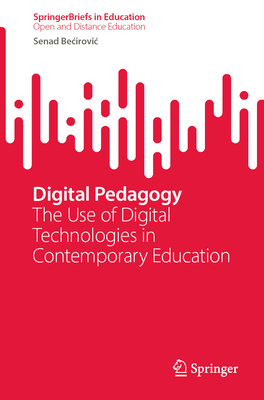
Fostering Giftedness : Challenges and Opportunities
Book Details
Format
Hardback
ISBN-10
1536190985
ISBN-13
9781536190984
Publisher
Nova Science Publishers Inc
Imprint
Nova Science Publishers Inc
Country of Manufacture
US
Country of Publication
GB
Publication Date
Feb 17th, 2021
Print length
234 Pages
Weight
442 grams
Dimensions
16.10 x 23.50 x 2.00 cms
KSh 31,150.00
Not available
0 in stock
Delivery Location
Delivery fee: Select location
Secure
Quality
Fast
This book contains two parts. The first part, Chapters 1 to 14 provide a systematic insight into key aspects of gifted students starting from different approaches to defining giftedness, then identifying the gifted, their role in the society, gender differences, socio-emotional development, mentoring gifted students, creating an optimal environment for their development, evaluating the work of the gifted, underachievement of the gifted, methods and programs of working with the gifted, use of modern technologies in teaching gifted students, and training of teachers to work with the gifted population. The second part of the manuscript includes a case study, or empirical research on the development of students gifted in mathematics. The research method is explained first, including a description of the participants and data collection instruments. The research conducted is a case study showing the development of gifted mathematicians both in schools and in the family environment, from early childhood to higher education. The research includes many factors in the family environment such as: socio-economic and educational status of parents, learning conditions, number of children in the family, parents'' assistance with school obligations, parents'' reaction to children''s successes and failures, punishment, etc. The research also includes many in-school factors that could have a positive or negative, motivating or restraining effect on the development of the mathematical gift of the respondents. Some of these factors are: identification of the gifted, methods of working with them, rewards, punishments, programs of working with them, teacher-student relations, and the like. In addition to the development of respondents in the family and school environments, their motivation was also investigated. Based on the interviews conducted with the respondents, the factors that induced our respondents to develop into mathematically gifted students were presented. The development of students gifted in mathematics is also described on the basis of the analysis of their pedagogical documentation, through which their abilities outside mathematics were determined, along with whether there were any crucial moments that had a positive or negative effect on them, i.e. their mathematical development. Finally, the results of the research were summarized and the factors that could have contributed to the mathematical gift of the respondents were listed. Moreover, certain recommendations are given to parents and teachers for more efficient work with the gifted population.
Get Fostering Giftedness by Senad Becirovic at the best price and quality guaranteed only at Werezi Africa's largest book ecommerce store. The book was published by Nova Science Publishers Inc and it has 234 pages.
Customers Who Bought This Also Bought

The Anxious Generation
KSh 2,000.00

Restoring Childhood
KSh 3,050.00

Bible old testament bindup_8x8
KSh 2,450.00
The Einstein Syndrome
KSh 3,200.00

Restoring Childhood
KSh 4,500.00
Free to Learn
KSh 3,050.00
Key Issues in Childhood and Youth Studies
KSh 8,000.00
Key Issues in Childhood and Youth Studies
KSh 30,950.00

Outsmart Anxiety
KSh 4,700.00
How Children Succeed
KSh 3,400.00
Helping Children Succeed
KSh 3,050.00

The Life and Creative Works of Paulo Coelho
KSh 21,600.00