
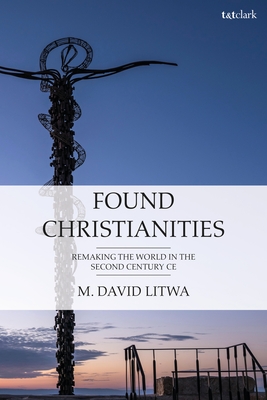
Found Christianities : Remaking the World of the Second Century CE
Book Details
Format
Paperback / softback
ISBN-10
056770386X
ISBN-13
9780567703866
Publisher
Bloomsbury Publishing PLC
Imprint
T.& T.Clark Ltd
Country of Manufacture
GB
Country of Publication
GB
Publication Date
Mar 24th, 2022
Print length
336 Pages
Weight
522 grams
Dimensions
15.70 x 23.30 x 2.00 cms
Product Classification:
Ancient / Biblical IsraelNonePolitical structure and processes
KSh 4,950.00
Currently unavailable
0 in stock
Delivery Location
Delivery fee: Select location
Secure
Quality
Fast
M. David Litwa tells the stories of the early Christians whose religious identity was either challenged or outright denied. In the second century many different groups and sects claimed to be the only Orthodox or authentic version of Christianity, and Litwa shows how those groups and figures on the side of developing Christian Orthodoxy often dismissed other versions of Christianity by refusing to call them "Christian". However, the writings and treatises against these groups contain fascinating hints of what they believed, and why they called themselves Christian.
Litwa outlines these different groups and the controversies that surrounded them, presenting readers with an overview of the vast tapestry of beliefs that made up second century Christianity. By moving beyond notions of "gnostic", "heretical" and "orthodox" Litwa allows these "lost Christianities" to speak for themselves. He also questions the notion of some Christian identities "surviving" or "perishing", arguing that all second century "Catholic" groups look very different to any form of modern Roman Catholicism.
Litwa shows that countless discourses, ideas, and practices are continually recycled and adapted throughout time in the building of Christian identities, and indeed that the influence of so-called "lost" Christianities can still be felt today.
Litwa outlines these different groups and the controversies that surrounded them, presenting readers with an overview of the vast tapestry of beliefs that made up second century Christianity. By moving beyond notions of "gnostic", "heretical" and "orthodox" Litwa allows these "lost Christianities" to speak for themselves. He also questions the notion of some Christian identities "surviving" or "perishing", arguing that all second century "Catholic" groups look very different to any form of modern Roman Catholicism.
Litwa shows that countless discourses, ideas, and practices are continually recycled and adapted throughout time in the building of Christian identities, and indeed that the influence of so-called "lost" Christianities can still be felt today.
Get Found Christianities by Dr M. David Litwa at the best price and quality guaranteed only at Werezi Africa's largest book ecommerce store. The book was published by Bloomsbury Publishing PLC and it has 336 pages.
Customers Who Bought This Also Bought
Reflections on Psalms
KSh 2,000.00
How to Preach and Teach the Old Testament for All Its Worth
KSh 2,700.00
The God I Don''t Understand
KSh 2,350.00

The Mission of God
KSh 7,200.00
Supernatural
KSh 2,700.00
How to Read the Bible for All Its Worth
KSh 3,250.00
Romans 8-16: In view of God's mercy
KSh 900.00

The Message of Lamentations – Honest To God
KSh 2,500.00

Scripture and the Authority of God – How to read the Bible today
KSh 2,150.00

For Everyone Bible Study Guide: Letters Of John
KSh 1,250.00
How to Read the Bible Book by Book
KSh 3,600.00
Hearing God Bible Study
KSh 2,000.00


