
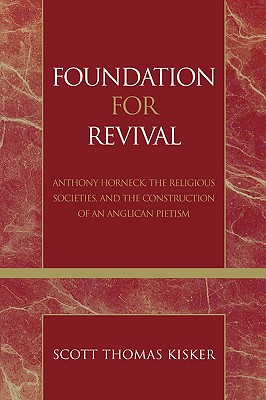
Foundation for Revival : Anthony Horneck, The Religious Societies, and the Construction of an Anglican Pietism
Book Details
Format
Paperback / softback
Book Series
Pietist and Wesleyan Studies
ISBN-10
0810857995
ISBN-13
9780810857995
Publisher
Scarecrow Press
Imprint
Scarecrow Press
Country of Manufacture
GB
Country of Publication
GB
Publication Date
Dec 24th, 2007
Print length
268 Pages
Weight
431 grams
Dimensions
23.10 x 15.60 x 1.80 cms
Product Classification:
Anglican & Episcopalian Churches, Church of EnglandAnglican and Episcopalian Churches
KSh 17,400.00
Currently unavailable
0 in stock
Delivery Location
Delivery fee: Select location
Secure
Quality
Fast
Anthony Horneck (1641-1697) is a key figure for the migration of the continental Pietist sensibilities into Restoration Anglicanism and ultimately into Methodism. Horneck was educated at Heidelberg and Leiden and then immigrated to England during the year of the Restoration. In England he became a committed Anglican, but his life and ministry demonstrated the influences of developing continental Pietism. He preached salvation. He avoided disputes over non-essentials. Most significantly, he organized religious societies of awakened souls beginning in 1678. The rules Horneck drew up for the guidance of these societies bear many marks of continental Pietism and laid the foundation for philanthropic and revivalist movements in England. At Horneck''s death there were a number of these religious societies in and around London. In the next twenty years they expanded in London and throughout the counties, profoundly impacting Anglican piety. By the 1720s their network provided the matrix of relationships through which Moravians (a Continental Pietist group) and Oxford Methodists met in what became the Anglo-evangelical revival. In the 1730s and 40s they enabled Methodism''s rapid spread and were united into a new movement. Foundation for Revival provides insight into the complex religious world of Restoration piety—blurring some of the rigid distinctions between Puritans and Anglicans. As a combination of Restoration high church piety and Pietist sensibilities concerning personal regeneration, Horneck provides a theological emancipation from the usual categories defining evangelical Christianity. Horneck''s life also reveals an early, and generally overlooked, link between continental versions of Pietism and English evangelicalism, on which both the development of mission/philanthropic institutions in England and the rise of Methodism, Reformed and Wesleyan, depend. Finally, as a forerunner of Methodism, Horneck helps to clarify many of the "contradictions" in the piety of the young John Wesley, giving Wesley
Get Foundation for Revival by Scott Thomas Kisker at the best price and quality guaranteed only at Werezi Africa's largest book ecommerce store. The book was published by Scarecrow Press and it has 268 pages.
Customers Who Bought This Also Bought
Weight of Glory
KSh 2,000.00

Pilgrims Regress
KSh 2,000.00
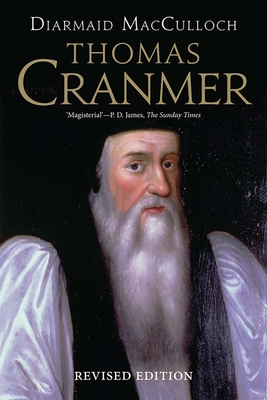
Thomas Cranmer – A Life
KSh 4,600.00

John Stott – A Portrait By His Friends
KSh 2,700.00
The Books of Homilies
KSh 29,750.00

La Liturgia
KSh 3,400.00

Common Worship Lectionary Advent 2026 to the Eve of Advent 2027 Standard Format
KSh 1,100.00

The Second Spring
KSh 1,450.00

Prayer Book Studies Volume One
KSh 12,800.00
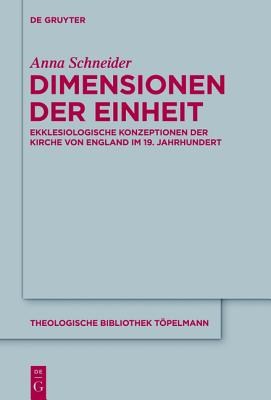
Dimensionen der Einheit
KSh 19,600.00
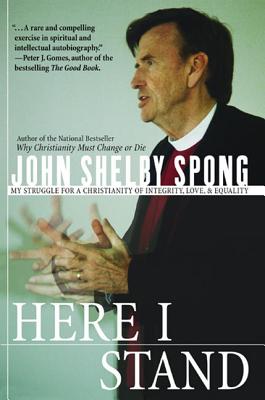
Here I Stand
KSh 3,100.00
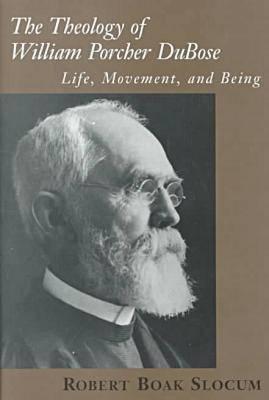
The Theology of William Porcher DuBose
KSh 5,750.00
