

Book Details
Format
Hardback
ISBN-10
3030931374
ISBN-13
9783030931377
Edition
Fourth Edition 2023
Publisher
Springer Nature Switzerland AG
Imprint
Springer Nature Switzerland AG
Country of Manufacture
GB
Country of Publication
GB
Publication Date
Jun 13th, 2023
Print length
853 Pages
Product Classification:
Classical mechanicsEngineering: Mechanics of solidsMechanics of solids
KSh 45,000.00
Currently unavailable
0 in stock
Delivery Location
Delivery fee: Select location
Secure
Quality
Fast
This book is the standard text book for elastoplasticity/viscoplasticity which is explained comprehensively covering the rate-independent to -dependent finite deformations of metals, soils, polymers, crystal plasticity, etc. and the friction phenomenon. Concise explanations on vector-tensor analysis and continuum mechanics are provided first, covering the underlying physical concepts, e.g. various time-derivatives, pull-back and push-forward operations, work-conjugacy and multiplicative decomposition of deformation gradient tensor. Then, the rigorous elastoplastic/viscoplastic model, called the subloading surface model, is explained comprehensively, which is based on the subloading surface concept to describe the continuous development of the plastic/viscoplastic strain rate as the stress approaches to the yield surface, while it can never be described by the other plasticity models, e.g. the Chaboche-Ohno and the Dafalias-Yoshida models assuming the purely-elastic domain. The main features of the subloading surface model are as follows: 1) The subloading surface concept underling the cyclic plasticity is introduced, which insists that the plastic deformation develops as the stress approaches the yield surface. Thus, the smooth elastic-plastic transition leading to the continuous variation of the tangent stiffness modulus is described always. 2) The subloading-overstress model is formulated by which the elastoplastic deformation during the quasi-static loading and the viscoplastic deformation during the dynamic and impact loading can be described by the unified equation. Then, only this model can be used to describe the deformation in the general rate of deformation, disusing the elastoplastic constitutive equation. 3) The hyperelastic-based (visco)plasticity based on the multiplicative decomposition of deformation gradienttensor and the subloading surface model is formulated for the exact descriptions of the finite elastic and (visco)plastic deformations. 4) The subloading-friction model is formulated for the exact description of the dry and the fluid (lubricated) frictions at the general rate of sliding from the static to the impact sliding. Thus, all the elastic and inelastic deformation/sliding phenomena of solids can be described accurately in the unified equation by the subloading-overstress model. The subloading surface model will be engraved as the governing law of irreversible deformation of solids in the history of solid mechanics.
Get Foundations of Elastoplasticity: Subloading Surface Model by Koichi Hashiguchi at the best price and quality guaranteed only at Werezi Africa's largest book ecommerce store. The book was published by Springer Nature Switzerland AG and it has 853 pages.
Customers Who Bought This Also Bought

Pearson Edexcel International A Level Mathematics Mechanics 3 Student Book
KSh 5,900.00
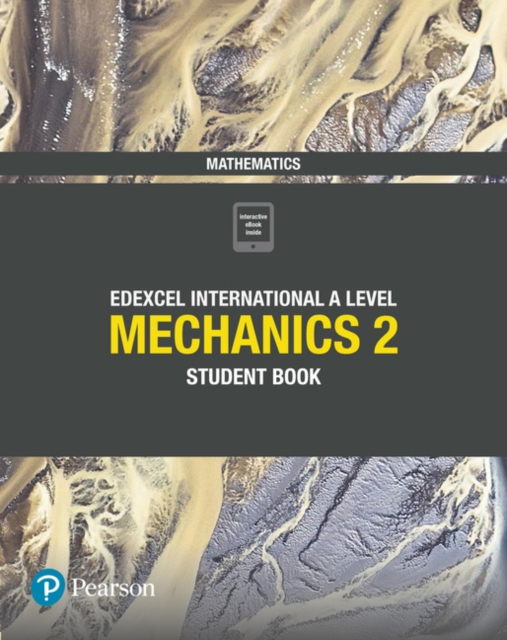
Pearson Edexcel International A Level Mathematics Mechanics 2 Student Book
KSh 5,800.00
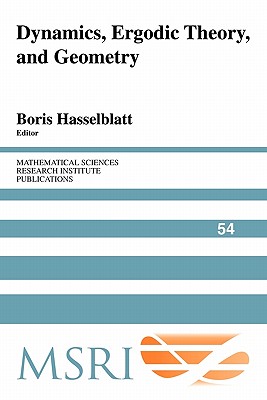
Dynamics, Ergodic Theory and Geometry
KSh 9,550.00
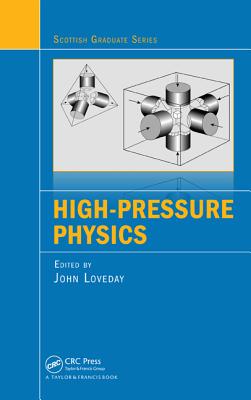
High-Pressure Physics
KSh 42,300.00
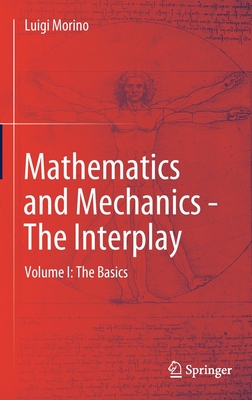
Mathematics and Mechanics - The Interplay
KSh 25,200.00
Engineering Damage Mechanics
KSh 28,800.00
Engineering Damage Mechanics
KSh 28,800.00

Integration Algorithms and Classical Mechanics
KSh 17,650.00
An Analytical Mechanics Framework for Flow-Oscillator Modeling of Vortex-Induced Bluff-Body Oscillations
KSh 16,200.00
The Catalogue of Computational Material Models
KSh 25,200.00

Rheology of Drag Reducing Fluids
KSh 21,600.00

Computational Granular Mechanics and Its Engineering Applications
KSh 16,200.00



More in This Genre
Pearson Edexcel International A Level Mathematics Mechanics 3 Student Book
KSh 5,900.00
Pearson Edexcel International A Level Mathematics Mechanics 2 Student Book
KSh 5,800.00
Dynamics, Ergodic Theory and Geometry
KSh 9,550.00
High-Pressure Physics
KSh 42,300.00
Mathematics and Mechanics - The Interplay
KSh 25,200.00
Engineering Damage Mechanics
KSh 28,800.00
