
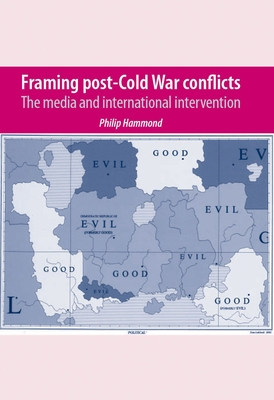
Framing Post-Cold War Conflicts : The Media and International Intervention
Book Details
Format
Hardback
ISBN-10
071907696X
ISBN-13
9780719076961
Publisher
Manchester University Press
Imprint
Manchester University Press
Country of Manufacture
GB
Country of Publication
GB
Publication Date
Dec 1st, 2007
Print length
256 Pages
Weight
550 grams
Dimensions
16.30 x 24.00 x 2.50 cms
KSh 15,300.00
Currently unavailable
0 in stock
Delivery Location
Delivery fee: Select location
Secure
Quality
Fast
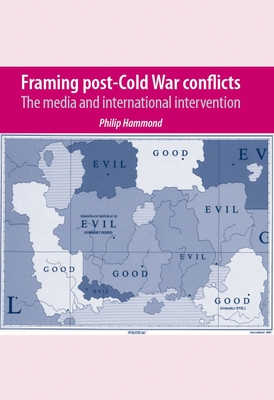
This book examines how the media interprets contemporary conflicts and international interventions. It compares British press coverage across six different crises (Somalia, Bosnia, Rwanda, Kosovo, Afghanistan and Iraq), examining how conflict is explained and how far Western military intervention is represented as justifiable and necessary. -- .
Since the end of the Cold War there have been many competing ideas about how to explain contemporary conflicts, and about how the West should respond to them. This study examines how the media interpret conflicts and international interventions, testing the sometimes contradictory claims that have been made about recent coverage of war. Framing post-Cold War conflicts takes a comparative approach, examining UK press coverage across six different crises. Through detailed analysis of news content, it seeks to identify the dominant themes in explaining the post-Cold War international order, and to discover how far the patterns established prior to 11 September 2001 have subsequently changed. Based on extensive original research, the book includes case studies of two ‘humanitarian military interventions’ (in Somalia and Kosovo), two instances where Western governments were condemned for not intervening enough (Bosnia and Rwanda), and the post-9/11 interventions in Afghanistan and Iraq. -- .
Get Framing Post-Cold War Conflicts by Philip Hammond at the best price and quality guaranteed only at Werezi Africa's largest book ecommerce store. The book was published by Manchester University Press and it has 256 pages.
Customers Who Bought This Also Bought

Cultish
KSh 2,350.00

How to Read the Bible for All Its Worth
KSh 3,250.00

The Art of Fighting
KSh 3,950.00

The Gutenberg Galaxy
KSh 6,000.00
Persuasion and Power
KSh 4,850.00

Helping College Students Write
KSh 6,850.00
Persuasion in Society
KSh 17,100.00
Nonviolent Communication: A Language of Life
KSh 3,050.00

The Dynamics of Persuasion
KSh 9,800.00

Fundamental Issues, Measurement and Study Design
KSh 35,100.00

The Psychology of Clear Leadership Communication
KSh 30,950.00

Patterns in Language and Communication
KSh 18,800.00
More by Philip Hammond
Journalism Studies
KSh 7,550.00

Climate Change and Post-Political Communication
KSh 30,950.00
Climate Change and Post-Political Communication
KSh 7,550.00
Media, War and Postmodernity
KSh 30,950.00
Journalism Studies
KSh 30,950.00
Framing post-Cold War conflicts
KSh 3,700.00
Media, War and Postmodernity
KSh 8,450.00
