Free Logic : A Generalization
Book Details
Format
Paperback / softback
Book Series
Elements in Philosophy and Logic
ISBN-10
1009114050
ISBN-13
9781009114059
Publisher
Cambridge University Press
Imprint
Cambridge University Press
Country of Manufacture
GB
Country of Publication
GB
Publication Date
Jan 30th, 2025
Print length
110 Pages
Weight
174 grams
Dimensions
22.80 x 15.10 x 0.90 cms
Product Classification:
Philosophy: logicPhilosophy: logic
KSh 3,250.00
Currently unavailable
0 in stock
Delivery Location
Delivery fee: Select location
Secure
Quality
Fast
The Principle of Univocality has two parts: an existence assumption and a uniqueness assumption. The existence assumption holds that every name refers to at least one individual, and the uniqueness assumption states that every name refers to at most one individual. This Element investigates violations of the Principle of Univocality.
Classical logic assumes that names are univocal: every name refers to exactly one existing individual. This Principle of Univocality has two parts: an existence assumption and a uniqueness assumption. The existence assumption holds that every name refers to at least oneindividual, and the uniqueness assumption states that every name refers to at most one individual. The various systems of free logic which have been developed and studied since the 1960s relax the existence assumption, but retain the uniqueness assumption. The present work investigates violations of both halves of the Principle of Univocality. That is, whereas the free logics developed from the 1960s are called ''free'' because they are free of existential assumptions, the current Element generalizes this idea, to study logics that are free of uniqueness assumptions. We explore several versions of free logic, comparing their advantages and disadvantages. Applications of free logic to other areas of philosophy are explored.
Get Free Logic by Greg Frost-Arnold at the best price and quality guaranteed only at Werezi Africa's largest book ecommerce store. The book was published by Cambridge University Press and it has 110 pages.
Customers Who Bought This Also Bought

How to Be a Stoic
KSh 1,450.00

Critique of Judgment
KSh 5,800.00
An Inquiry Into Meaning and Truth
KSh 3,750.00

Encyclopaedia Logic
KSh 4,850.00
Kant's Introduction to Logic
KSh 3,600.00
The Laws of Thought
KSh 2,000.00
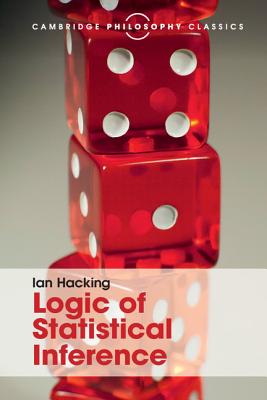
Logic of Statistical Inference
KSh 4,150.00
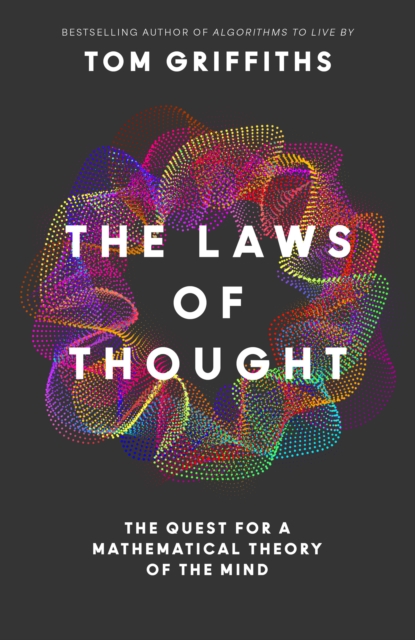
Laws of Thought
KSh 3,050.00
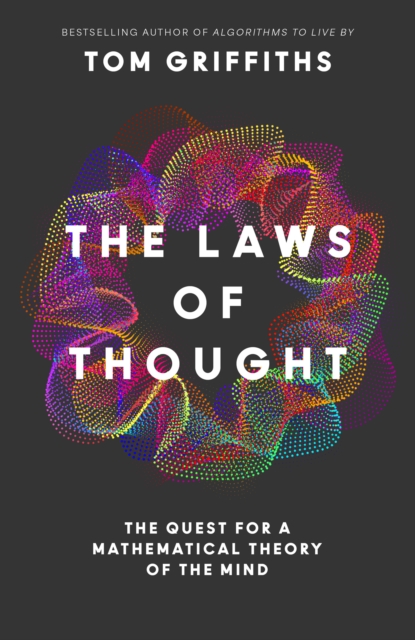
Laws of Thought
KSh 4,500.00

Aristotle: On Sophistical Refutations
KSh 4,900.00

Soul of Goodness
KSh 4,300.00
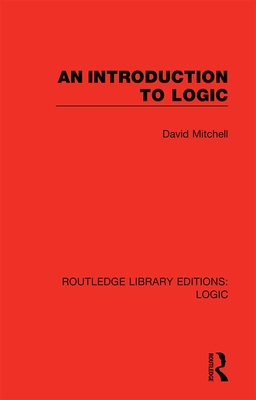
An Introduction to Logic
KSh 6,650.00