
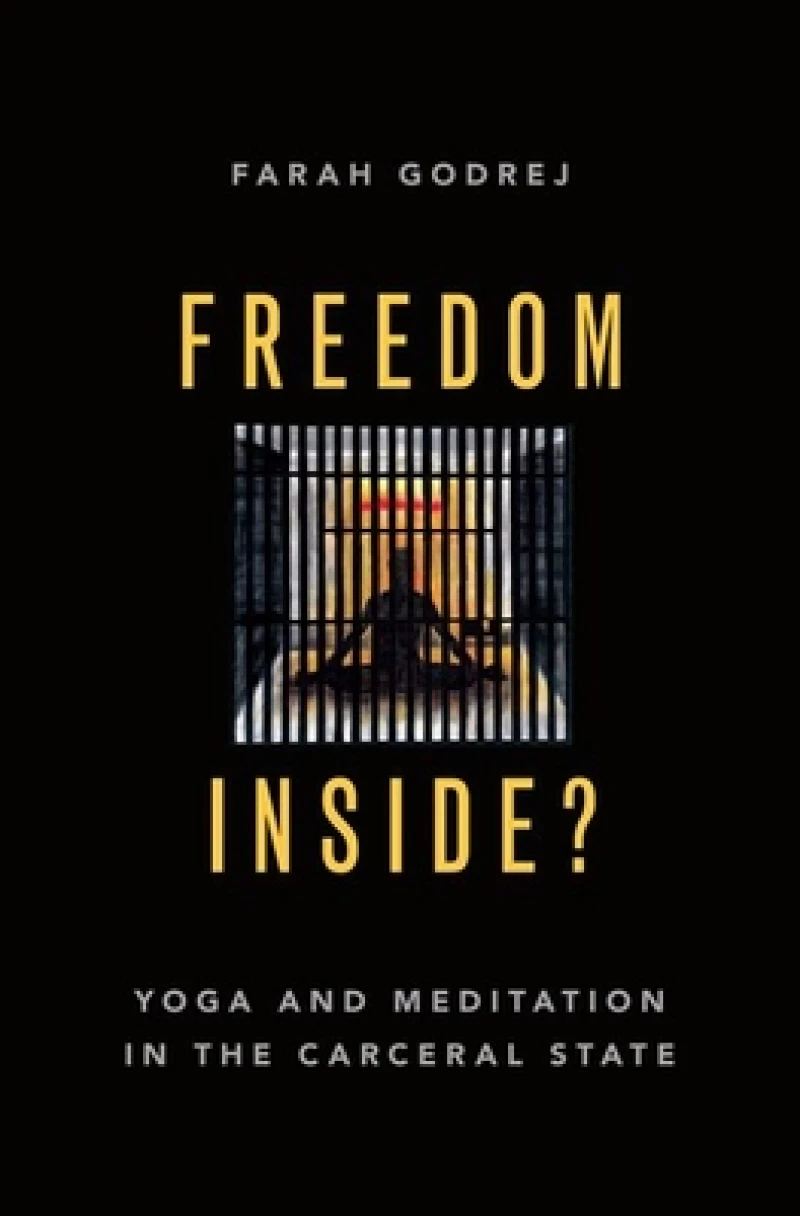
Freedom Inside? : Yoga and Meditation in the Carceral State
by
Farah Godrej
Book Details
Format
Hardback or Cased Book
ISBN-10
0190070080
ISBN-13
9780190070083
Publisher
Oxford University Press Inc
Imprint
Oxford University Press Inc
Country of Manufacture
GB
Country of Publication
GB
Publication Date
Jun 27th, 2023
Print length
358 Pages
Weight
660 grams
Dimensions
16.40 x 24.50 x 2.70 cms
Ksh 16,600.00
Manufactured on Demand
0 in stock
Delivery Location
Delivery fee: Select location
Secure
Quality
Fast
An estimated forty million people in the United States regularly practice yoga, and as an industry it generates over nine billion dollars annually. A major reason for its popularity is its promise of mental and physical well-being: yoga and meditation are thought to be spiritual paths to self-improvement. Yoga is also widely practiced in prisons, another large business in the United States. Prisons in all fifty states offer yoga and meditation as a form of rehabilitation. But critics argue that such practices can also have disempowering effects, due to their emphasis on acceptance, non-judgment, and non-reaction. If the root of suffering is in the mind, as the philosophy behind yoga and meditation suggests, then injustice (including mass incarceration) may be reduced to a mental state requiring coping techniques rather than a more critical mindset. Others insist that yoga can heighten people''s attention to structural violence, hierarchy, racism, and inequity. In fact, some of history''s most radical activists, including M.K. Gandhi and Thich Nhat Hanh, traced their ethical and political commitments to their grounding in yogic or meditative traditions. Yoga and meditation programs no doubt offer crucial respite for those who are incarcerated, but what sort of political effects do they have? Do they reinforce the neoliberal logic of mass incarceration which emphasizes individual choices, or can they assist marginalized people in navigating systemic injustice? Drawing on collaborations with incarcerated practitioners, interviews with volunteers and formerly incarcerated practitioners, and her own fieldwork with organizations offering yoga/meditation classes inside prisons, Farah Godrej examines both the promises and pitfalls of yoga and meditation. Freedom Inside? reveals the ways in which incarcerated persons have used yogic practices to resist the dehumanizing effects of prisons, and to heighten their awareness of institutional racism and mass incarceration among poor people and people of color. Godrej argues that while these practices could unwittingly exacerbate systemic forms of inequity and injustice, they also serve as resources for challenging such injustice, whether internally (via the realm of belief) or externally (through action). A combination of ethnography and political theory, Freedom Inside? reimagines the concept of "resistance" in a way that considers people''s interior lives as a crucial arena for liberation.
Get Freedom Inside? by at the best price and quality guaranteed only at Werezi Africa's largest book ecommerce store. The book was published by Oxford University Press Inc and it has pages.

