
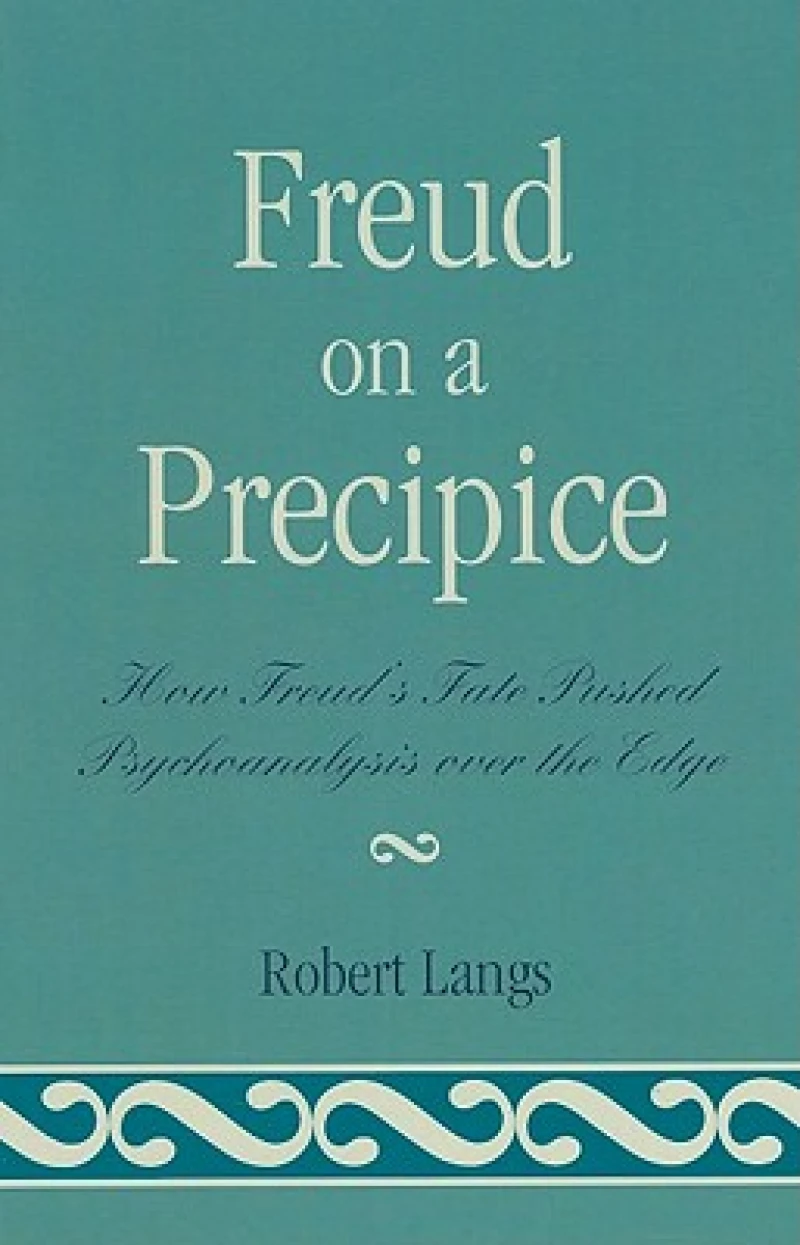
Freud on a Precipice : How Freud's Fate Pushed Psychoanalysis Over the Edge
by
Robert Langs
Book Details
Format
Hardback or Cased Book
ISBN-10
0765706008
ISBN-13
9780765706003
Publisher
Jason Aronson Publishers
Imprint
Jason Aronson Publishers
Country of Manufacture
GB
Country of Publication
GB
Publication Date
Oct 26th, 2009
Print length
180 Pages
Weight
440 grams
Dimensions
16.10 x 23.50 x 1.90 cms
Product Classification:
PsychologyPsychoanalytical theory (Freudian psychology)Psychotherapy
Ksh 16,450.00
Manufactured on Demand
0 in stock
Delivery Location
Delivery fee: Select location
Secure
Quality
Fast
This book is a psychoanalytic detective story that takes the reader back to the late 1890's and to the generally unappreciated, yet single most important, turning point in the history of psychoanalysis. The context is the death of Freud's father and the decision Freud made to abandon his first, reality-centered theory of the mind in favor of a theory focused on inner fantasies and needs. Marshalling a large body of evidence, Langs views this change of heart as a regressive paradigm shift driven by unconsciously influential archetypes that were, in turn, linked to a series of early-life traumas in Freud's life, possibly eight in all, several of them preceding Freud's birth and all but one outside of Freud's conscious awareness. The ramifications of these incidents placed Freud on a later-day precipice from which his fall into equivalents of homicide and suicide were at risk; Freud shifted focus to save his life! Langs' detective work brings him to new insights into such matters as the psychological archetypes that affect the creation and modifications of paradigms, physical and mental; a new, utilitarian view of the design of the emotion-processing mind; recognition of the complex unconscious impact of reality and of death-related traumas on the human psyche and emotionally-charged choices; the vast superiority of Freud's first paradigm over his second theory of the mind; and the unconscious reasons, despite its many flaws, that Freud's second paradigm remains in favor to this very day. Freud saved his life by shifting course, but at the same time he created a theory that must be held partly accountable for the compromised forms of dynamic therapy and broad psychological harm that has followed in its wake. Using an updated version of Freud's first paradigm, Langs shows us a better way to live and work, as a psychotherapist or any other career.
This book is a psychoanalytic detective story that takes the reader back to the late 1890''s and to the generally unappreciated, yet single most important, turning point in the history of psychoanalysis. The context is the death of Freud''s father and the decision Freud made to abandon his first, reality-centered theory of the mind in favor of a theory focused on inner fantasies and needs. Marshalling a large body of evidence, Langs views this change of heart as a regressive paradigm shift driven by unconsciously influential archetypes that were, in turn, linked to a series of early-life traumas in Freud''s life, possibly eight in all, several of them preceding Freud''s birth and all but one outside of Freud''s conscious awareness. The ramifications of these incidents placed Freud on a later-day precipice from which his fall into equivalents of homicide and suicide were at risk; Freud shifted focus to save his life! Langs'' detective work brings him to new insights into such matters as the psychological archetypes that affect the creation and modifications of paradigms, physical and mental; a new, utilitarian view of the design of the emotion-processing mind; recognition of the complex unconscious impact of reality and of death-related traumas on the human psyche and emotionally-charged choices; the vast superiority of Freud''s first paradigm over his second theory of the mind; and the unconscious reasons, despite its many flaws, that Freud''s second paradigm remains in favor to this very day. Freud saved his life by shifting course, but at the same time he created a theory that must be held partly accountable for the compromised forms of dynamic therapy and broad psychological harm that has followed in its wake. Using an updated version of Freud''s first paradigm, Langs shows us a better way to live and work, as a psychotherapist or any other career.
Get Freud on a Precipice by at the best price and quality guaranteed only at Werezi Africa's largest book ecommerce store. The book was published by Jason Aronson Publishers and it has pages.

