
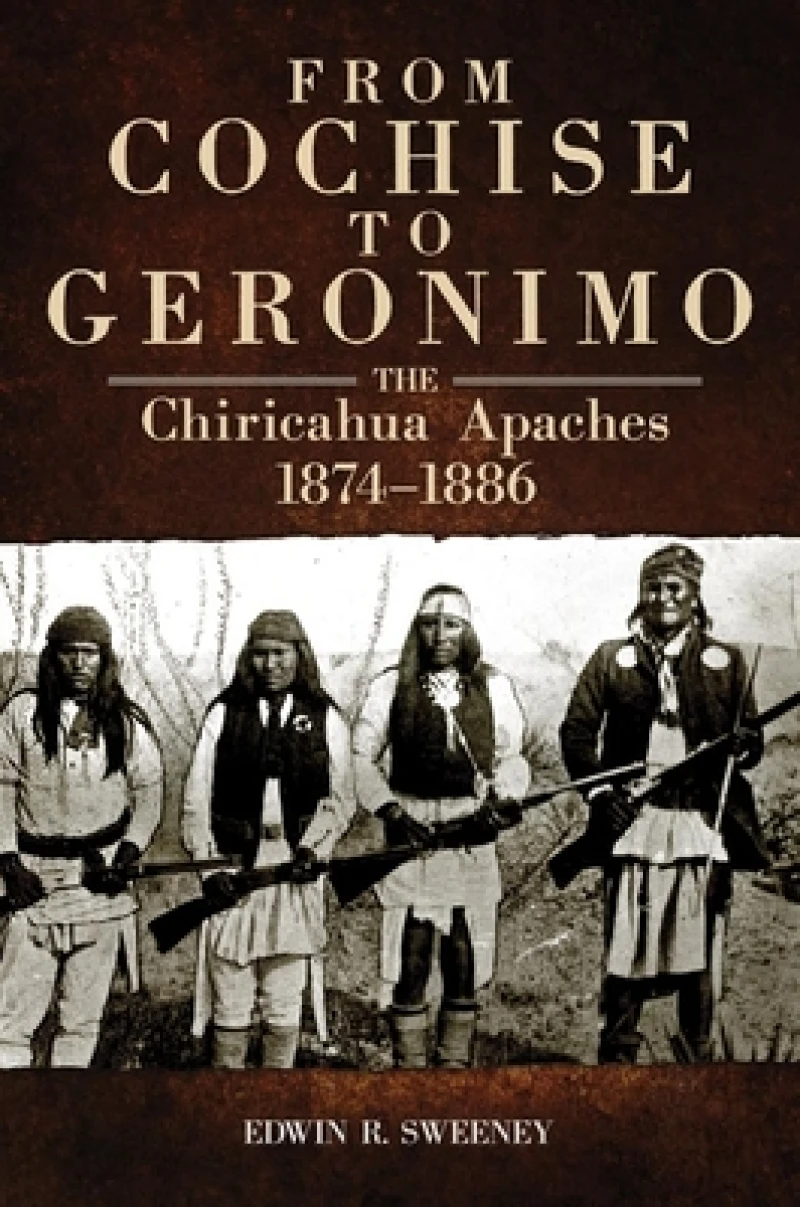
From Cochise to Geronimo : The Chiricahua Apaches, 1874–1886
Book Details
Format
Paperback / Softback
Book Series
The Civilization of the American Indian Series
ISBN-10
0806142723
ISBN-13
9780806142722
Publisher
University of Oklahoma Press
Imprint
University of Oklahoma Press
Country of Manufacture
US
Country of Publication
GB
Publication Date
Jan 1st, 2012
Print length
720 Pages
Weight
1,026 grams
Dimensions
15.80 x 23.60 x 4.60 cms
Product Classification:
Social & cultural historySocial and cultural history
Ksh 4,300.00
Werezi Extended Catalogue
0 in stock
Delivery Location
Delivery fee: Select location
Secure
Quality
Fast
In the decade after the death of their revered chief Cochise in 1874, the Chiricahua Apaches struggled to survive as a people and their relations with the US government further deteriorated. In From Cochise to Geronimo, Edwin Sweeney offers a definitive history of the turbulent period between Cochise's death and Geronimo's surrender in 1886.
In the decade after the death of their revered chief Cochise in 1874, the Chiricahua Apaches struggled to survive as a people and their relations with the U.S. government further deteriorated. In From Cochise to Geronimo, Edwin R. Sweeney builds on his previous biographies of Chiricahua leaders Cochise and Mangas Coloradas to offer a definitive history of the turbulent period between Cochise''s death and Geronimo''s surrender in 1886.
Sweeney shows that the cataclysmic events of the 1870s and 1880s stemmed in part from seeds of distrust sown by the American military in 1861 and 1863. In 1876 and 1877, the U.S. government proposed moving the Chiricahuas from their ancestral homelands in New Mexico and Arizona to the San Carlos Reservation. Some made the move, but most refused to go or soon fled the reviled new reservation, viewing the government''s concentration policy as continued U.S. perfidy. Bands under the leadership of Victorio and Geronimo went south into the Sierra Madre of Mexico, a redoubt from which they conducted bloody raids on American soil.
Sweeney draws on American and Mexican archives, some only recently opened, to offer a balanced account of life on and off the reservation in the 1870s and 1880s. From Cochise to Geronimo details the Chiricahuas'' ordeal in maintaining their identity despite forced relocations, disease epidemics, sustained warfare, and confinement. Resigned to accommodation with Americans but intent on preserving their culture, they were determined to survive as a people.
Sweeney shows that the cataclysmic events of the 1870s and 1880s stemmed in part from seeds of distrust sown by the American military in 1861 and 1863. In 1876 and 1877, the U.S. government proposed moving the Chiricahuas from their ancestral homelands in New Mexico and Arizona to the San Carlos Reservation. Some made the move, but most refused to go or soon fled the reviled new reservation, viewing the government''s concentration policy as continued U.S. perfidy. Bands under the leadership of Victorio and Geronimo went south into the Sierra Madre of Mexico, a redoubt from which they conducted bloody raids on American soil.
Sweeney draws on American and Mexican archives, some only recently opened, to offer a balanced account of life on and off the reservation in the 1870s and 1880s. From Cochise to Geronimo details the Chiricahuas'' ordeal in maintaining their identity despite forced relocations, disease epidemics, sustained warfare, and confinement. Resigned to accommodation with Americans but intent on preserving their culture, they were determined to survive as a people.
Get From Cochise to Geronimo by at the best price and quality guaranteed only at Werezi Africa's largest book ecommerce store. The book was published by University of Oklahoma Press and it has pages.

