
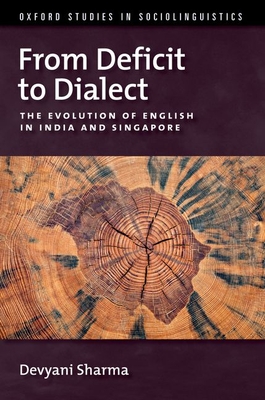
From Deficit to Dialect : The Evolution of English in India and Singapore
Book Details
Format
Hardback
Book Series
Oxford Studies in Sociolinguistics
ISBN-10
019530750X
ISBN-13
9780195307504
Publisher
Oxford University Press Inc
Imprint
Oxford University Press Inc
Country of Manufacture
GB
Country of Publication
GB
Publication Date
Nov 7th, 2023
Print length
320 Pages
Weight
590 grams
Dimensions
16.20 x 24.30 x 2.90 cms
Product Classification:
SociolinguisticsSociety & social sciencesSociety and Social Sciences
KSh 13,150.00
Currently unavailable
0 in stock
Delivery Location
Delivery fee: Select location
Secure
Quality
Fast
The emergence of new English dialects in postcolonial regions has transformed the politics of English in the world and language ecologies in many regions. Why, how, and when did these dialects develop? Why do they have the accents and grammars that we hear? Are the grammars of these dialects completely different due to the influence of local languages, or similar due to natural tendencies in human cognition? In terms of social identity, do these new speakers behave like native speakers of British or American English, or like language learners? Focusing on two prominent cases; English in India and in Singapore; this book examines the social, historical, and cognitive forces that together created and continue to shape these dialects. Differences in the linguistic ecology of the two regions help us to identify the strongest mechanisms of dialect formation under long-term cultural contact. The multi-scale analysis of a range of bilinguals moves beyond a simplistic divide between ''deficit'' and ''dialect'' views of these speech communities, showing that change proceeds unevenly across the language system and the social group, with feedback loops between social history, language learning, language structure, and identity.
Get From Deficit to Dialect by Devyani Sharma at the best price and quality guaranteed only at Werezi Africa's largest book ecommerce store. The book was published by Oxford University Press Inc and it has 320 pages.
Customers Who Bought This Also Bought

Decolonising the Mind
KSh 4,700.00

Cultish
KSh 2,350.00

Digital Plurilingual Pedagogies in Teacher Education
KSh 27,900.00

Linguistic Landscape Studies of Global Chinese
KSh 30,800.00
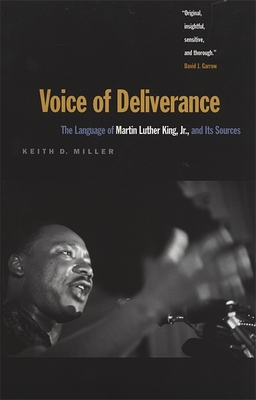
Voice of Deliverance
KSh 6,450.00

Romania Africana
KSh 32,750.00

Second Language Learning and the COVID-19 Pandemic
KSh 21,250.00

Literacy Mediation
KSh 30,950.00

That''s Not What I Meant!
KSh 1,850.00

Construction Grammar and Sociolinguistic Theory
KSh 20,450.00

The Climate Turn in Language Teaching
KSh 3,250.00
The Cambridge Handbook of Sociolinguistics
KSh 30,100.00

