
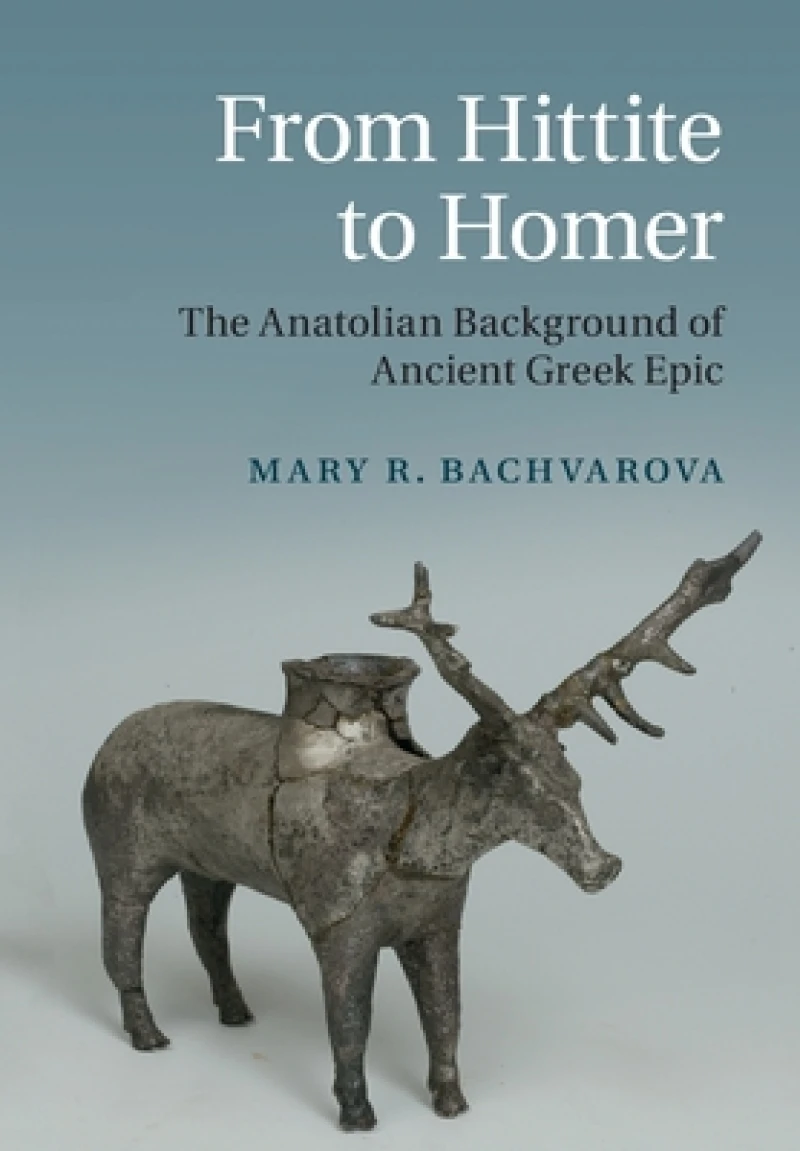
From Hittite to Homer : The Anatolian Background of Ancient Greek Epic
Book Details
Format
Paperback / Softback
ISBN-10
1108994105
ISBN-13
9781108994101
Publisher
Cambridge University Press
Imprint
Cambridge University Press
Country of Manufacture
GB
Country of Publication
GB
Publication Date
Dec 10th, 2020
Print length
690 Pages
Weight
1,180 grams
Dimensions
16.90 x 24.40 x 4.30 cms
Ksh 11,200.00
Manufactured on Demand
0 in stock
Delivery Location
Delivery fee: Select location
Secure
Quality
Fast
This book takes a bold new approach to the prehistory of Homeric epic. It argues that the Near Eastern influence on early Greek hexameter poetry primarily came from a single Syro-Anatolian tradition of oral narrative song, which included the Song of Gilgamesh and the Kumarbi Cycle, starting in the eleventh century BCE.
This book provides a groundbreaking reassessment of the prehistory of Homeric epic. It argues that in the Early Iron Age bilingual poets transmitted to the Greeks a set of narrative traditions closely related to the one found at Bronze-Age Hattusa, the Hittite capital. Key drivers for Near Eastern influence on the developing Homeric tradition were the shared practices of supralocal festivals and venerating divinized ancestors, and a shared interest in creating narratives about a legendary past using a few specific storylines: theogonies, genealogies connecting local polities, long-distance travel, destruction of a famous city because it refuses to release captives, and trying to overcome death when confronted with the loss of a dear companion. Professor Bachvarova concludes by providing a fresh explanation of the origins and significance of the Greco-Anatolian legend of Troy, thereby offering a new solution to the long-debated question of the historicity of the Trojan War.
Get From Hittite to Homer by at the best price and quality guaranteed only at Werezi Africa's largest book ecommerce store. The book was published by Cambridge University Press and it has pages.

