
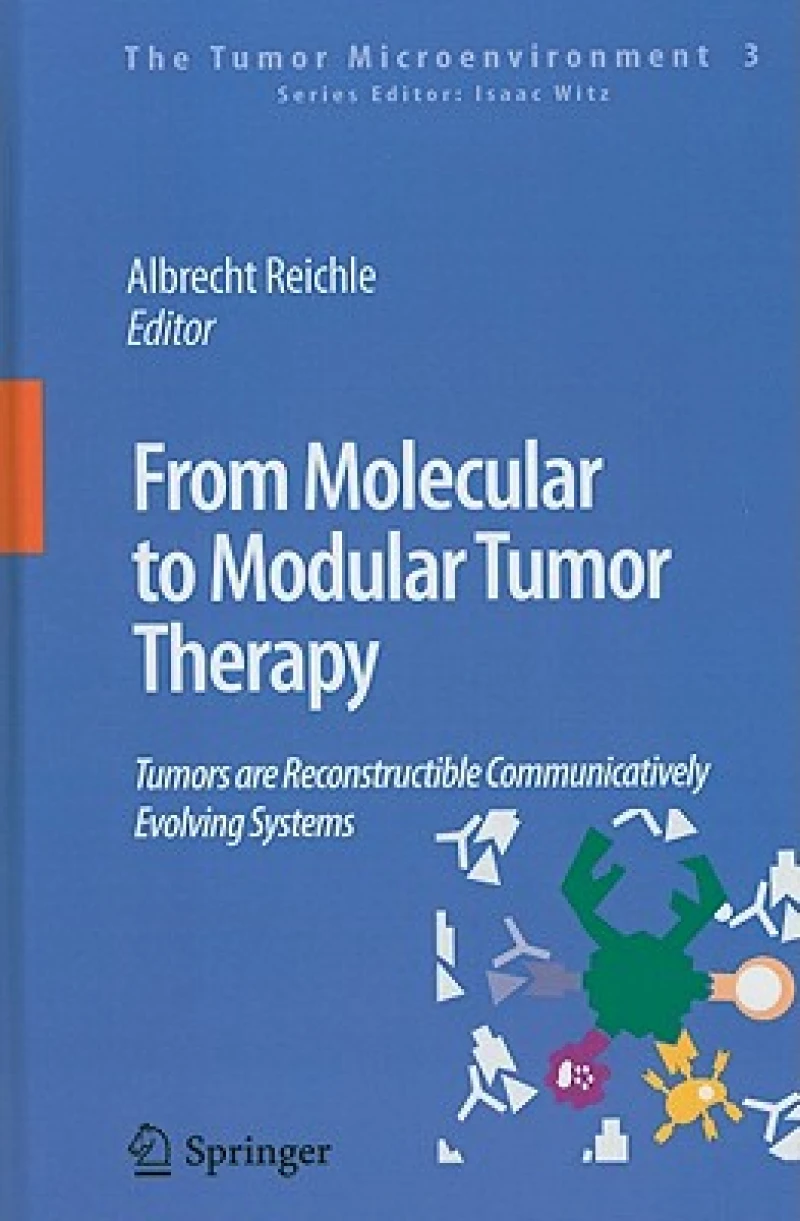
From Molecular to Modular Tumor Therapy: : Tumors are Reconstructible Communicatively Evolving Systems
Book Details
Format
Hardback or Cased Book
Book Series
The Tumor Microenvironment
ISBN-10
9048195306
ISBN-13
9789048195305
Publisher
Springer
Imprint
Springer
Country of Manufacture
NL
Country of Publication
GB
Publication Date
Sep 10th, 2010
Print length
568 Pages
Weight
1,104 grams
Dimensions
24.10 x 16.20 x 2.80 cms
Ksh 32,400.00
Werezi Extended Catalogue
0 in stock
Delivery Location
Delivery fee: Select location
Secure
Quality
Fast
Presenting a holistic and abstract perspective of tumors, this volume aims to provide personalized diagnostic and therapeutic strategies for the control of metastatic tumor disease. Readers will find ways to record tumor biology that are based on different sciences, in addition to other strategies.
Chronic inflammation is one of the major pathological bases manifesting the development of gastric cancers, hepatitis and hepatocellular carcinoma, cervical cancer, ulcerative colitis and colorectal cancer [1]. Microbial infections, viral infections and autoimmune responses can lead to chronic inflammation-associated cancer formation. Human herpesviruses, such as human cytomegalovirus (HCMV) and Kaposi sarcoma herpesvirus (KSHV) are known to be associated with tumorigenesis and tumor progression. HCMV infection potentiates malignancies of colon cancer and malignant glioma [2,3]. KSHV was initially discovered from Kaposi's sarcoma lesion of an AIDS patient [4]. It was subsequently discovered that KSHV contributed to the pathogenesis of KS, primary effusion lymphoma [5] and lymphoproliferative disorder multicentric Castleman's disease. Emerging evidence shows that herpesvirus infection interferes or inhibits host cell immune defense and maintains a tumor-promoting microenvironment by expressing virulent homologues of host cell proteins that disturb normal cell cycle progression and leads to apoptosis of the host cells. For example, cellular growth and transformation are induced by viral-encoded homologues of cytokines, chemokines or chemokine receptors [6]. The constitutive expression of viral chemokine GPCRs triggers prolonged activation of G protein signaling and eventually becomes the major inputs for chronic leukocyte infiltration and cancer development. GPCRs can serve as proto-oncogenes since overexpression of various wild type GPCRs can transform cells in the presence of their specific ligands. Mutations on GPCRs may result in constitutive signaling and oncogenesis [7]. Naturally occurring mutations in GPCRs have been identified in human tumors [8,9].
Get From Molecular to Modular Tumor Therapy: by at the best price and quality guaranteed only at Werezi Africa's largest book ecommerce store. The book was published by Springer and it has pages.

