
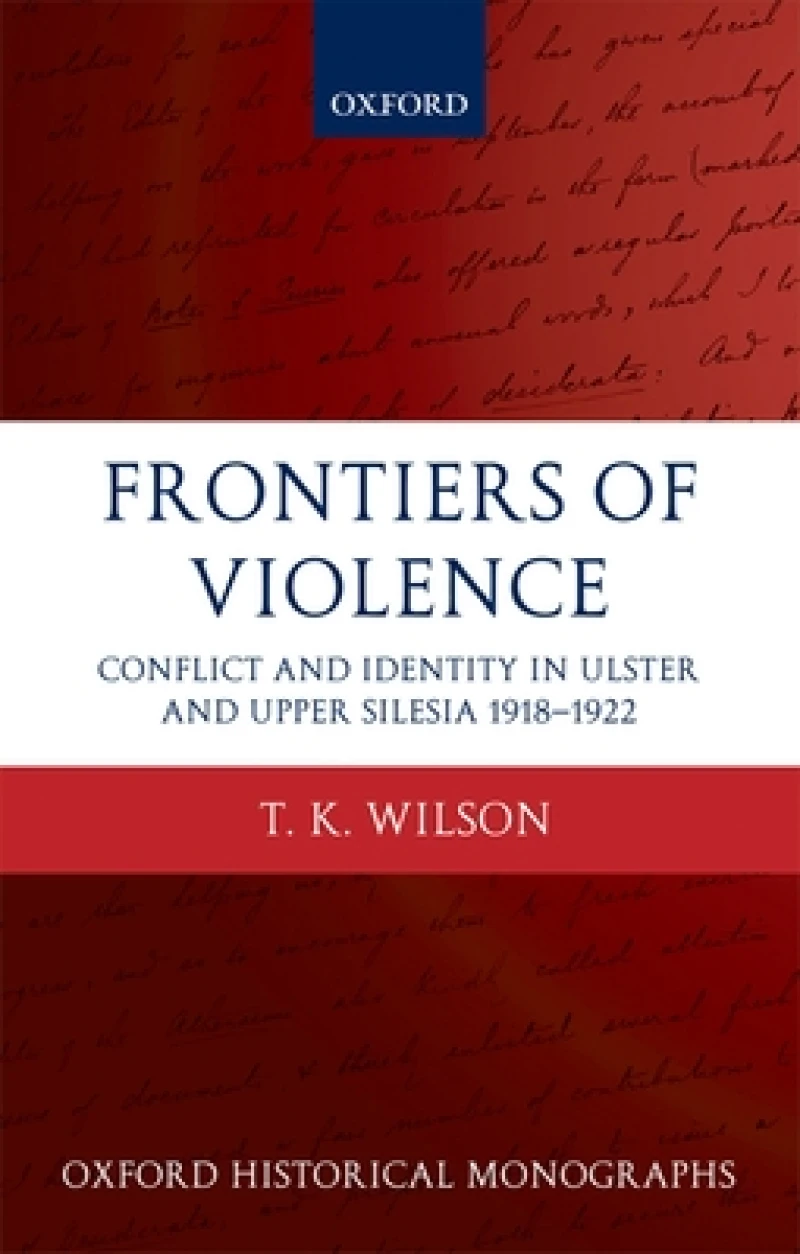
Frontiers of Violence : Conflict and Identity in Ulster and Upper Silesia 1918-1922
by
T.K. Wilson
Book Details
Format
Hardback or Cased Book
Book Series
Oxford Historical Monographs
ISBN-10
0199583714
ISBN-13
9780199583713
Publisher
Oxford University Press
Imprint
Oxford University Press
Country of Manufacture
GB
Country of Publication
GB
Publication Date
Jun 17th, 2010
Print length
278 Pages
Weight
496 grams
Dimensions
14.70 x 22.30 x 2.50 cms
Product Classification:
European history20th century history: c 1900 to c 2000Violence in societyArmed conflict
Ksh 27,850.00
Manufactured on Demand
0 in stock
Delivery Location
Delivery fee: Select location
Secure
Quality
Fast
In the years after the First World War both Ulster and Upper Silesia saw violent conflicts over self-determination. Examining the nature of communal boundaries, such as religion and language, Timothy Wilson explains the profound contrasts in these experiences of plebeian violence.
In the years after the First World War both Ulster and Upper Silesia saw violent conflicts over self-determination. The violence in Upper Silesia was more intense both in the numbers killed and in the forms it took. Acts of violation such as rape or mutilation were noticeably more common in Upper Silesia than in Ulster.Examining the nature of communal boundaries, Timothy Wilson explains the profound contrasts in these experiences of plebeian violence. In Ulster the rival communities were divided by religion, but shared a common language. In Upper Silesia, the rival sides were united in religion-92 per cent of the local population being Catholic-but ostensibly divided on linguistic grounds between German and Polish speakers. In practice, language in Upper Silesia proved a far more porous boundary than did religion in Ulster. Language could not always be taken as a straightforward indication of national loyalties. At a local level, boundaries mattered because without them there could not be any sense of security. In Ulster, where communal identities were already clearly staked out, militants tended to concentrate on the limited task of boundary maintenance. In Upper Silesia, where national identities were so unclear, they focused upon boundary creation. This was a task that required more ''transgressive'' violence. Hence atrocity was more widely practised in Upper Silesia because it could, and did, act as a polarizing force.
Get Frontiers of Violence by at the best price and quality guaranteed only at Werezi Africa's largest book ecommerce store. The book was published by Oxford University Press and it has pages.

