
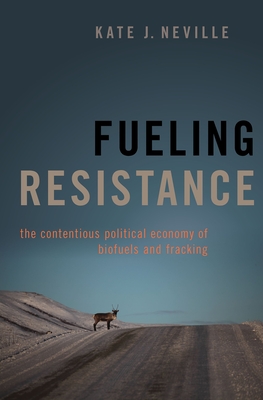
Fueling Resistance : The Contentious Political Economy of Biofuels and Fracking
Book Details
Format
Hardback
ISBN-10
0197535585
ISBN-13
9780197535585
Publisher
Oxford University Press Inc
Imprint
Oxford University Press Inc
Country of Manufacture
US
Country of Publication
GB
Publication Date
Oct 6th, 2021
Print length
264 Pages
Weight
522 grams
Dimensions
23.60 x 15.70 x 2.50 cms
KSh 11,000.00
Currently unavailable
0 in stock
Delivery Location
Delivery fee: Select location
Secure
Quality
Fast
Fueling Resistance examines conflicts over development projects in "energy frontiers"--places in the world far from sites of economic and political power that are seen as potential suppliers of new energy commodities. Neville looks at biofuels in Kenya and fracking in the Canadian Yukon and shows how organizers connect specific energy projects to broader issues of globalization, climate, food, water, and justice. Taken together, the intersecting elements of the political economy of energy (finance, ownership, and trade relations) shape the contentious politics of biofuels and fracking at both local and global scales, and help explain how and why particular mechanisms of contention emerge at different times and places.
A series of concurrent pressures in the early 2000s--climate change, financial system crashes, economic development in rural regions, and shifts in geopolitics--intensified interest in alternative energy production. At the same time, rising oil prices rendered alternative fuels a more economically viable option. Among these energy sources, liquid biofuels (bioethanol and biodiesel) and natural gas derived from hydraulic fracturing ("fracking") took center stage as promising commodities and technologies. But controversy quickly erupted in surprisingly similar ways around both renewable fuels. Global enthusiasm for these fuels--and the widespread projections for their production around the world--collided with local politics in debates over "food versus fuel" and concerns over "land grabs." What seemed, from a global perspective, like empty lands ripe for development were, to rural communities, vibrant and already contested spaces. As proposals for biofuels and fracking landed in specific communities and ecosystems, they reignited and reshaped old disputes over land, water, and decision-making authority. Fueling Resistance offers an account of how and why controversies over these different fuels unfolded in surprisingly similar ways in the global North and South. To explain these convergent dynamics of contention and resistance, Kate J. Neville argues that the emergence of grievances and the patterns of resistance to new fuel technologies depends less on the type of energy developed (renewable versus fossil fuel) than on intersecting elements of the political economy of energy: finance, ownership, and trade relations. As local commodities enter global supply chains and are integrated into existing corporate structures, opportunities arise to broker connections between otherwise disparate communities. Neville looks at biofuels in Kenya and fracking in the Canadian Yukon and shows how organizers connect specific energy projects to broader issues of globalization, climate, food, water, and justice. Taken together, the intersecting elements of the political economy of energy shape the contentious politics of biofuels and fracking at both local and global scales, and help explain how and why particular mechanisms of contention emerge at different times and places.
Get Fueling Resistance by Kate J. Neville at the best price and quality guaranteed only at Werezi Africa's largest book ecommerce store. The book was published by Oxford University Press Inc and it has 264 pages.
Customers Who Bought This Also Bought

Africa Dances
KSh 2,700.00

Its Our Turn to Eat
KSh 2,350.00

Stranger Faces
KSh 2,500.00

The 48 Laws Of Power
KSh 3,600.00

Wild Seed
KSh 2,350.00

Patternmaster
KSh 2,350.00

Clay's Ark
KSh 2,350.00

Mind of My Mind
KSh 2,350.00

The Anxious Generation
KSh 2,000.00

Clay''s Ark
KSh 2,000.00

Mind of My Mind
KSh 2,000.00

Patternmaster
KSh 2,000.00

